Many people stop while writing when they see peak or pique. The words look close. The sounds match. However, the meanings differ a lot. As a result, writers feel unsure. Students pause. Even professionals hesitate. Therefore, this small pair causes big confusion.
This problem appears in emails, essays, news, and social posts. Moreover, spellcheck tools do not always help. Both words are correct English words. Consequently, software may miss the error. That mistake can change meaning fast. In contrast, one wrong word can confuse readers or sound careless.
This article solves that problem clearly. First, it explains why people mix up peak or pique. Next, it shows where errors happen most. Then, it teaches simple rules with real examples. Finally, it gives one easy tip you can remember forever. Overall, you will write with confidence after reading this guide.
For more quick side-by-side checks, browse the “word comparison hub“.
Peak or Pique – Quick Answer
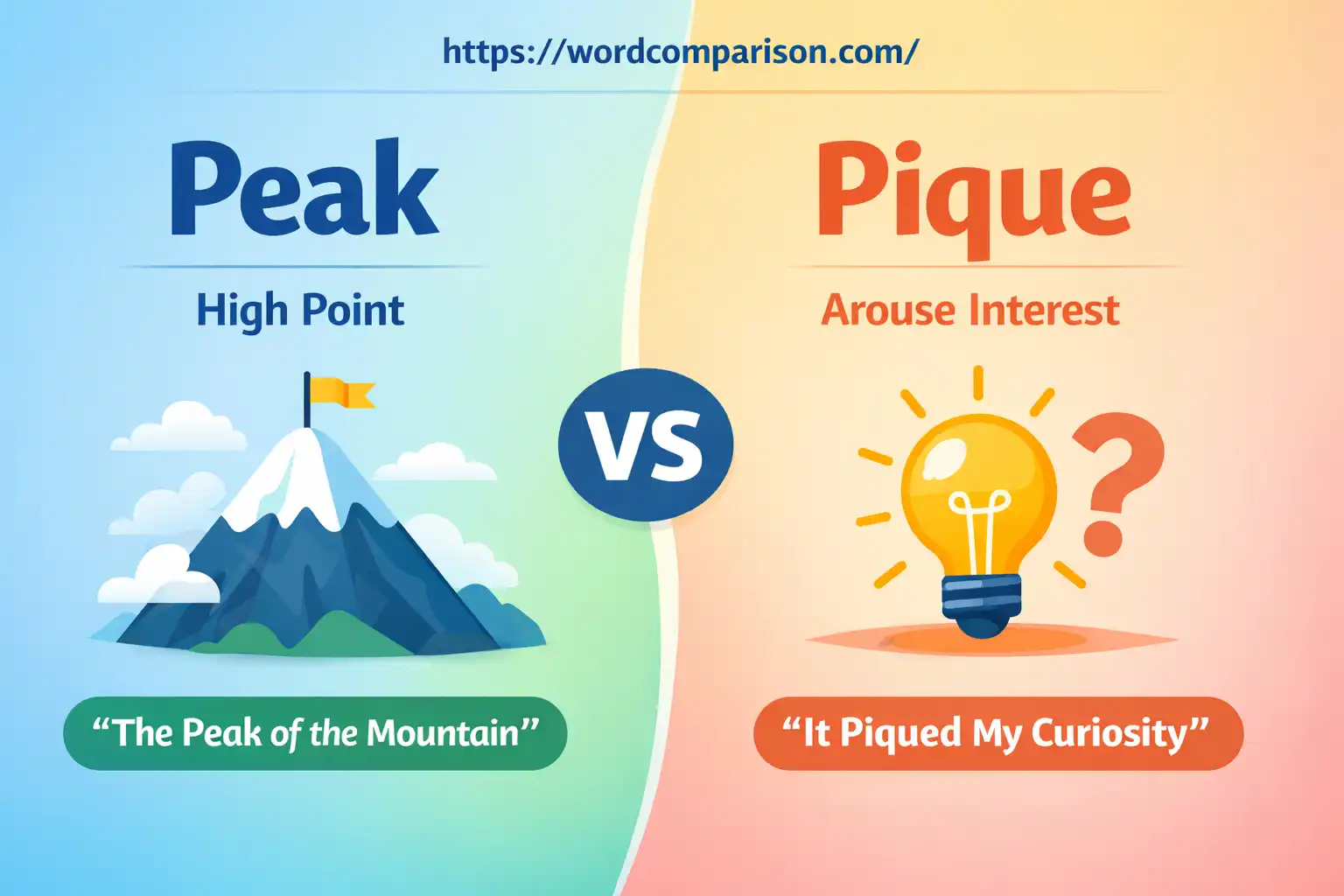
Peak means the highest point or level.
Pique means to cause interest, curiosity, or slight anger.
- Use peak for levels, points, or times.
Example: Sales reached a peak. - Use pique for feelings or reactions.
Example: The headline piqued my interest.
The Origin of Peak or Pique
The history of these words explains the confusion. Peak comes from Middle English. It first described a sharp point, like a mountain top. Over time, the meaning grew. Therefore, people began using it for the highest level of anything.
Pique, however, comes from French. It first meant “to prick.” Later, writers used it for emotional reactions. For example, something could prick curiosity or pride. As a result, pique became linked to feelings and interest.
The confusion exists because both words sound the same. Moreover, English borrowed them from different languages. Meanwhile, spelling stayed close. In contrast, meanings moved apart. That gap causes mistakes today.
For similar mix-ups, visit the “commonly confused words” pillar page.
British English vs American English Spelling
Many writers ask if peak or pique changes by region. The answer is simple. Both British and American English use the same spellings. However, usage errors appear everywhere.
Clear spelling rules help:
- Peak = highest point or maximum level
- Pique = trigger emotion or curiosity
Comparison Table (Spelling Focus)
| Aspect | Peak | Pique |
|---|---|---|
| Spelling | Same in US & UK | Same in US & UK |
| Meaning | Highest level | Emotional reaction |
| Common Error | Used for interest | Used for levels |
In contrast to some words, region does not matter here. Therefore, meaning matters more than location.
Which Spelling Should You Use?
Choice depends on meaning, not country. However, audience still matters for clarity.
For US writers:
Use peak for data, results, and trends.
Choose pique for interest, curiosity, or emotion.
For UK and Commonwealth writers:
Follow the same rule. Meanwhile, watch formal tone closely.
For global or professional writing:
Clarity matters most. Therefore, ask one question:
“Am I talking about a level or a feeling?”
That question solves the problem fast.
Common Mistakes with Peak or Pique
Errors happen often. However, they follow patterns. Learn them once.
❌ This topic peaked my interest.
✅ This topic piqued my interest.
Why: Interest is a feeling.
❌ Unemployment will pique next year.
✅ Unemployment will peak next year.
Why: Numbers reach levels, not emotions.
❌ Sales piqued in July.
✅ Sales peaked in July.
Why: Sales hit a high point.
These small fixes change meaning clearly. As a result, your writing sounds accurate and confident.
Peak or Pique in Everyday Examples
Understanding improves with real use. Therefore, see how both words work daily.
Emails:
- Your message piqued my curiosity.
- Demand will peak during holidays.
News:
- Temperatures will peak this weekend.
- The story piqued public interest.
Social Media:
- That teaser piqued my interest.
- Views peaked after the announcement.
Formal or Professional Writing:
- Employee stress reached its peak.
- The proposal piqued investor interest.
Each example shows clear meaning. Moreover, tone stays natural.
Peak or Pique – Google Trends & Usage Data
Search behavior explains why confusion grows. Many users type peak or pique to check correctness. Meanwhile, trends show mistakes remain common.
Popularity by country:
- High searches in the US, UK, Canada, and India
- Strong interest from English learners worldwide
User types:
- Students writing essays
- ESL learners improving accuracy
- Writers and editors checking tone
- Professionals sending emails
Usage patterns:
Correct use appears less than mistakes online. As a result, users seek quick answers. Therefore, clear guidance matters more than ever.
If you’re comparing similar terms, our “how to use piqued or peaked” article can help.
Comparison Table: Peak vs Pique
| Feature | Peak | Pique |
|---|---|---|
| Meaning | Highest point or level | Cause interest or emotion |
| Part of Speech | Noun, verb | Verb, noun |
| Context of Use | Data, time, growth | Feelings, reactions |
| Formal vs Informal | Works in both | Works in both |
| Common Mistake | Used for interest | Used for levels |
| Correct Example | Profits peaked in June. | The ad piqued interest. |
This table removes confusion fast. Moreover, it works as a quick reference.
Semantic FAQs (People Also Ask)
Is peak the same as pique?
No. Peak relates to levels. Pique relates to feelings.
Which one is correct in formal writing?
Both work. However, meaning decides usage.
Can they be used interchangeably?
Never. Meanings differ clearly.
Why do people confuse them?
They sound the same. Spelling looks similar.
Can grammar tools catch this mistake?
Sometimes. However, tools often miss context.
Is there a British vs American difference?
No. Both regions use the same spellings.
Conclusion
Overall, peak or pique causes confusion because sound tricks the ear. However, meaning clears everything. Peak always points to the highest level. In contrast, pique always connects to emotion or curiosity. That rule never changes.
Writers often make this error in fast writing. Moreover, spellcheck rarely helps. Therefore, learning one simple check saves time. Ask yourself what rises. If a number rises, use peak. If interest rises, use pique.
In short, focus on meaning, not sound. Finally, remember this easy rule:
Levels peak. Feelings pique. Use it once, and mistakes disappear.
Related reading: see “stolen or stollen” for another commonly mixed-up pair.

James Holloway writes detailed guides on confusing English words and grammar usage with clear side-by-side comparisons.