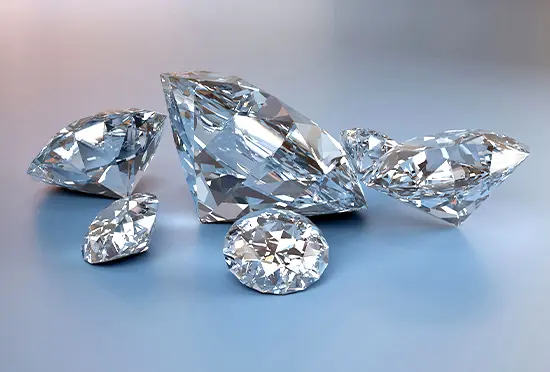
Carat weight is often the first detail people notice when they begin talking about diamonds. It appears on certificates, influences price expectations, and is frequently used as a quick way to compare one stone with another. Yet carat is also one of the most misunderstood parts of diamond evaluation. Many people assume that a higher carat automatically means a better or more valuable diamond, but the reality is more refined.
A diamond’s carat weight tells us how much the stone weighs, not how beautiful it is, how bright it appears, or how well it performs in the light. It is an important measurement, but it only becomes meaningful when viewed alongside the other quality factors that shape a diamond’s overall character. This is why careful evaluation looks beyond weight alone and considers how carat works together with cut, color, clarity, certification, and market demand.
For anyone buying, selling, inheriting, or simply trying to understand the value of a diamond, learning the role of carat weight can make the process clearer and more confident.
Carat Is a Measure of Weight, Not Just Visual Size
The word “carat” refers to the weight of a diamond. One carat equals 0.2 grams, which may sound small, but in the diamond world even slight differences in weight can affect price. A stone weighing 0.90 carat and another weighing 1.00 carat may look very close to the eye, yet the one-carat diamond often carries a noticeably higher market value because it reaches a popular weight milestone.
This is where many misunderstandings begin. Carat weight is not the same as size. Two diamonds with the same carat weight can look different depending on how they are cut. A well-cut diamond may appear lively and balanced, while a poorly cut diamond of the same weight may look smaller, deeper, or less brilliant. The way weight is distributed inside the stone affects how the diamond faces up when viewed from above.
For example, a diamond that carries too much weight in its depth may technically have a higher carat number, but it may not look as large or as bright as expected. Another diamond with slightly lower carat weight but better proportions may appear more elegant and visually pleasing. This is why experienced buyers and appraisers rarely judge value by carat alone.
Carat gives the starting point, but it does not tell the whole story.
Why Carat Weight Has a Strong Influence on Price
Carat weight matters because larger diamonds are rarer in nature. As diamonds increase in weight, their price does not rise in a simple, straight line. Instead, prices often increase more sharply at certain popular weight points, such as 0.50 carat, 1.00 carat, 1.50 carats, and 2.00 carats. These thresholds are important because many buyers recognize them as desirable sizes.
This means a diamond just over one carat can sometimes be priced significantly higher than a diamond slightly under one carat, even if the visual difference is subtle. In practical terms, carat weight affects both emotional perception and market value. People often attach meaning to round-number carat sizes, especially for engagement rings or important jewelry pieces.
However, price is still shaped by quality. A two-carat diamond with poor color, visible inclusions, or weak cutting may not be as desirable as a smaller diamond with excellent proportions and clean appearance. Carat adds weight to the valuation, but it does not replace quality.
For those who want a deeper understanding of how carat weight affects diamond value, it is useful to look at carat as part of a wider grading picture rather than as a single deciding factor.
The Relationship Between Carat and the Other 4Cs
Carat is one of the 4Cs, alongside cut, color, and clarity. These four factors work together to influence the overall value of a diamond. When one factor changes, the way the diamond is evaluated can also shift.
Cut has a direct effect on brilliance. A diamond with excellent cut quality can reflect light beautifully, making it appear more alive and attractive. Even if the carat weight is impressive, a poorly cut diamond may look dull or heavy. In many cases, cut quality can make a smaller diamond feel more valuable to the eye than a larger diamond that lacks sparkle.
Color also affects valuation. Diamonds closer to colorless grades are generally more desirable, especially in larger carat weights where body color can become easier to notice. A high-carat diamond with a visible yellow or brown tint may be less valuable than expected if the color grade is lower.
Clarity refers to the presence of internal inclusions or surface blemishes. In larger diamonds, inclusions can sometimes be easier to see because the stone offers more viewing area. This does not mean every larger diamond needs to be flawless, but clarity should be considered carefully, especially when the stone is meant for fine jewelry or resale.
This balance is what makes diamond evaluation both technical and nuanced. Carat may attract attention first, but the other 4Cs determine whether the weight is supported by beauty, rarity, and desirability.
What Carat Means When Selling or Appraising a Diamond
When a diamond is evaluated for resale, carat weight is one of the first details checked. It helps appraisers identify the category of the stone and compare it with similar diamonds in the market. A certified diamond with clearly stated carat weight, color, clarity, and cut grade is usually easier to assess than a stone with limited documentation.
Still, resale value is not based only on the original purchase price or the carat number. The current market, diamond condition, certificate details, setting style, and buyer demand all influence the final valuation. A diamond that was expensive at retail may receive a different resale offer because retail pricing includes design, branding, store margin, and other costs beyond the loose stone itself.
For this reason, sellers benefit from understanding carat weight before entering the appraisal process. It helps them ask better questions and interpret offers more realistically. Instead of focusing only on whether a diamond is “big” or “small,” they can look at whether the carat weight is supported by desirable grading details.
Carat also matters in jewelry that includes multiple diamonds. A ring may have a total carat weight that combines the center stone and smaller side stones. This is different from the carat weight of one main diamond. When evaluating value, the center stone usually carries more importance than the total number alone, because a single larger diamond is generally rarer than many small diamonds adding up to the same total weight.
Conclusion
Carat weight plays a major role in how diamonds are described, compared, priced, and appraised. It gives a measurable starting point and strongly influences market value because larger diamonds are naturally rarer and often more desirable. But carat should never be treated as the only measure of quality.
A diamond’s true value comes from the relationship between weight and overall character. Cut determines how beautifully the stone handles light. Color affects visual purity. Clarity influences how clean the diamond appears. Certification helps confirm important grading details. Carat brings these qualities into a measurable frame, but it does not stand above them.
For buyers, understanding carat weight helps prevent decisions based only on size. For sellers, it provides a clearer foundation before appraisal or negotiation. For collectors and jewelry owners, it explains why two diamonds with the same weight can carry very different values.
The most reliable way to evaluate a diamond is to see carat as one part of a complete picture. A larger stone may be impressive, but a well-balanced diamond is the one that combines weight, beauty, rarity, and trust. That is where carat becomes more than a number. It becomes part of the story that defines the diamond’s real value.
