Many English learners stop when they see tinder and tender. The words look almost the same. They sound close too. So people mix them up in writing, messages, and even exams. That small spelling change can create a big meaning mistake. One word talks about fire or dating apps. The other word talks about softness and care.
This confusion matters because the wrong word can change your sentence completely. A teacher may mark it wrong. A boss may misunderstand your email. Readers may feel confused. So this guide explains the difference in a simple way. You will learn meaning, origin, usage, and fast decision tricks. After reading, you will never mix them again.
Tinder vs Tender – Quick Answer
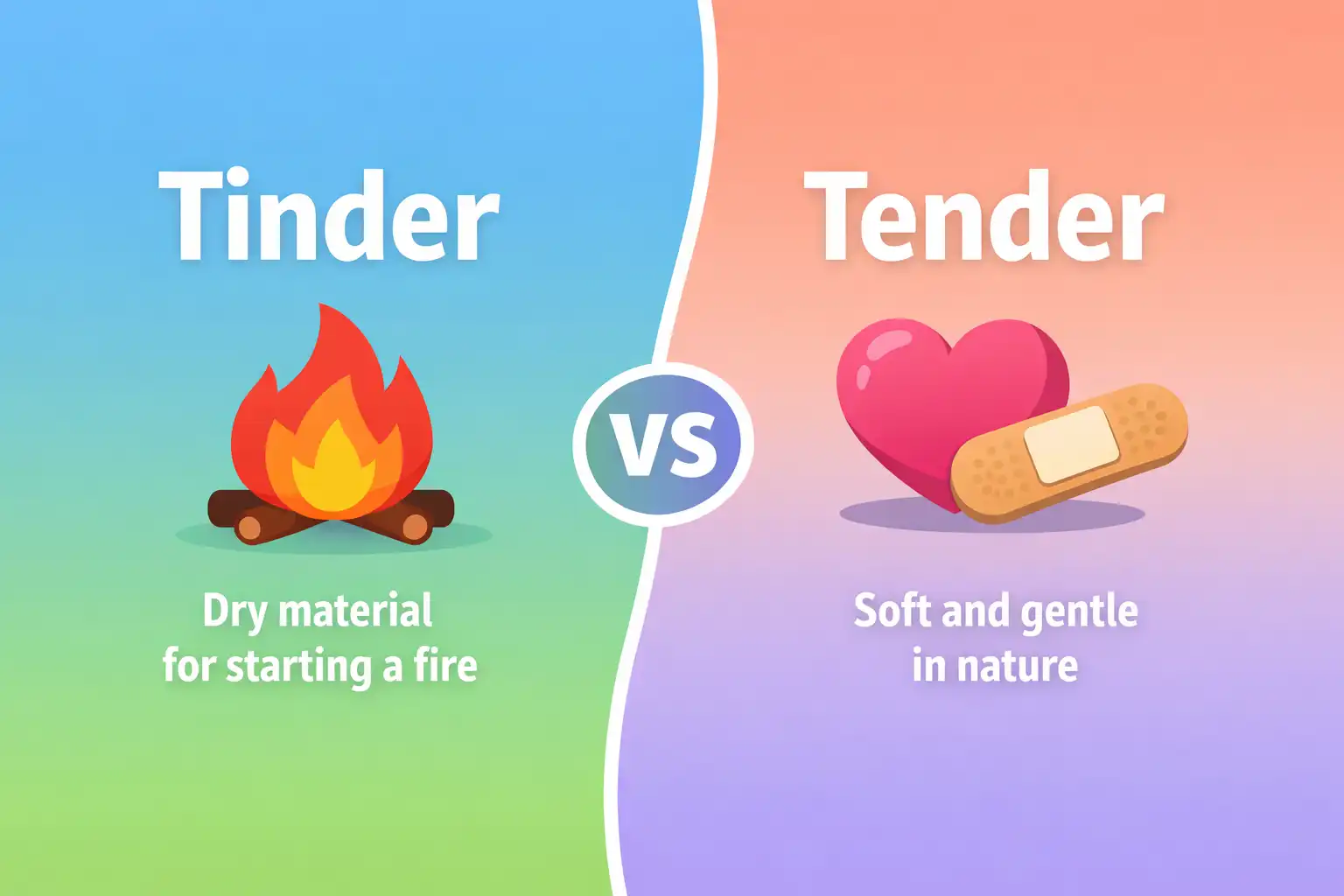
Tinder and tender are different words with different meanings.
- Tinder = dry material used to start a fire
- Tender = soft, gentle, or caring
Example:
- He used tinder to light the campfire.
- The meat is tender and easy to eat.
👉 Easy rule: Fire = tinder. Soft feeling = tender.
Etymology: Where “tinder” and “tender” come from (and why they sound similar)
The word tinder comes from old Germanic roots. It described dry material that catches fire easily. People used bark, grass, or cloth as tinder to start flames. The meaning stayed stable for centuries. Today, the word also appears in modern culture because of the dating app name. However, the original meaning still relates to fire.
The word tender, meanwhile, comes from Latin and Old French. It described softness, kindness, and care. Over time, it gained emotional meaning. Writers used it to describe gentle love, soft food, or careful treatment. That emotional tone is why the word appears often in stories and poetry.
The confusion happens now because both words share letters and sound similar. Writers often type fast. Autocorrect also replaces one word with the other. So small spelling mistakes spread easily.
British English vs American English Spelling
There is no spelling difference between British and American English. Both regions use the same forms:
| Word | US spelling | UK spelling |
| Tinder | tinder | tinder |
| Tender | tender | tender |
However, pronunciation can vary slightly. Some accents stress the first syllable more strongly. Still, the spelling stays identical. Therefore, confusion comes from similarity, not regional rules.
Now the focus should stay on meaning, not location.
How to Choose the Right Word Fast
Choosing the correct word becomes easy when you follow audience logic.
US writing
Use the same rule everywhere. Fire-related meaning = tinder. Soft or emotional meaning = tender.
UK / Commonwealth writing
The same rule applies. No spelling change exists. Focus only on context.
Global or professional writing
Clarity matters most. Ask one quick question:
👉 Am I talking about flames or feelings?
If the topic involves burning, camping, or sparks, choose tinder.
If the topic involves care, softness, or emotions, choose tender.
This mental shortcut saves time during fast writing.
Common Mistakes with Tinder vs Tender
Writers often mix the words in emotional sentences.
❌ The steak is tinder.
✅ The steak is tender.
(Meat cannot start a fire. It describes softness.)
❌ She spoke in a tinder voice.
✅ She spoke in a tender voice.
(Voice describes feeling, not flames.)
❌ He packed tender to start the fire.
✅ He packed tinder to start the fire.
(Fire needs tinder, not softness.)
These errors appear small. However, readers notice them instantly. Editors usually see this mistake in beginner writing.
Tinder vs Tender in Everyday Examples
Emails
“The chicken was tender and delicious.”
(Describes texture)
News writing
“Campers carried dry tinder to light a safe fire.”
(Describes survival gear)
Social media
“She wrote a tender message to her mother.”
(Shows emotion)
Professional writing
“The meat remained tender after slow cooking.”
(Neutral, factual tone)
Real-life usage shows that context decides everything.
Tinder vs Tender – Usage Patterns & Search Interest
People often search “tinder vs tender” because the words look similar and sound close. This mix-up happens a lot in fast typing, ESL writing, and school work. It also happens when someone writes about food, feelings, or fire and picks the wrong spelling.
The mistake can feel small, but it can change the whole meaning. For example, “tinder steak” sounds like a fire joke, not a food review. So readers may pause, laugh, or get confused. That is why many writers check this pair before they publish or submit work.
Tinder vs Tender Comparison Table
| Feature | Tinder | Tender |
| Meaning | Material used to start fire | Soft, gentle, caring |
| Part of speech | Noun | Adjective / noun |
| Context of use | Camping, survival, sparks | Food, emotions, care |
| Formal vs informal | Neutral | Neutral to emotional |
| Common mistake | Used for softness | Used for fire |
| Correct example | He carried tinder for the fire. | The bread feels tender. |
This table removes confusion instantly.
FAQs – People Also Ask
Is tinder the same as tender?
No. Tinder relates to fire. Tender relates to softness or emotion.
Which word is correct in formal writing?
Both are correct. Context decides which one fits.
Can they be used interchangeably?
No. The meanings are unrelated.
Why do people confuse them?
They look and sound similar, so spelling errors happen.
Can grammar tools catch this mistake?
Sometimes. Tools help, but context errors can still slip through.
Is there a British vs American difference?
No. Both regions spell them the same.
Does Tinder the app change the meaning?
The app name is modern branding. The original word still means fire material.
Conclusion
Tinder and tender look similar, but they mean very different things. Tinder is for fire. Tender is for softness, care, or gentle feelings. So a small spelling mistake can change your whole message and confuse the reader.
Use this quick rule: Fire = tinder. Soft or kind = tender.
👉 Fire burns tinder. Hearts feel tender.
CTA: Ready to test yourself? Take the 60-second mini-quiz: /quiz/tinder-vs-tender

Moses Jhon is a dedicated content writer known for producing high-quality, reader-focused, and SEO-optimized content. He has experience crafting blog posts, website content, articles, and marketing copy across different niches. His writing style combines creativity, clarity, and strategy to help businesses grow their online presence and engage their target audience effectively.