Many people feel confused when they write the word internet. Sometimes they see Internet with a capital “I”. However, other times they see internet in lowercase. As a result, writers, students, and even professionals stop and think.
This confusion happens because rules changed over time. Moreover, different style guides give different advice. Therefore, mistakes appear in emails, blogs, exams, and news articles.
This article solves that problem clearly. First, it explains where the confusion started. Next, it shows how British and American English treat the word. Additionally, it gives simple rules you can follow every day. For example, you will learn which form works best for school, work, or online posts. Explore the “full word comparison library” to spot similar mix-ups.
Finally, you will know one easy rule that removes doubt forever. Overall, this guide helps beginners and non-native readers write with confidence.
Internet or internet – Quick Answer
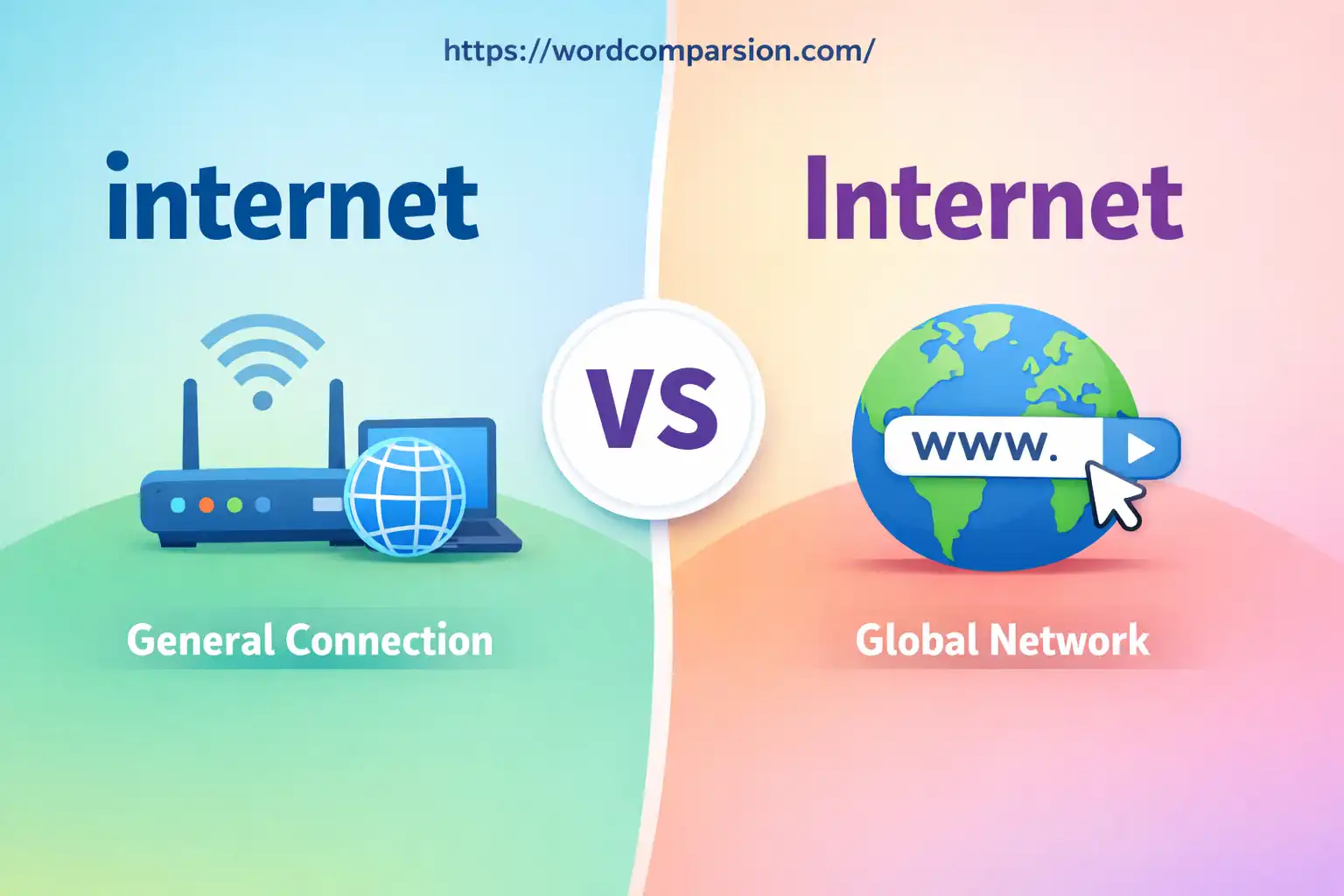
- Internet (capital I) = the global network of computers.
- internet (small i) = common modern usage, especially online.
- Both forms are correct today.
- Style guide and audience decide the choice.
The Origin of Internet or internet
The word Internet comes from “interconnected network.” In the early days, it named one unique system. Therefore, writers treated it like a proper noun. As a result, they capitalized it, just like a name.
Over time, the internet became part of daily life. Meanwhile, people started using it like common tools such as electricity or water. Because of this change, many editors dropped the capital letter. However, some traditional guides kept it. This history explains why confusion still exists today. For more language slip-ups, see the “Grammar Mistakes checklist” page.
British English vs American English Spelling
British and American English follow similar trends. However, style preferences differ slightly.
In contrast to older rules, modern usage favors lowercase.
| Aspect | British English | American English |
| Traditional form | Internet | Internet |
| Modern media | internet | internet |
| Academic writing | Internet | Internet |
| Casual writing | internet | internet |
Therefore, both regions accept both forms. However, context matters more than location.
Which Spelling Should You Use?
Choosing the right form depends on your audience.
For the US audience:
Formal papers often use Internet. However, blogs and tech sites prefer internet.
For the UK and Commonwealth:
Academic writing still accepts Internet. Meanwhile, news and online content mostly use internet.
For global or professional writing:
Consistency matters most. Therefore, pick one style and use it everywhere.
Common Mistakes with Internet or internet
Many errors happen because writers mix styles.
- ❌ I searched the internet and found Internet tools.
✅ I searched the internet and found internet tools. - ❌ The internet is called Internet.
✅ The Internet connects computers worldwide. - ❌ Internet access is slow on the internet.
✅ Internet access is slow.
These mistakes confuse readers. As a result, clarity drops.
Internet or internet in Everyday Examples
Usage changes with context.
In emails, lowercase works best for friendly tone.
In news articles, modern outlets prefer lowercase.
On social media, lowercase feels natural and fast.
In formal writing, capital “I” still looks safe and traditional.
Therefore, tone and setting guide your choice. You might also like our “it or it’s explanation” for a similar issue.
Internet or internet – Google Trends & Usage Data
Search data shows clear patterns. Students often search “Internet or internet correct.” Meanwhile, ESL learners ask grammar questions. Professionals check style rules for reports.
Country data shows high confusion in English-learning regions. Moreover, online publishers mostly use lowercase today. As a result, lowercase use grows every year. Correct usage increases when writers follow one clear rule.
Comparison Table: Internet vs internet
| Feature | Internet | internet |
| Meaning | Global network | Same global network |
| Part of speech | Noun | Noun |
| Context of use | Formal, academic | Casual, modern |
| Formal vs informal | More formal | More informal |
| Common mistakes | Over-capitalizing | Mixing styles |
| Correct example | The Internet changed society. | The internet is fast today. |
This table removes confusion instantly.
Semantic FAQs (People Also Ask)
Is Internet the same as internet?
Yes. Both mean the same global network.
Which one is correct in formal writing?
Internet works better in academic or legal texts.
Can they be used interchangeably?
Yes. However, consistency is important.
Why do people confuse them?
Old rules and new habits clash.
Can grammar tools catch this mistake?
Some tools flag inconsistency, not correctness.
Is there a British vs American difference?
Both accept both forms today.
Conclusion
Overall, the debate between Internet and internet comes from history, not meaning. Both words describe the same global network. However, writing style and audience decide the best choice.
Formal documents often prefer the capital form. Meanwhile, modern online writing favors lowercase. Therefore, neither option is wrong.
In short, the biggest mistake is mixing both styles in one piece. That habit confuses readers and weakens trust. Instead, choose one form early. Then, use it everywhere. Finally, remember this simple rule: be consistent for your audience. Once you follow that, the confusion disappears. For another quick check, read “13rd or 13th” next.

James Holloway writes detailed guides on confusing English words and grammar usage with clear side-by-side comparisons.