Many people search for “don’t’s or don’ts” because they see both versions used online—and that creates confusion. You might notice one spelling in blog posts, another in emails, and yet another in social media captions. So which one is correct? And why does this tiny apostrophe cause so much trouble?
The confusion comes from mixing two grammar ideas: contractions and plurals. “Don’t” is already a shortened form of “do not.” When people want to talk about rules or lists, they try to make it plural—and that’s where mistakes happen. Apostrophes are often misunderstood, especially when turning words into plurals.
This article clears everything up in a simple way. You’ll get a quick answer first, then a deeper explanation. We’ll cover where the word came from, how British and American English treat it, common mistakes people make, and how to use it correctly in real life. By the end, you’ll know exactly which spelling to use—and why. Explore the “full word comparison library” to spot similar mix-ups.
Don’t’s or Don’ts – Quick Answer
People search donts to find the plural form of dont and common usage in headings. In most cases writers use do’s and don’ts to show omission and make it clear.
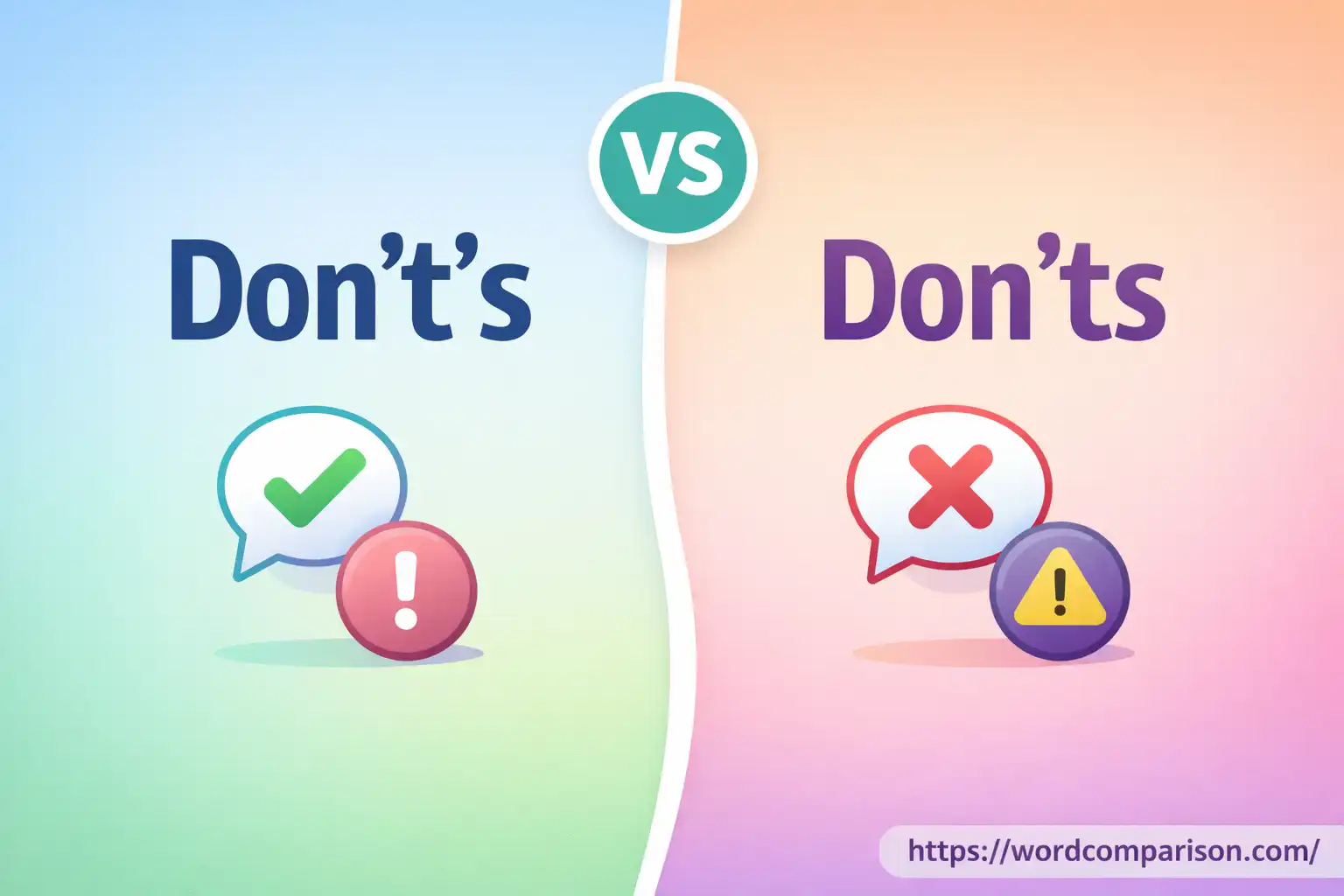
The correct spelling is: don’ts.
You should not use don’t’s.
Why?
- Don’t = contraction of do not
- Don’ts = plural form, meaning things you should not do
- Apostrophes do not make words plural
Example:
- ✅ Follow the do’s and don’ts of email etiquette.
- ❌ Follow the do’s and don’t’s of email etiquette.
The Origin of Don’ts
The word don’t comes from combining do + not, which became common in spoken English in the 17th century. Over time, contractions like don’t, can’t, and won’t became standard in everyday writing.
The plural form don’ts appeared later when people started listing rules, especially in guides and instructions. The apostrophe stays because it is part of the contraction—not because it shows possession.
The confusion exists because many learners were taught that apostrophes and “s” go together. In reality, apostrophes are mainly used for contractions and possession, not plurals. Explore our “Grammar Mistakes” category for related writing errors.
British English vs American English Spelling
There is no spelling difference between British and American English for this word.
Both follow the same rule.
| Version | Correct Form | Incorrect Form |
| British English | don’ts | don’t’s |
| American English | don’ts | don’t’s |
| Formal Writing | don’ts | don’t’s |
| Informal Writing | don’ts | don’t’s |
Key point: This is a grammar rule, not a regional spelling rule.
Which Spelling Should You Use?
Use don’ts in all cases.
- US audience: don’ts
- UK & Commonwealth: don’ts
- Global or professional writing: don’ts
If you want to avoid confusion completely, you can also write:
- “things you should not do”
- “rules to avoid”
But if you use the word, don’ts is the safe and correct choice.
Common Mistakes with Don’ts
Here are frequent errors people make:
- ❌ don’t’s
✅ don’ts - ❌ Adding an apostrophe to make plurals
✅ Apostrophes do not create plurals - ❌ Mixing “do nots” and “don’ts” in the same list
✅ Choose one style and stay consistent - ❌ Using don’ts in very formal legal writing
✅ Rewrite as “prohibited actions” if needed
Don’ts in Everyday Examples
Emails
- Please review the do’s and don’ts before replying to clients.
News
- The article lists the do’s and don’ts of safe driving.
Social Media
- Gym tips: do’s and don’ts for beginners 💪
Formal Writing
- This guide outlines the essential do’s and don’ts of data handling.
Don’ts – Google Trends & Usage Data
Search data shows that:
- “don’ts” is widely used in guides, blogs, and how-to articles.
- “don’t’s” is searched often—but mostly because people are unsure.
- English-speaking countries like the US, UK, Canada, and Australia show steady interest in this keyword.
Most professional and high-authority websites use don’ts, which reinforces it as the standard form. You might also like our “flew or flown explanation” for a similar issue.
Comparison Table: Keyword Variations
| Variation | Correct? | Reason |
| don’ts | ✅ Yes | Correct plural of “don’t” |
| don’t’s | ❌ No | Apostrophe misuse |
| do nots | ✅ Yes | Non-contracted plural |
| do’s and don’ts | ✅ Yes | Standard phrase |
| dos and don’ts | ❌ No | Loses contraction meaning |
FAQs
Is “don’t’s” ever correct?
No. It is always incorrect.
Why does “don’ts” still have an apostrophe?
Because it is part of the contraction “don’t.”
Can I write “dos and don’ts”?
No. The correct phrase is do’s and don’ts.
Is “don’ts” informal?
It is fine for most writing, except very formal legal texts.
Dos and donts which is correct
The common form is do’s and don’ts especially in formal writing.
Is donts a word
Writers usually prefer don’ts with an apostrophe to show the missing letter.
Donts meaning what does it refer to
It refers to things you should not do and is commonly written as don’ts.
Can I avoid the word completely?
Yes. You can say “rules to avoid” or “prohibited actions.”
Conclusion
The confusion around don’t’s or don’ts comes from a simple grammar misunderstanding. Apostrophes do not make words plural. In this case, the apostrophe already belongs to the contraction “don’t.” When you talk about more than one rule, you add s, not another apostrophe—making don’ts the only correct option.
This rule stays the same in British English, American English, and global usage. You’ll see don’ts used in professional guides, news articles, and educational content. While “don’t’s” is commonly searched, it is never grammatically correct. For another quick check, read “time flies or time flys” next.
If you remember one thing, remember this: plural = add s, not an apostrophe. Using don’ts keeps your writing clear, correct, and professional. When in doubt, rephrase—but never add that extra apostrophe.

James Holloway writes detailed guides on confusing English words and grammar usage with clear side-by-side comparisons.