People mix up blatantly and bluntly all the time. Both words sound strong, and both describe behavior that feels direct. So writers often swap them without noticing. However, the meaning is not the same, and that small mistake can change the tone of a sentence in a big way.
This confusion matters because tone shapes how readers judge intent. A message that sounds honest can suddenly feel rude. A clear statement can look aggressive. Now many students, ESL learners, and even professionals search this comparison because grammar tools rarely explain the emotional difference well.
This article breaks that gap. You will learn the real meaning, when each word fits, and how to choose fast without guessing.
Blatantly vs Bluntly – Quick Answer
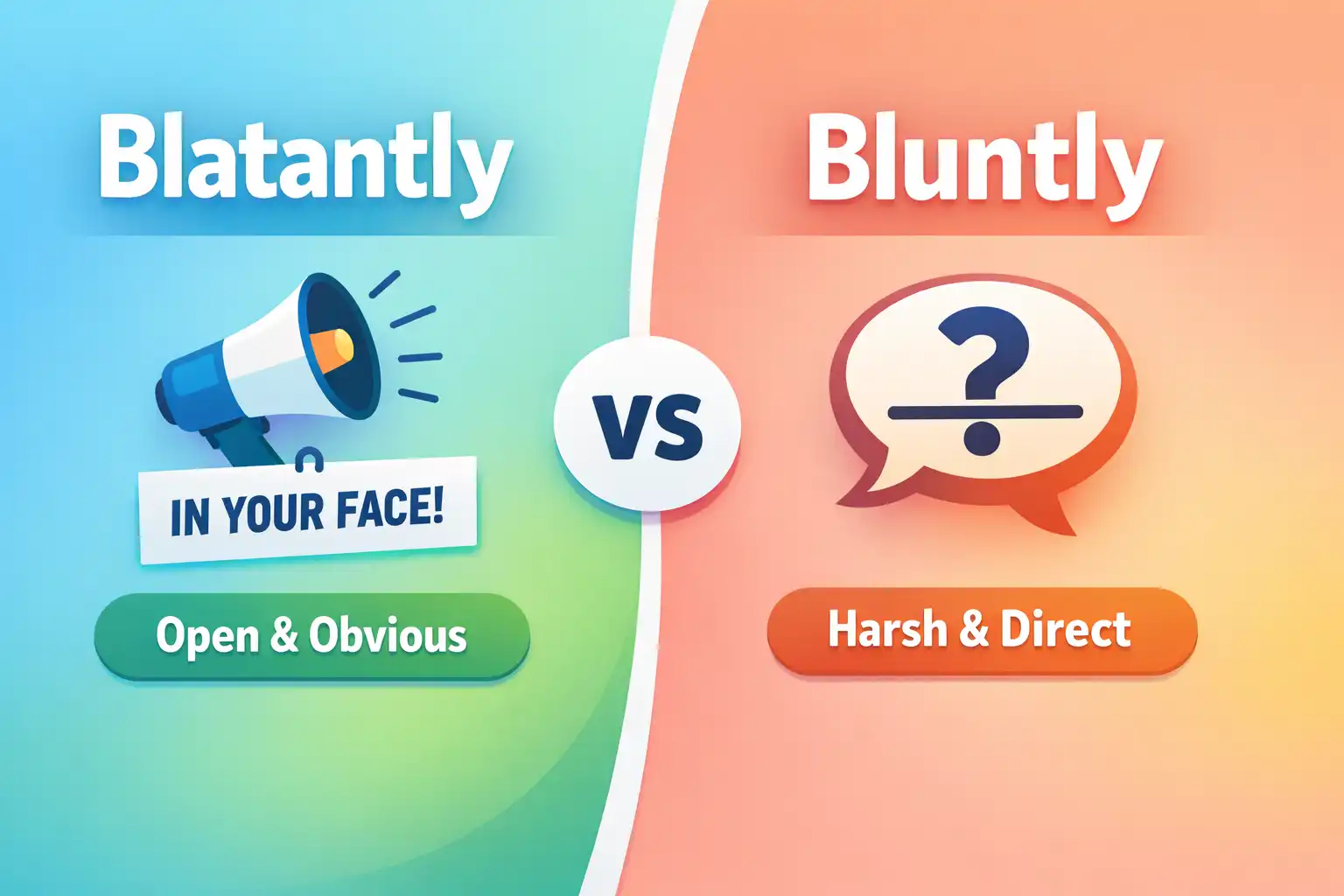
Blatantly means something is obvious and done without shame.
Bluntly means something is said in a direct and plain way.
- He blatantly ignored the rules.
- She bluntly said the plan would fail.
Easy rule:
Use blatantly for shameless actions.
Use bluntly for direct speech.
Meaning + Origins (Why They Feel Similar)
The word blatant first meant loud or noisy in old English writing. Over time, it shifted. Writers began to use it for actions that were bold, obvious, and impossible to hide. So today, blatantly describes behavior that shows no attempt to conceal wrongdoing or disrespect.
Meanwhile, blunt came from a word meaning dull or not sharp. Then the meaning changed in social use. A blunt person does not soften their words. They speak straight and without decoration. Therefore, bluntly focuses on communication style, not moral judgment.
The confusion happens because both words carry emotional force. Each suggests intensity. However, one judges behavior, while the other describes delivery. Editors often see writers use blatantly when they really mean someone spoke harshly. That small swap changes the meaning from tone to ethics.
British vs American English Spelling
There is no spelling difference between British and American English for these words. Both regions use:
- blatantly
- bluntly
The meaning also stays the same across dialects.
| Word | US Spelling | UK Spelling | Meaning Change |
| blatantly | same | same | none |
| bluntly | same | same | none |
In contrast to many English comparisons, this pair is about tone, not spelling.
How to Choose Blatantly vs Bluntly (Fast Rule)
For US writing, the rule is simple. Use blatantly when describing behavior that looks shameless or openly wrong. Use bluntly when describing speech that is direct and unfiltered.
UK and Commonwealth writing follows the same rule. There is no regional shift in tone. So writers in Britain, Canada, and Australia apply the words in identical contexts.
For global or professional writing, clarity matters more than drama. Therefore, choose based on intent. If you judge the action, use blatantly. If you describe delivery, use bluntly. Now the sentence keeps its emotional accuracy.
Common Mistakes with Blatantly vs Bluntly
Writers confuse action with speech.
❌ He blatantly told me the truth.
✅ He bluntly told me the truth.
Explanation: Telling truth is speech, not shameless behavior.
❌ She bluntly cheated on the test.
✅ She blatantly cheated on the test.
Explanation: Cheating is an action judged as obvious wrongdoing.
❌ The sign bluntly broke the rules.
✅ The sign blatantly broke the rules.
Explanation: Objects cannot speak bluntly. They act blatantly.
Many errors happen because both words feel strong. However, one describes ethics, and the other describes style.
Blatantly vs Bluntly in Everyday Examples
Emails
He blatantly ignored company policy.
She bluntly rejected the proposal.
News writing
The player blatantly violated the rules.
The coach bluntly criticized the team.
Social media
That post blatantly spreads misinformation.
He bluntly said the movie was terrible.
Formal or professional writing
The report states the firm blatantly misused funds.
The reviewer bluntly questioned the strategy.
Each context shows the same pattern. One word judges behavior. The other explains delivery.
Why People Confuse Them (Tone + Intent)
Search interest rises because learners want emotional precision. Students often fear sounding rude. ESL learners struggle with tone differences. Professional writers want sharper language control. So this comparison appears frequently in editing forums and writing guides.
A common real-world issue happens in workplace feedback. If a manager writes that an employee “blatantly disagreed,” it sounds like rebellion. If they write “bluntly disagreed,” it suggests honesty. That one word shifts perception of character. Therefore, misuse can change how people interpret intent.
Comparison Table
| Feature | Blatantly | Bluntly |
| Meaning | Done openly without shame | Said in a direct way |
| Part of speech | Adverb | Adverb |
| Context of use | Behavior or actions | Speech or communication |
| Formal vs informal | Often critical or negative | Neutral but direct |
| Common mistakes | Used for speech tone | Used for unethical actions |
| Correct example | He blatantly lied. | She bluntly refused. |
This table removes confusion fast. If the sentence involves speaking, think bluntly. If it involves shameless action, think blatantly.
FAQs
Is blatantly the same as bluntly?
No. Blatantly judges actions. Bluntly describes speech style.
Which one is correct in formal writing?
Both are correct. Choose based on meaning, not formality.
Can they be used interchangeably?
No. Swapping them changes the tone and message.
Why do people confuse them?
Both words sound strong and emotional, so learners link them incorrectly.
Can grammar tools catch this mistake?
Sometimes. However, many tools miss tone differences.
Is there a British vs American difference?
No. Usage stays the same in both regions.
Conclusion
Blatantly and bluntly feel similar, yet they serve different jobs. One word judges behavior as obvious and shameless. The other word describes speech as direct and unfiltered. Writers mix them up because both carry emotional weight. However, the impact on tone is huge.
Overall, the safest approach is to check what the sentence describes. If the focus is action and moral judgment, use blatantly. If the focus is communication style, use bluntly. In short, never attach blatantly to speech or bluntly to unethical behavior. Finally, remember this rule: actions are blatant, words are blunt. That simple line prevents almost every mistake.

Moses Jhon is a dedicated content writer known for producing high-quality, reader-focused, and SEO-optimized content. He has experience crafting blog posts, website content, articles, and marketing copy across different niches. His writing style combines creativity, clarity, and strategy to help businesses grow their online presence and engage their target audience effectively.