Many writers pause when they choose between blatantly vs bluntly. Both words feel strong. Both can sound harsh. So people often mix them up. But they do not mean the same thing.
This confusion happens in emails, essays, and even news writing. Some writers use bluntly when they mean openly. Others use blatantly when they only mean directly. That small mistake can change the tone of a sentence. It can make someone sound rude or accusing without meaning to.
In this guide, you will learn the simple difference. You will see real examples. You will also learn one easy rule to remember. By the end, you will know exactly when to use blatantly and when to use bluntly.
Blatantly vs Bluntly – Quick Answer
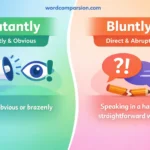
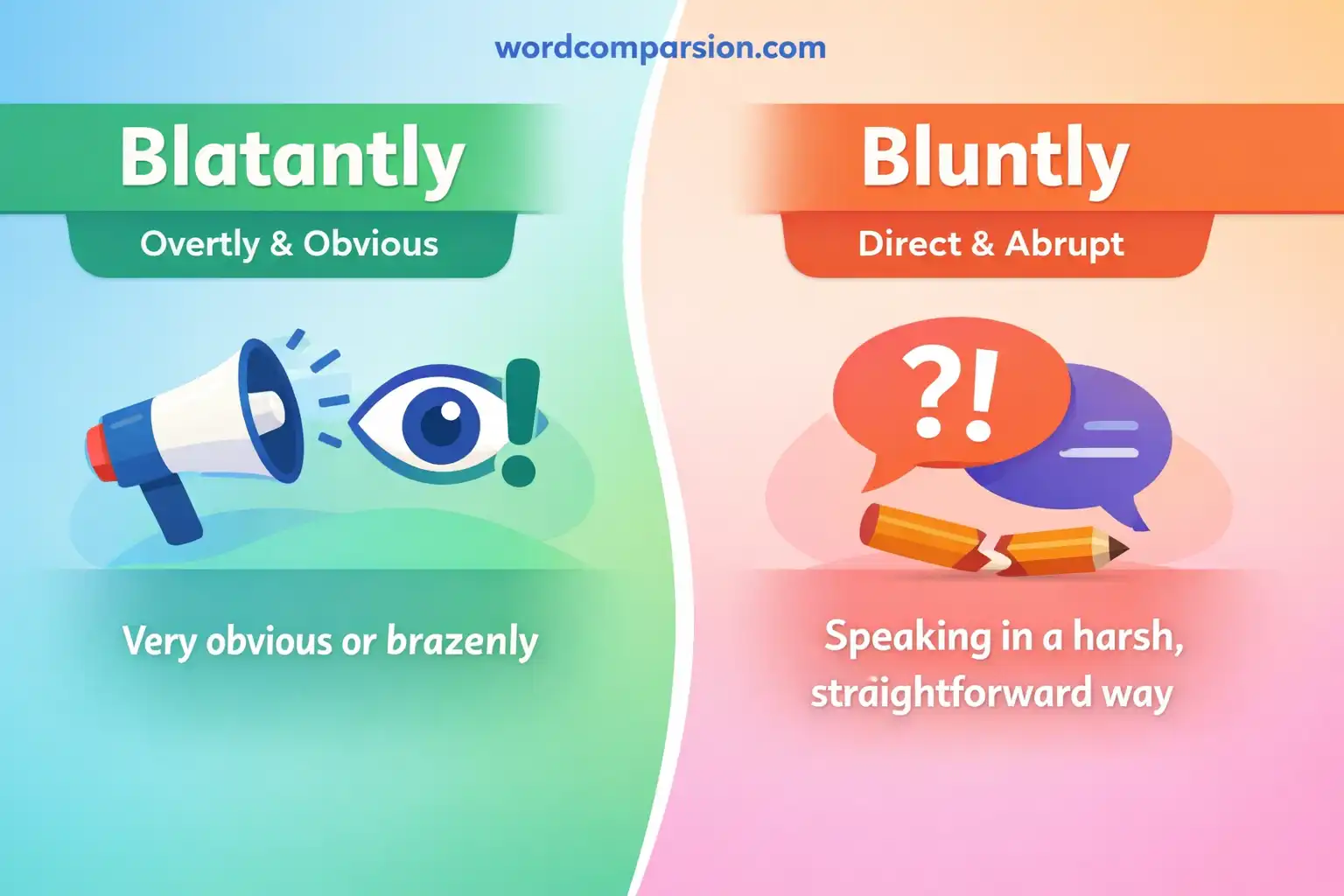
Blatantly means in an obvious and often wrong way.
Bluntly means in a direct and honest way, without soft words.
Examples:
- She blatantly ignored the rules.
- He bluntly said, “This will not work.”
Easy rule:
If it shows something obvious and often bad → use blatantly.
If it shows direct speech → use bluntly.
The Origin of Blatantly vs Bluntly (Simple History)
Understanding the roots helps clear the confusion.
Bluntly comes from the word blunt. Long ago, people used blunt to describe a knife that was dull, not sharp. Later, the meaning changed. People began to use it for speech that is not gentle or sugar-coated. So when someone speaks bluntly, they speak in a direct and clear way without softening their words.
Blatantly comes from blatant. This word appeared later in English. It meant loud, noisy, or obvious. Over time, it began to describe actions that are clearly wrong or shameless.
Now the confusion makes sense. Both words describe strong behavior. However, they describe different kinds of strength:
- Bluntly → strong honesty
- Blatantly → obvious wrongdoing
Writers confuse them because both feel bold. But their tone is very different.
British English vs American English Spelling
There is no spelling difference between British and American English.
| Word | US Spelling | UK Spelling |
| Blatantly | Blatantly | Blatantly |
| Bluntly | Bluntly | Bluntly |
So the issue is not spelling. The issue is meaning and tone.
In contrast, some English words change spelling across regions. But these two words stay the same everywhere.
How to Choose the Right Word Fast
Choosing between blatantly vs bluntly becomes easy when you focus on tone and intention.
For US Writers
Use bluntly when someone speaks directly.
Use blatantly when an action is clearly wrong or obvious.
For UK / Commonwealth Writers
The rule is the same. Meaning does not change by region.
For Global or Professional Writing
Think about the impact.
- If you describe behavior that breaks rules openly, choose blatantly.
- If you describe clear, direct speech, choose bluntly.
When in doubt, ask yourself:
“Am I describing speech or behavior?”
Speech → bluntly
Behavior → blatantly
Common Mistakes with Blatantly vs Bluntly
Writers often mix these words in emotional sentences.
❌ Incorrect → ✅ Correct
❌ He blatantly told me the truth.
✅ He bluntly told me the truth.
(Because it describes direct speech.)
❌ She bluntly broke the law.
✅ She blatantly broke the law.
(Because it describes obvious wrongdoing.)
❌ The company bluntly ignored safety rules.
✅ The company blatantly ignored safety rules.
Editors usually see this mistake in opinion articles. The wrong word changes the tone. It can sound like you are accusing someone unfairly.
That is why the difference matters.
Blatantly vs Bluntly in Everyday Examples
Let’s look at real-life writing.
Emails
- He bluntly said the project failed.
- She blatantly copied the report.
In professional emails, using the wrong word may sound aggressive.
News
- The player blatantly fouled his opponent.
- The coach bluntly admitted the mistake.
Sports reporting often uses blatantly for rule-breaking. Interviews use bluntly for honest comments.
On Social Media
- She blatantly lied in the video.
- He bluntly said he does not care.
Social posts often exaggerate. Still, the difference remains clear.
Formal Writing
- The company blatantly violated regulations.
- The manager bluntly explained the policy.
In formal contexts, tone matters even more. Bluntly may sound honest but harsh. Blatantly may sound accusatory.
Blatantly vs Bluntly – Usage Patterns & Search Interest
People search for blatantly vs bluntly because the words sound similar. They also both end in “-ly,” so learners assume they work the same way.
Students, ESL learners, bloggers, and even professionals search this comparison. Many grammar tools do not catch the mistake. Both words are spelled correctly. The error happens in meaning.
A common real-world problem happens in workplace writing. Imagine this sentence:
“The manager blatantly explained the delay.”
That sentence suggests wrongdoing. But maybe the writer only meant “directly explained.” The tone changes the message. This small mistake can create tension.
So the search intent is clear. Users want clarity. They want to avoid embarrassment. This article solves that problem by giving one simple rule.
Comparison Table: Blatantly vs Bluntly
| Feature | Blatantly | Bluntly |
| Meaning | In an obvious, often wrong way | In a direct, honest way |
| Part of Speech | Adverb | Adverb |
| Context of Use | Rule-breaking, obvious behavior | Direct speech or statements |
| Formal vs Informal | Used in both, but often negative tone | Used in both, may sound harsh |
| Common Mistake | Used for honest speech | Used for wrongdoing |
| Correct Example | She blatantly ignored the warning. | He bluntly said it was a bad idea. |
This table removes confusion instantly. The key difference is behavior versus speech.
Semantic FAQs (People Also Ask)
Is blatantly the same as bluntly?
No. Blatantly means obviously wrong. Bluntly means directly honest.
Which one is correct in formal writing?
Both are correct. Choose based on meaning, not formality.
Can they be used interchangeably?
No. They describe different actions and tones.
Why do people confuse them?
They sound similar and both describe strong behavior.
Can grammar tools catch this mistake?
Often no. The words are spelled correctly. The error is about meaning.
Is there a British vs American difference?
No. Spelling and meaning stay the same.
Does bluntly always mean rude?
Not always. It means direct. But it can sound harsh.
Conclusion
The confusion between blatantly vs bluntly happens because both words feel bold. However, they describe very different ideas.
Blatantly shows something obvious and often wrong. It usually describes actions.
Bluntly shows direct and honest speech. It describes how someone speaks.
Overall, the mistake to avoid is mixing up speech and behavior. That is where most writers go wrong. If you use blatantly for simple honesty, you may sound accusatory. If you use bluntly for rule-breaking, your sentence may feel weak.
Finally, remember this easy rule:
Blatantly = obvious wrongdoing.
Bluntly = direct speech.
Keep that in mind, and you will never confuse them again.