Many people pause when they type tweek. It looks right. It sounds right. But then spellcheck turns red, and doubt kicks in. Is it wrong? Or is it just another spelling? This small moment causes big confusion, especially for students, ESL learners, and new writers.
The mix-up happens because English words often sound the same but work very differently. Also, online writing moves fast. People type quickly, and small spelling slips spread. Over time, these slips start to look real. Because of that, many users now search “tweek vs tweak” to be sure before they write an email, post, or report.
In this article, you will get a clear answer. You will learn which word is correct, why the confusion exists, and how to choose the right form every time. The goal is simple. By the end, you will stop guessing and start writing with calm confidence.
Tweek vs Tweak – Quick Answer
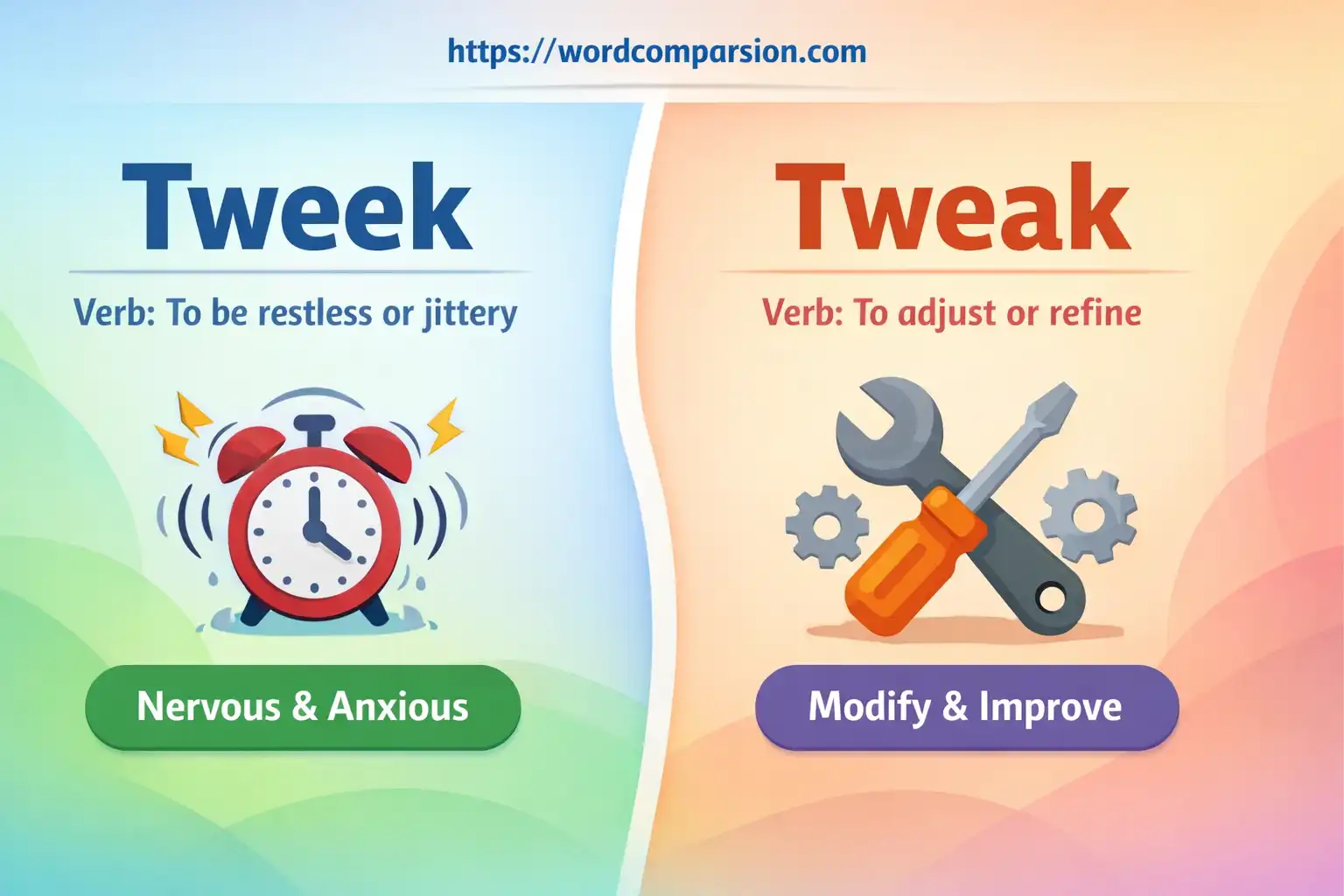
- Tweak is the correct English word.
- Tweek is a common spelling mistake.
- Use tweak when you mean a small change.
Example:
- ✅ “I will tweak the design.”
- ❌ “I will tweek the design.”
Easy rule:
If you mean a small adjustment, always use tweak.
The Origin of Tweek vs Tweak
The word tweak has been part of English for a long time. It came from old words that meant to pinch or pull sharply. Over time, the meaning softened. Now, it means to make a small change.
Tweek, however, has no real history in standard English. It did not grow from older language forms. Instead, it appeared through sound-based spelling. People heard “tweak” and wrote it the way it sounded to them.
So why does this confusion still exist today?
It happens because English spelling is tricky. The “ee” sound feels natural. Also, fast typing and casual writing make mistakes spread. Once people see a word often enough, it starts to feel correct, even when it is not.
British English vs American English Spelling
This is where many learners expect a difference. Often, British and American English use different spellings. However, this time, there is no difference at all.
- American English uses tweak
- British English also uses tweak
In contrast to words like color and colour, this spelling stays the same everywhere.
| Region | Correct Spelling |
| United States | tweak |
| United Kingdom | tweak |
| Australia | tweak |
| Canada | tweak |
So, no matter where you write, tweek is still incorrect.
Which Spelling Should You Use?
The answer is simple, but context still matters.
- US writing: Always use tweak
- UK / Commonwealth writing: Still use tweak
- Global or professional writing: Use tweak only
There is no safe situation where tweek is preferred. Even in casual writing, it looks like an error. Editors usually flag it right away. Readers may also pause, which breaks flow and trust.
So, when in doubt, remember this: only one spelling works, and it works everywhere.
Common Mistakes with Tweek vs Tweak
Writers often make the same errors again and again. Let’s fix them clearly.
- ❌ “I need to tweek the settings.”
✅ “I need to tweak the settings.” - ❌ “She tweeked the plan a bit.”
✅ “She tweaked the plan a bit.” - ❌ “Just a small tweek.”
✅ “Just a small tweak.”
Why do these mistakes matter?
Because spelling shapes meaning. One wrong letter can make your writing look rushed or unsure, even if your idea is good.
Tweek vs Tweak in Everyday Examples
Seeing a word in real life helps it stick. Here is how tweak works in daily writing.
Emails
- “I will tweak the draft and send it again.”
News
- “The company tweaked its policy last year.”
Social media
- “Just tweaked my routine, and it feels better.”
Formal or professional writing
- “The team tweaked the process to improve results.”
In all cases, tweak means a small, careful change. It never means a full rewrite or a big shift.
Tweek vs Tweak – Usage Patterns & Search Interest
Search interest in this comparison is steady. Many users ask this question again and again. That tells us something important.
Most searchers are:
- Students
- ESL learners
- New writers
- Professionals who want clean writing
A common real-world problem happens at work. Imagine a report that says “tweek the numbers.” The reader may stop and reread. That pause creates doubt. The message loses strength, even if the data is solid.
So, this small spelling choice can affect clarity, trust, and tone.
Comparison Table: Tweek vs Tweak
| Feature | Tweak | Tweek |
| Meaning | Small adjustment | No standard meaning |
| Part of speech | Verb / noun | Misspelling |
| Context of use | Editing, design, settings | Typing error |
| Formal vs informal | Works in both | Avoid in all cases |
| Common mistakes | Past tense spelling | Used instead of tweak |
| Correct example | “She tweaked the plan.” | ❌ Not correct |
This table shows the truth clearly. Only one word belongs in real writing.
Semantic FAQs: People Also Ask
Is tweek the same as tweak?
No. Tweak is correct. Tweek is a spelling error.
Which one is correct in formal writing?
Only tweak works in formal writing.
Can they be used interchangeably?
No. They do not mean the same thing.
Why do people confuse them?
Because they sound the same when spoken.
Can grammar tools catch this mistake?
Yes, most tools flag tweek as an error.
Is there a British vs American difference?
No. Both use tweak.
Conclusion
Overall, the confusion between tweek vs tweak comes from sound, speed, and habit. English spelling does not always match how words feel when spoken. Because of that, small mistakes spread fast, especially online.
In short, there is only one correct choice. Tweak means a small change. It works in emails, news, social posts, and professional writing. Tweek does not belong in standard English at all.
The one mistake to always avoid is trusting how the word sounds. Sound can mislead. Spelling rules are what matter here.
Finally, remember this easy rule:
If you mean a small adjustment, write “tweak.” Every time.

James Holloway writes detailed guides on confusing English words and grammar usage with clear side-by-side comparisons.