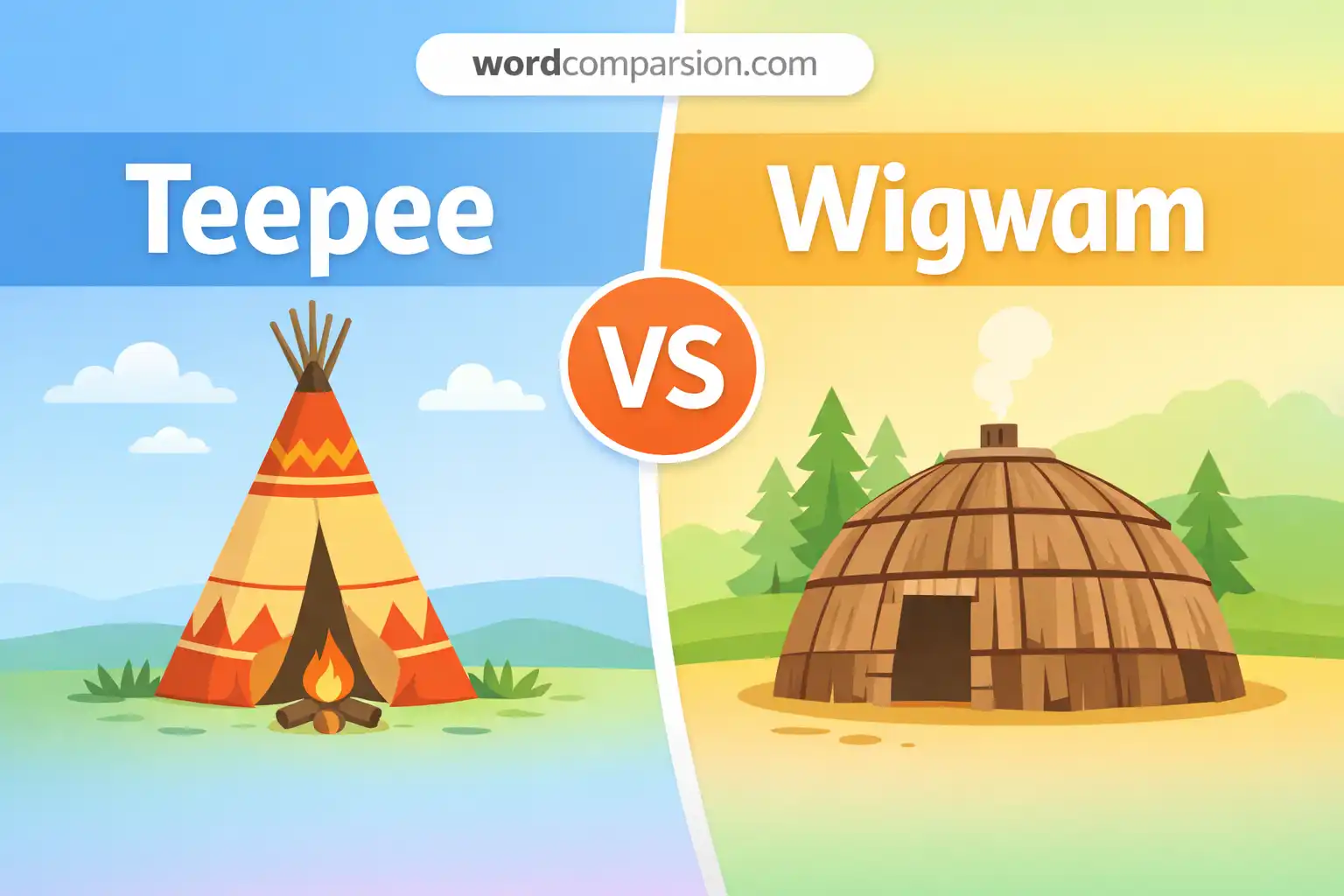
The difference between a teepee and a wigwam can be tricky. Both are types of homes used by Native American groups, but they are different in many ways. They have different shapes, materials, and ways of being used.
If you’re learning about history or just curious, it’s important to know when to use each word. This article will help you understand the difference, where these words come from, and how to use them correctly.
Many people mix up these words, but if you learn their history and design, you’ll be able to use them the right way. If you’ve ever wondered which word to use or why people get confused, this article will help you.
Teepee – Quick Answer
- Teepee: A conical-shaped tent traditionally used by Plains people, such as the Sioux and Cheyenne. It is made with a framework of poles and covered with animal hides or canvas.
- Wigwam: A domed shelter used by people from the Eastern Woodlands, such as the Algonquin. It is made from a framework of bent saplings, covered with bark or mats.
Quick Rule: Use teepee when referring to the conical structure used by Plains people, and wigwam when talking about the dome-shaped shelter used by people in the woodlands.
The Origin of Teepee and Wigwam
The teepee and wigwam each have unique origins. The teepee, sometimes spelled “tipi,” was developed by the Plains people, such as the Sioux, Cheyenne, and Arapaho. This type of shelter was designed for a nomadic lifestyle. The teepee’s conical shape allowed it to be quickly set up and taken down, which made it ideal for the nomadic lifestyle of these people, who moved frequently with the buffalo herds.
On the other hand, the wigwam comes from the Eastern Woodlands people, such as the Algonquin, Iroquois, and Powhatan. These people were more sedentary, living in permanent or semi-permanent villages, and their shelters reflected that. The wigwam has a rounded, domed shape, making it a stable structure that could withstand the harsh winters of the northeastern United States.
While both structures are associated with Native American people, they are geographically and culturally distinct. The teepee is linked to people of the Great Plains, while the wigwam is linked to those in the Eastern Woodlands.
British English vs American English Spelling
There is no difference in spelling between teepee and wigwam in British and American English. Both terms are spelled the same across regions.
However, there is a significant difference in the pronunciation of these words depending on the region. In some parts of the world, teepee might be pronounced slightly differently, but the spelling remains the same.
Which Spelling Should You Use?
For the most part, teepee and wigwam are used consistently across global and professional writing. There are no major spelling differences in British vs American English.
- For US English: Stick with teepee and wigwam when referring to the traditional structures.
- For UK English: Similarly, use teepee and wigwam, but the use may be less common unless discussing historical or cultural topics.
If you’re working on global content, use these terms based on their historical context, as regional differences are minimal.
Common Mistakes with Teepee vs Wigwam
Mistakes often arise from misidentifying the structures or confusing the terms:
- ❌ Incorrect: “The Sioux lived in wigwams made of hides.”
- ✅ Correct: “The Sioux lived in teepees made of hides.”
- ❌ Incorrect: “The Algonquin people used teepees for shelter.”
- ✅ Correct: “The Algonquin people used wigwams for shelter.”
Key Mistake to Avoid: Do not confuse the teepee with the wigwam. The teepee is conical and used by Plains people, while the wigwam is domed and used by Eastern people. They are not interchangeable.
Teepee vs Wigwam in Everyday Examples
Let’s look at how to use teepee and wigwam in real-life examples:
- Emails:
- “The teepee was the perfect shelter for the nomadic Plains people.”
- News:
- “Archaeologists discovered ancient wigwams in the forested region of New York.”
- Social Media:
- “Check out this teepee camping experience! A perfect throwback to ancient times.”
- Formal or Professional Writing:
- “The construction of wigwams was essential for the survival of Eastern people during harsh winters.”
In these contexts, make sure you choose the right word based on the people and shelter design.
Teepee vs Wigwam – Usage Patterns & Search Interest
The confusion around teepee vs wigwam is common among students, history enthusiasts, and those writing about Native American culture. Writers often confuse the two words because both are shelter types used by Native American people.
For example, someone might be researching historical shelters and mistakenly refer to a wigwam when they mean a teepee. This can create confusion in the audience’s mind, especially if the reader is unfamiliar with these terms.
However, teepee is generally more popular in search queries, as it is often associated with Western depictions of Native American culture in popular media. Wigwam, though historically significant, doesn’t appear as frequently in modern media representations of Native American life.
Comparison Table
| Feature | Teepee | Wigwam |
| Meaning | Conical tent used by Plains tribes | Domed shelter used by Eastern tribes |
| Part of Speech | Noun | Noun |
| Context of Use | Nomadic tribes of the Great Plains | Sedentary tribes of the Eastern Woodlands |
| Formal vs Informal | Informal and historical | Informal and historical |
| Common Mistakes | Misidentified as a wigwam | Confused with a teepee |
| Correct Example | “The Cheyenne built teepees for shelter.” | “The Algonquin lived in wigwams.” |
Semantic FAQs
- Is Teepee the same as Wigwam?
- No, a teepee is conical and used by Plains people, while a wigwam is domed and used by Eastern people.
- Which one is correct in formal writing?
- Both terms are used in historical contexts, but teepee is more common in popular culture, whereas wigwam is often used in academic or historical discussions.
- Can they be used interchangeably?
- No, teepee and wigwam should not be used interchangeably as they refer to different types of shelters.
- Why do people confuse them?
- Both are Native American shelters, and because they are both commonly seen in media, people often mix them up.
- Can grammar tools catch this mistake?
- Grammar tools may not catch this mistake, as the error is more related to historical accuracy than grammar.
- Is there a British vs American difference?
- No, the spelling of teepee and wigwam is the same in both British and American English.
Conclusion
In short, understanding the difference between teepee and wigwam is crucial for accurate writing about Native American culture. Always remember:
- Teepees are conical and used by Plains people.
- Wigwams are domed and used by Eastern people.
To avoid confusion, make sure you use these terms based on the correct people and shelter design. Teepee is linked to nomadic, Plains people, while wigwam belongs to the more settled, Eastern people. By following these distinctions, your writing will be clear, accurate, and respectful of Native American culture.

James Holloway writes detailed guides on confusing English words and grammar usage with clear side-by-side comparisons.