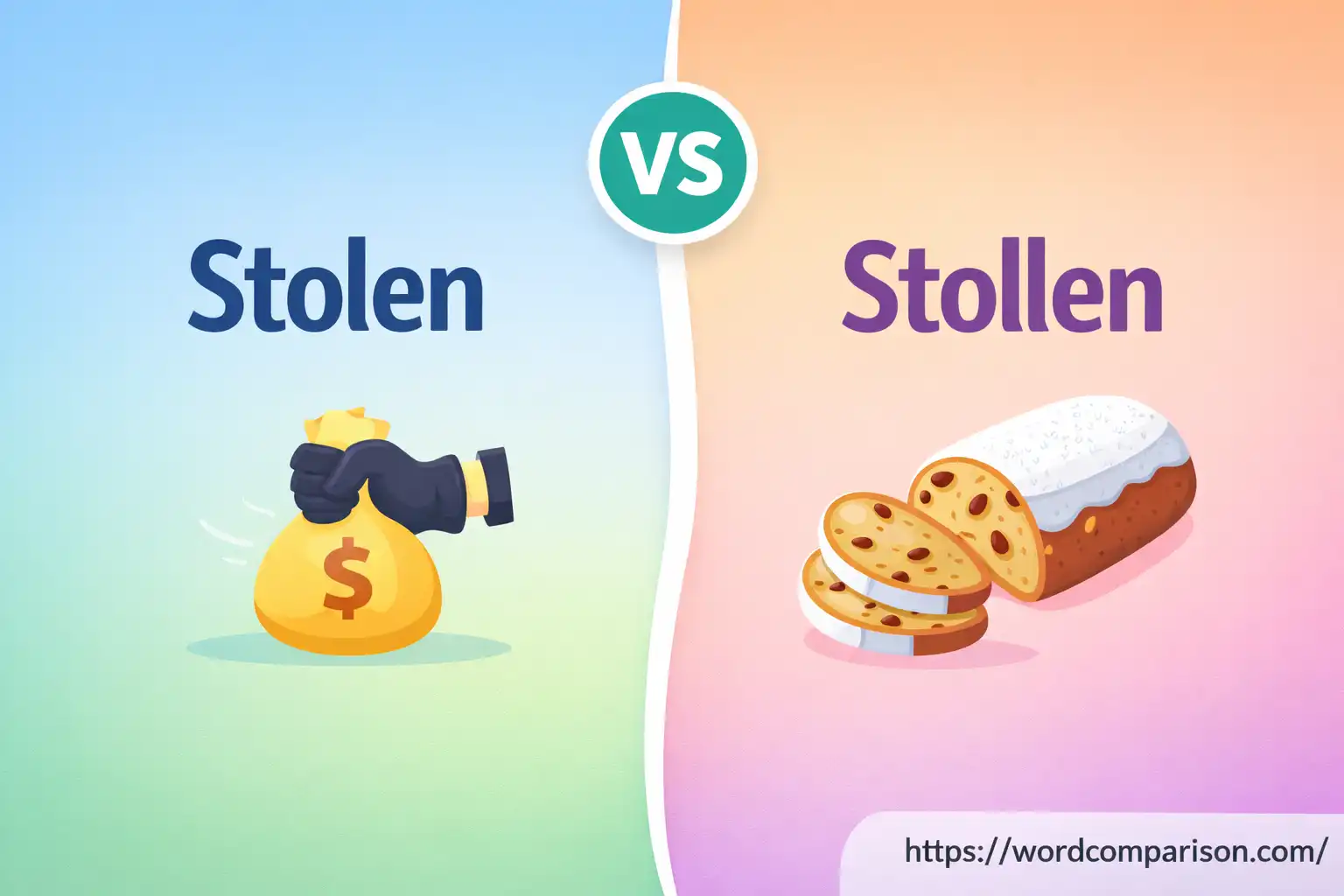
Many people search for “stolen or stollen” because these two words look almost the same but mean very different things. One spelling is common in daily English, especially in news, emails, and legal writing. The other spelling often appears in food-related content, recipes, and holiday traditions. This small spelling difference can completely change the meaning of a sentence.
The confusion usually happens when someone hears the word instead of seeing it written. Since stolen and stollen sound similar, writers are unsure which one is correct. This matters for students, bloggers, journalists, and anyone writing professional or SEO content. Using the wrong word can confuse readers and reduce credibility.
This guide clears up that confusion in a simple way. You will get a quick answer, learn the origin of both words, see British vs American usage, and understand which spelling you should use for your audience. By the end, you will know exactly when to use stolen and when stollen is the right choice. For more quick side-by-side checks, browse the “word comparison hub“.
Stolen or Stollen – Quick Answer
Stolen is the correct spelling when you mean something taken illegally.
Stollen is correct only when talking about a traditional German fruit bread.
Examples:
- My phone was stolen yesterday.
- We ate stollen during Christmas.
The Origin of Stolen or Stollen
The word stolen comes from Old English stelan, meaning “to take secretly.” It is the past participle of the verb steal.
The word stollen comes from German. It refers to Christstollen, a rich fruit bread eaten during Christmas. It has nothing to do with theft.
The spelling difference exists because these words come from different languages and different meanings, even though they sound similar in English.
For similar mix-ups, visit the “commonly confused words” pillar page.
British English vs American English Spelling
There is no spelling difference between British and American English for this word.
Both use:
- Stolen → past participle of steal
- Stollen → German bread
Comparison Table
| Meaning | British English | American English |
| Taken illegally | stolen | stolen |
| German fruit bread | stollen | stollen |
Which Spelling Should You Use?
Use stolen if:
- You are writing news, emails, blogs, or legal content
- You mean theft or illegal taking
- Your audience is global, US, UK, or Commonwealth
Use stollen only if:
- You are writing about food or recipes
- You mean German Christmas bread
- Your content is culinary or cultural
Tip: If it is not about food, use stolen.
Common Mistakes with Stolen or Stollen
Here are frequent errors people make:
❌ My car was stollen last night.
✅ My car was stolen last night.
❌ I reported the stollen items to police.
✅ I reported the stolen items to police.
Stolen or Stollen in Everyday Examples
Emails
- My laptop was stolen from the office.
News
- Police recovered stolen vehicles.
Social Media
- Someone stolen my bike ❌
- Someone stole my bike ✅
Formal Writing
- The court ordered the return of stolen property.
Food Writing
- This bakery sells traditional German stollen.
Stolen or Stollen – Google Trends & Usage Data
Search interest for stolen is high worldwide because it is used in daily language, news, and legal topics.
Search interest for stollen increases mainly:
- In Germany
- In December
- Around Christmas and baking seasons
Most searches for “stolen or stollen” come from people checking the correct spelling, not food recipes. If you’re comparing similar terms, our “how to use coma or comma” article can help.
Comparison Table: Stolen vs Stollen
| Word | Meaning | Usage | Common Context |
| stolen | Taken illegally | Very common | News, law, daily English |
| stollen | German bread | Rare | Food, Christmas, baking |
FAQs
1. Is “stollen” ever correct in English?
Yes, but only for German Christmas bread.
2. Is “stolen” American or British English?
It is correct in both.
3. Can “stollen” mean stolen goods?
No. That is always wrong.
4. Why do people confuse stolen and stollen?
They sound similar but come from different languages.
5. Which spelling should I use for SEO content?
Use stolen, unless writing about food.
6. Is “stolen” a verb or adjective?
It can be both, depending on the sentence.
7. Does “stollen” have a plural form?
Yes. The plural is stollens.
Conclusion
The confusion between stolen or stollen is common, but the rule is simple. Stolen is the correct spelling when something is taken illegally. It is used in everyday English, news reports, emails, and professional writing. This spelling works in both British and American English, making it safe for global audiences.
Stollen, on the other hand, has only one meaning. It refers to a traditional German fruit bread, usually connected with Christmas. If your sentence has nothing to do with food, baking, or German culture, stollen is wrong.
To avoid mistakes, always check the context. Ask yourself one question: Am I talking about theft or food? That single check will help you choose the correct word every time and keep your writing clear, professional, and accurate.
Related reading: see “manor or manner” for another commonly mixed-up pair.

James Holloway writes detailed guides on confusing English words and grammar usage with clear side-by-side comparisons.