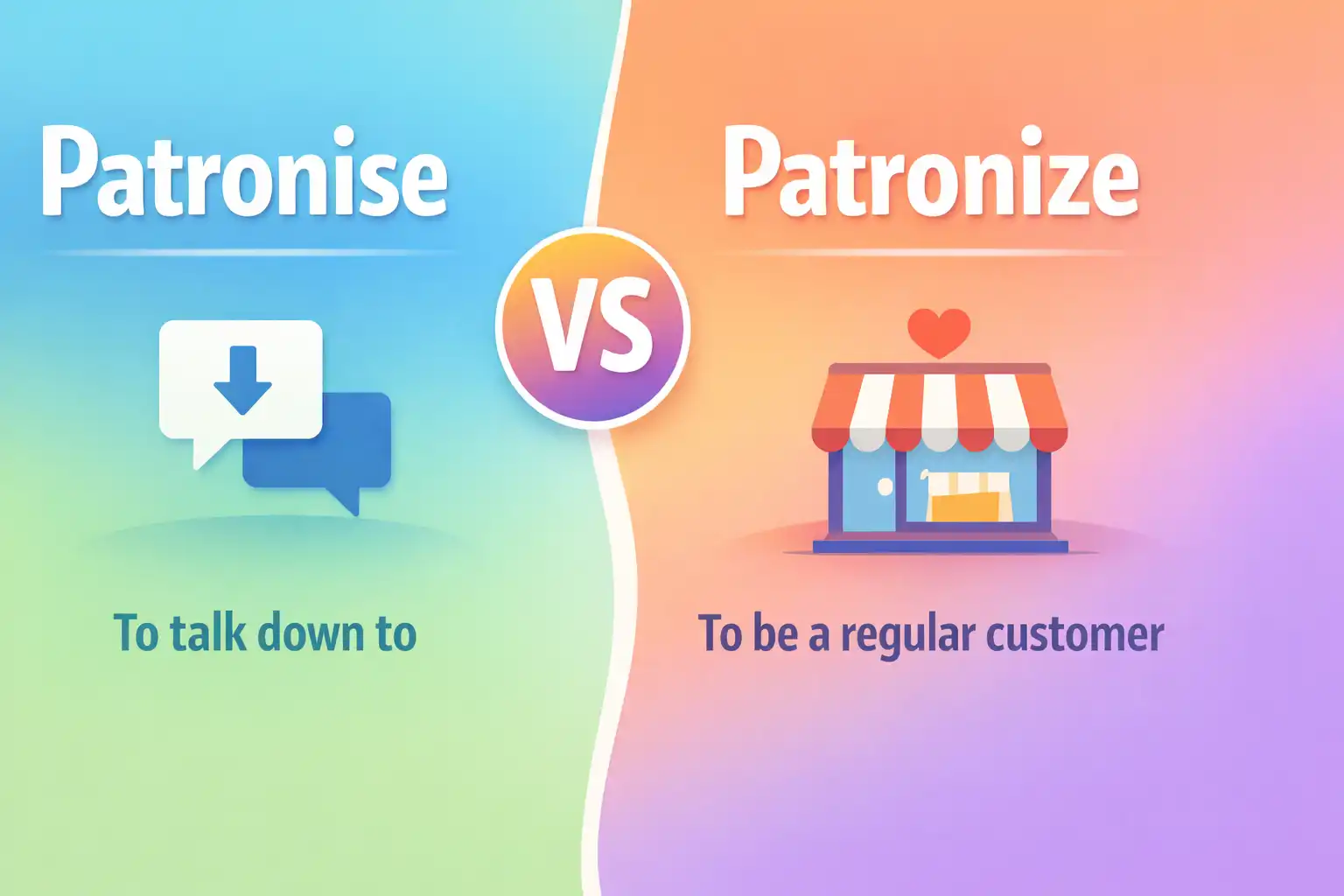
Patronise vs Patronize: Why People Get Confused
Many English learners stop and think when they see the words patronise and patronize. They look almost the same, but the spelling changes slightly. So people often ask: Which one is correct? Is it patronise or patronize?
This confusion happens because English has two major spelling systems: British English and American English. Some words change their endings depending on where the English is used. Because of this, writers sometimes mix the two forms.
Another reason for confusion is meaning. The word patronize can have both a neutral meaning and a negative one. In some contexts it means to support a business. In others, it means to treat someone as if they are less intelligent.
So it is easy to make mistakes, especially for students, ESL learners, and global writers.
In this guide, you will learn:
- The real difference between patronise vs patronize
- Which spelling is correct in UK vs US English
- How to use the word correctly in real situations
- Common mistakes people make
- Simple rules to choose the right spelling fast
By the end, the confusion around patronise vs patronize will be clear.
Patronise vs Patronize – Quick Answer
Meaning of patronise vs patronize
Both words have the same meaning. The only difference is spelling.
- Patronize → American English spelling
- Patronise → British English spelling
Common meanings:
- To support a business or service
- To talk to someone as if they are less intelligent
Examples
- I always patronize local restaurants.
- She felt he was patronising her during the meeting.
Easy rule:
Use patronize in American English and patronise in British English.
The Origin of patronise vs patronize
The word patronize comes from the Latin word patronus, which means protector or supporter. A patron was someone who supported artists, businesses, or communities.
Later, the word moved into French as patroniser, and then into English during the 16th century.
Originally, the meaning was positive. It meant:
- To support someone
- To provide help or protection
- To give business to a shop or service
Over time, a second meaning appeared. If a powerful person supported someone in a controlling way, it could feel insulting. So the word started to mean:
- Treating someone as if they are less capable
- Talking down to someone
Today, both meanings still exist.
That is why people sometimes ask “is patronize good or bad?” The answer depends on the context.
Reason for confusion today
There are three main reasons why patronise vs patronize confuses people.
1. Two English spelling systems
American English often uses -ize endings, while British English often uses -ise endings.
Examples:
| American | British |
| organize | organise |
| recognize | recognise |
| patronize | patronise |
Because of this pattern, people sometimes mix the spellings.
2. Dual meaning
The word has both positive and negative meanings:
Positive meaning
- Supporting a business
Negative meaning
- Talking down to someone
This makes the word tricky.
3. Global English writing
Today many writers use international English online. Blogs, social media, and global companies mix spelling styles.
So readers often see both versions.
British English vs American English Spelling
The key difference in patronise vs patronize is spelling only.
The meaning stays the same.
American English
Use patronize.
Example:
- Many people patronize small businesses in their neighborhood.
British English
Use patronise.
Example:
- The community patronises local cafés.
Simple comparison
| Style | Correct Spelling |
| American English | patronize |
| British English | patronise |
Both are correct. They simply belong to different spelling systems.
How to Choose the Right Word Fast
If you are unsure which spelling to use, follow this quick guide.
US audience
Use patronize.
American publications, schools, and companies prefer -ize spelling.
Example:
- Customers often patronize small shops.
UK / Commonwealth audience
Use patronise.
Countries that follow British English often prefer -ise endings.
Example:
- Many locals patronise independent bookstores.
Global or professional writing
Either spelling works, but stay consistent.
Choose one style and use it throughout your document.
Many international companies choose American spelling because it is widely used online.
Common Mistakes with patronise vs patronize
Here are mistakes writers often make.
Mixing spelling styles
❌ Incorrect
She likes to patronise local stores in New York.
✅ Correct
She likes to patronize local stores in New York.
Explanation: American context → use patronize.
Using the wrong tone
❌ Incorrect
He patronized the restaurant last night. (when you mean insult)
✅ Correct
He patronized her during the meeting.
Explanation: The word can describe condescending behavior, not only business support.
Confusing patron with patronize
❌ Incorrect
He is a patronize of the museum.
✅ Correct
He is a patron of the museum.
Explanation:
Patron is a noun.
Patronize is a verb.
Patronise vs Patronize in Everyday Examples
Here is how the word appears in real situations.
Emails
Example:
We encourage employees to patronize local businesses during community events.
News writing
Example:
Residents continue to patronise small markets despite rising prices.
Social media
Example:
Please support small creators. Patronize local artists!
Professional writing
Example:
Customers who patronize independent bookstores help sustain local culture.
Negative tone example
Example:
She felt the manager was patronizing her during the discussion.
This shows the insulting meaning of the word.
Patronise vs Patronize – Usage Patterns & Search Interest
Many people search for patronise vs patronize because spelling differences cause confusion.
Who searches for it?
Common groups include:
- ESL learners
- Students studying English grammar
- Writers and bloggers
- Professionals writing global content
General search trend
Search interest stays steady because spelling questions appear frequently in English learning.
Users often search:
- patronise or patronize meaning
- patronise or patronize which is correct
- patronise meaning in Urdu
Real-world confusion example
Imagine a British company writing marketing text using patronize.
British readers may think it looks American. This can make the content feel less local.
So choosing the correct spelling improves clarity and trust.
Comparison Table
| Feature | Patronise | Patronize |
| Meaning | Support a business or talk down to someone | Same meaning |
| Part of speech | Verb | Verb |
| Context of use | British English writing | American English writing |
| Formal vs informal | Used in both | Used in both |
| Common mistake | Using it in US writing | Mixing spelling styles |
| Correct example | People patronise local shops. | People patronize local shops. |
This table shows the only real difference is spelling.
People Also Ask (FAQs)
Is it patronize or patronise?
Both are correct. Patronize is American English, while patronise is British English.
What does patronize my girl mean?
It usually means someone is talking down to her or treating her as if she is less intelligent.
What is another word for patronizing someone?
Common synonyms include condescending, belittling, talking down to, or being dismissive.
Is patronize a bad word?
Not always. It can mean supporting a business, which is positive. But it can also mean talking down to someone, which is negative.
Is patronizing an insult?
Yes, it can be. If someone speaks to you as if you are less capable, it may feel insulting.
What are the synonyms of patronize?
Possible synonyms include:
- support
- sponsor
- condescend
- belittle
The correct synonym depends on the context.
Is patronize the same as condescend?
They are similar but not identical. Condescend always has a negative meaning, while patronize can also mean supporting a business.
Which one is correct in formal writing?
Both are correct. Use patronize for American English and patronise for British English.
Conclusion
The confusion around patronise vs patronize mostly comes from English spelling differences.
Both words have the same meaning and come from the same historical origin. The only difference is spelling style.
Use this simple guide:
- Patronize → American English
- Patronise → British English
The word itself has two meanings. It can mean supporting a business, which is positive. But it can also mean talking down to someone, which is negative.
Many writers also confuse the verb patronize with the noun patron, so it is important to know the difference.
Overall, the best way to avoid mistakes is to match the spelling with your audience and keep it consistent.
Easy rule to remember:
If your audience is American, use patronize. If your audience is British, use patronise.
Meta Description:
SEO Title:

James Holloway writes detailed guides on confusing English words and grammar usage with clear side-by-side comparisons.