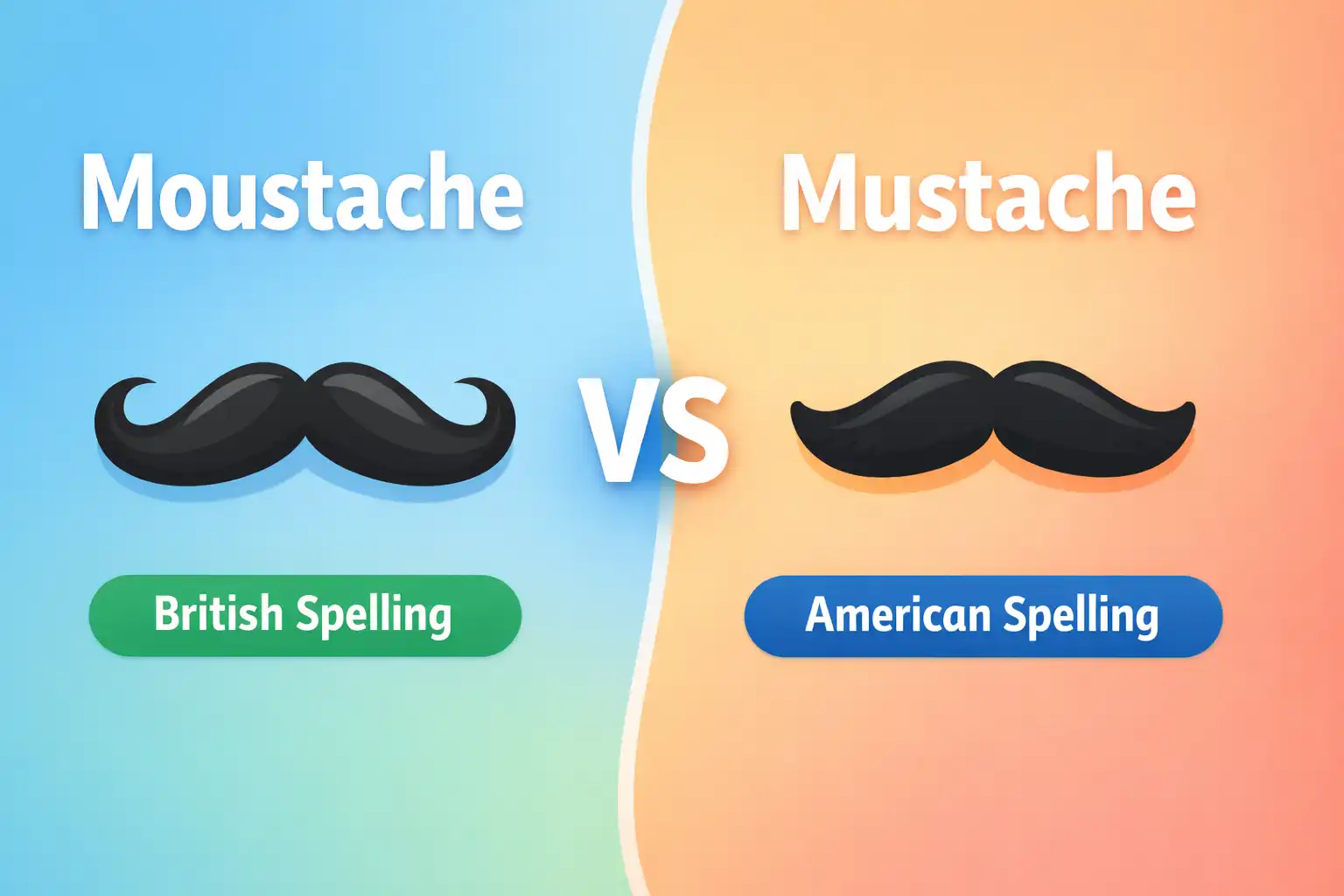
Moustache vs Mustache: Why People Get Confused
Many people feel confused when they see the words moustache and mustache. Both appear in books, blogs, and social media. Some writers use moustache, while others write mustache. So people often ask: Which spelling is correct? And also: Do they mean different things?
The confusion happens because English has different spelling traditions. American English prefers simpler spellings, but British English often keeps older forms. Because of this, one word can appear in two ways.
This guide explains moustache vs mustache in a very clear way. You will learn the history of the word, why the spellings differ, and how people use them today. We will also look at pronunciation, common mistakes, and real examples from everyday writing.
By the end, you will know exactly when to use moustache and when to use mustache, so you can write with confidence.
Moustache vs Mustache – Quick Answer
Meaning of moustache vs mustache
Both moustache and mustache mean the same thing.
- Hair that grows above the upper lip
- A style of facial hair
Examples:
- “He grew a thick mustache.”
- “His curly moustache became famous.”
Simple rule:
Use mustache in American English. Use moustache in British English.
The Origin of moustache vs mustache
The word comes from the French word “moustache.” French borrowed it from older Italian and Greek words related to the upper lip.
Early English writers used the French spelling moustache. This happened in the 1500s and 1600s when many French words entered English.
Later, American English started simplifying spelling. Writers dropped some silent letters. Because of this change, mustache became common in the United States.
So the difference did not come from meaning. It came from spelling traditions.
Both forms still exist today, and both are correct.
Why Moustache and Mustache Cause Confusion Today
The internet mixes many types of English. A reader may see American websites, British news, and global blogs on the same page.
Because of this mix, people often notice two spellings for the same word.
Other reasons also create confusion:
- Spell-check tools may suggest one version only
- Movies and media from different countries use different spellings
- Students learn British spelling in some schools but American spelling online
So readers often search “moustache vs mustache meaning” or ask which one is correct.
In reality, the difference is only regional spelling.
British English vs American English Spelling
The main difference between moustache vs mustache is spelling style.
American English prefers shorter words. British English keeps older forms.
Basic spelling rule
- Mustache → American English
- Moustache → British English
US vs UK Examples
American style
- He shaved his mustache yesterday.
- His mustache styles are very trendy.
British style
- He trimmed his moustache before work.
- The actor has a thick moustache.
Simple comparison
| English Type | Preferred Spelling |
| American English | Mustache |
| British English | Moustache |
| Canadian English | Often moustache |
| Australian English | Usually moustache |
The meaning does not change. Only the spelling changes.
How to Choose the Right Word Fast
You can choose the correct spelling quickly by thinking about your audience.
US
Use mustache.
American newspapers, blogs, and academic writing mostly use this spelling.
Example:
“His thick mustache became his trademark.”
UK / Commonwealth
Use moustache.
Writers in the UK, Australia, and many Commonwealth countries keep the traditional spelling.
Example:
“The gentleman twisted his long moustache.”
Global or professional writing
If your audience is international, either spelling is acceptable. But consistency matters.
Choose one style and use it throughout the text.
For example:
If your article starts with mustache, continue with mustache.
Do not mix both forms randomly.
Common Mistakes with moustache vs mustache
People often make small errors when writing this word.
Mixing spellings in one text
❌ Incorrect: He shaved his moustache, but his mustache grew back quickly.
✅ Correct: He shaved his mustache, but it grew back quickly.
Use one style only.
Using the wrong regional style
❌ Incorrect (American article): His curled moustache became popular.
✅ Correct: His curled mustache became popular.
Spelling errors
❌ Incorrect → mustash
✅ Correct → mustache
❌ Incorrect → moustashe
✅ Correct → moustache
Confusing with beard
❌ Incorrect: He shaved his beard but kept his beard above the lip.
✅ Correct: He shaved his beard but kept his mustache.
A beard grows on the chin and cheeks. A mustache grows above the lip.
Moustache vs Mustache in Everyday Examples
Emails
“Please remove the fake mustache before the photo shoot.”
News writing
“The actor’s signature moustache became a style trend.”
Social media
“Trying new mustache styles today!”
Professional writing
“The historical portrait shows a man with a thin moustache and formal clothing.”
Style references
Some mustache styles include:
- Handlebar mustache
- Pencil mustache
- Toothbrush mustache
The toothbrush mustache became controversial in history because Adolf Hitler wore it.
Moustache vs Mustache – Usage Patterns & Search Interest
Search trends show that mustache appears more often online. This happens because many websites follow American spelling.
However, moustache remains common in:
- British news articles
- Academic writing in the UK
- Literature and historical texts
Typical users searching this topic
Many groups search moustache vs mustache:
- ESL learners
- Students studying English spelling
- Writers and bloggers
- Editors checking grammar
Example of real confusion
A student writing for a British university might type mustache. Their teacher may expect moustache. This small spelling difference can cause confusion in assignments.
So understanding regional spelling helps avoid mistakes.
Comparison Table
| Feature | Mustache | Moustache |
| Meaning | Hair above the upper lip | Same meaning |
| Part of Speech | Noun | Noun |
| Context of Use | American English writing | British English writing |
| Formal vs Informal | Used in both | Used in both |
| Common Mistakes | Misspelling as “mustash” | Misspelling as “moustashe” |
| Correct Example | He trimmed his mustache. | He trimmed his moustache. |
This table shows that the only real difference is regional spelling.
People Also Ask (FAQs)
What’s the difference between a mustache and a moustache?
There is no difference in meaning. Both words describe hair that grows above the upper lip. The only difference is spelling. Mustache is American English, while moustache is British English.
What is a female mustache called?
People sometimes use the same word, mustache or moustache, for facial hair above the lip in women. Some informal phrases include “upper lip hair.”
How do the British pronounce moustache?
In British English, moustache is usually pronounced “muh-stahsh.” The pronunciation is very similar to the American word mustache.
Is it stache or stach?
The informal slang is “stache.” It is short for mustache. The spelling stach is uncommon and usually incorrect.
Is mustache or moustache correct?
Both are correct. The choice depends on the type of English you use. American English prefers mustache, while British English prefers moustache.
What was Hitler’s moustache style called?
It was called the toothbrush mustache. This style is small and square above the center of the lip.
Is moustache the same as beard?
No. A moustache grows above the upper lip. A beard grows on the chin, jaw, and cheeks.
Which one is correct in formal writing?
Both spellings are correct in formal writing. The key rule is consistency. Use mustache for American style and moustache for British style.
Is moustache vs mustache just a spelling difference?
Yes. The meaning, pronunciation, and usage remain the same. Only the spelling changes between regional English styles.
Moustache vs Mustache: Final Answer
The debate around moustache vs mustache is simpler than it looks. Both words describe the same thing: hair that grows above the upper lip. The only difference comes from regional spelling traditions.
American English simplified the spelling to mustache, while British English kept the older form moustache. Because the internet mixes both types of English, people often see both versions online.
When choosing the correct word, think about your audience. Use mustache for American readers and moustache for British or Commonwealth readers. In global writing, either spelling works as long as you stay consistent.
One mistake to avoid is mixing both spellings in the same piece of writing. That can look unprofessional and confuse readers.
Overall, the rule is easy to remember:
American English = mustache. British English = moustache.
Meta Description
SEO Title:

James Holloway writes detailed guides on confusing English words and grammar usage with clear side-by-side comparisons.