Many people feel confused when they see the words mamma and mama. Both words look almost the same. Both can refer to a mother. But the spelling changes in different places and situations. Because of this, many writers ask: Which spelling is correct?
The confusion happens because English borrows words from many languages. For example, mamma appears in Italian phrases like mamma mia. At the same time, mama is a very common English word used by children and families. Social media, regional speech, and culture also affect which form people use. In the southern United States, people often say momma. In the UK, people usually say mum instead.
So readers often search for answers about mamma vs mama pronunciation, spelling rules, and cultural use.
In this guide, you will learn the simple difference between mamma vs mama, their origin, where each spelling appears, and how to choose the right word fast. You will also see real examples from everyday writing.
Mamma vs Mama – Quick Answer
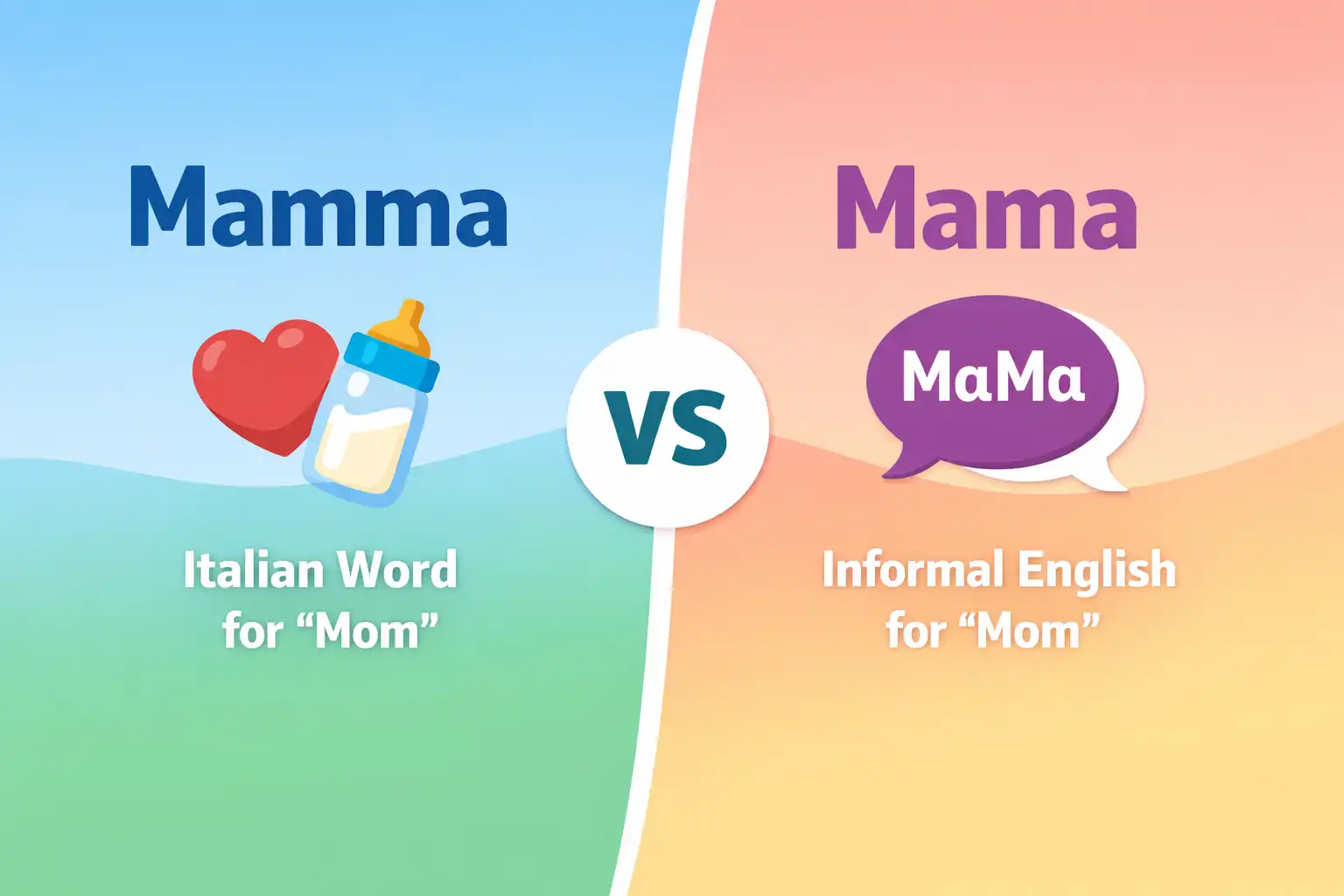
Mama and mamma both refer to a mother, but they come from different language traditions.
- Mama – common English spelling for “mother,” especially in speech by children.
- Mamma – older or European spelling, often seen in Italian expressions like mamma mia.
- Example: “Mama, look at this!”
- Example: “Mamma mia!”
Easy rule: Use mama in everyday English writing.
Meaning of mamma vs mama
Both words express a close or affectionate way to say mother. They usually appear in informal speech, family conversation, and cultural phrases.
The Origin of mamma vs mama (simple history)
The story of mamma vs mama starts long before modern English.
Many languages developed similar words for “mother.” Babies naturally make soft sounds like ma, mama, or amma. Because of this, many cultures created similar terms for mothers.
In Latin, the word mamma meant breast or mother. This Latin root influenced many European languages.
Italian kept the spelling mamma, which is why people say “mamma mia.”
English later simplified the spelling to mama in most cases.
So the two forms share the same history but developed differently across languages.
Mamma Etymology
- Latin: mamma (breast or mother)
- Italian: mamma (mother)
- English: mama (informal word for mother)
Mamma in Anatomy
In medical language, mamma refers to the breast or mammary gland. This is where the scientific word mammal also comes from. However, this meaning is mostly used in science, not everyday speech.
Reason for confusion today
Today, the internet mixes many writing styles. People read posts from different countries and cultures. Because of this, spellings blend together.
For example:
- Italian phrases use mamma
- English families usually write mama
- Southern US speech often uses momma
Online discussions like momma or mama reddit show that many people debate which spelling feels natural.
So the confusion comes from language history, culture, and personal preference.
British English vs American English Spelling
The difference between mamma vs mama is not exactly the same as many British vs American spelling differences.
In most modern English writing, mama is the common form.
British English does not usually use mamma either. Instead, British speakers often say mum.
Common patterns
American English
- mama
- mom
- momma (regional)
British English
- mum
- mummy
Short examples
American style:
“Tell mama dinner is ready.”
British style:
“Mum is calling you.”
Italian expression:
“Mamma mia, that was amazing!”
Quick comparison
| Style | Typical Word |
| American English | mama |
| Southern US | momma |
| British English | mum |
| Italian phrase | mamma |
So the spelling difference often depends on language background, not strict grammar rules.
How to Choose the Right Word Fast
Choosing the right spelling becomes easy when you think about the audience.
US
Use mama in normal writing.
Example:
“My mama taught me that.”
In southern dialects, people also write momma.
UK / Commonwealth
Writers rarely use mama or mamma. Instead, they prefer mum.
Example:
“I will call my mum later.”
Global or professional writing
Use mother in formal contexts.
Example:
“The child and his mother attended the event.”
If you write about Italian culture, use mamma only in phrases like mamma mia.
Common Mistakes with mamma vs mama
Writers sometimes mix the spellings or use them in the wrong context.
Frequent errors
❌ Incorrect → ✅ Correct
❌ My mamma is picking me up from school.
✅ My mama is picking me up from school.
Explanation: Everyday English usually uses mama, not mamma.
❌ Mama mia!
✅ Mamma mia!
Explanation: The Italian phrase keeps the original spelling.
❌ The baby cried for his mamma in American English writing.
✅ The baby cried for his mama.
Explanation: Use mama in standard American writing.
Small spelling details like this help writing look natural and consistent.
Mamma vs Mama in Everyday Examples
Emails
“Hi Mom, I will visit you and mama this weekend.”
News
“The child ran toward his mama after the event.”
Social media
“Happy birthday to the best mama ever!”
Formal or professional writing
“The child and his mother attended the ceremony.”
In professional contexts, writers usually avoid both mama and mamma.
Mamma vs Mama – Usage Patterns & Search Interest
Online searches show that people often compare mamma vs mama pronunciation and spelling.
Many users searching for this topic include:
- ESL learners
- students learning English
- writers checking spelling
- parents choosing how children address them
Search discussions like mama or momma in the south show strong regional differences.
For example, a Southern US writer may type momma, while someone from another region writes mama.
Real-world confusion example
A writer describing an Italian restaurant might write:
“Mama mia!”
But the correct cultural phrase is “Mamma mia!”
This small spelling change matters because it connects to the original Italian language.
Comparison Table
| Feature | Mama | Mamma |
| Meaning | Informal word for mother | Italian spelling of mother |
| Part of speech | Noun | Noun |
| Context of use | Everyday English speech | Italian expressions or historical form |
| Formal vs informal usage | Informal | Informal / cultural |
| Common mistakes | Confused with mamma spelling | Used in normal English sentences |
| Correct example | “My mama is cooking dinner.” | “Mamma mia, that is surprising!” |
This table shows that mama is the usual English choice, while mamma appears mainly in Italian contexts.
People Also Ask (FAQs)
Is it spelled mamma or mama?
Both spellings exist, but mama is the common English spelling. Mamma mainly appears in Italian phrases or older language forms.
Is mamma one M or two?
Mamma has two “m” letters in the middle. However, everyday English writing usually uses mama.
Does mamma mean breast?
In Latin and medical language, mamma refers to the breast or mammary gland. This meaning appears mostly in scientific contexts.
Is it mama or mamma mia?
The correct phrase is “mamma mia.” It is an Italian expression meaning surprise or shock.
Is it mama or mamma in the UK?
People in the UK rarely use either spelling. They usually say mum or mummy instead.
Why do Italians say mamma?
Italian kept the traditional spelling mamma for mother. The word comes from Latin roots related to family and nurturing.
How do you spell mamma for grandma?
Some families spell mama, mamma, or momma for a grandmother. The spelling depends on family preference rather than strict grammar.
What does “mamma mia” mean?
Mamma mia is an Italian expression that shows surprise, excitement, or shock.
Which one is correct in formal writing?
Neither mama nor mamma usually appears in formal writing. Writers normally use mother instead.
Conclusion
The difference between mamma vs mama is simple once you understand the history and context.
Both words come from early sounds children make for their mothers. Over time, languages shaped the spelling in different ways. English settled on mama for everyday use, while Italian kept mamma.
Today, mama appears in casual English conversation, family speech, and social media. Mamma mostly appears in Italian phrases like mamma mia or in historical references.
Regional speech also plays a role. In the southern United States, people often prefer momma, while the UK uses mum.
The biggest mistake people make is using mamma in normal English sentences. That spelling usually belongs to Italian expressions.
Overall, both words share the same meaning, but their usage differs by language and context.
Easy rule to remember:
Use mama in everyday English writing, and keep mamma for Italian phrases like mamma mia.

James Holloway writes detailed guides on confusing English words and grammar usage with clear side-by-side comparisons.