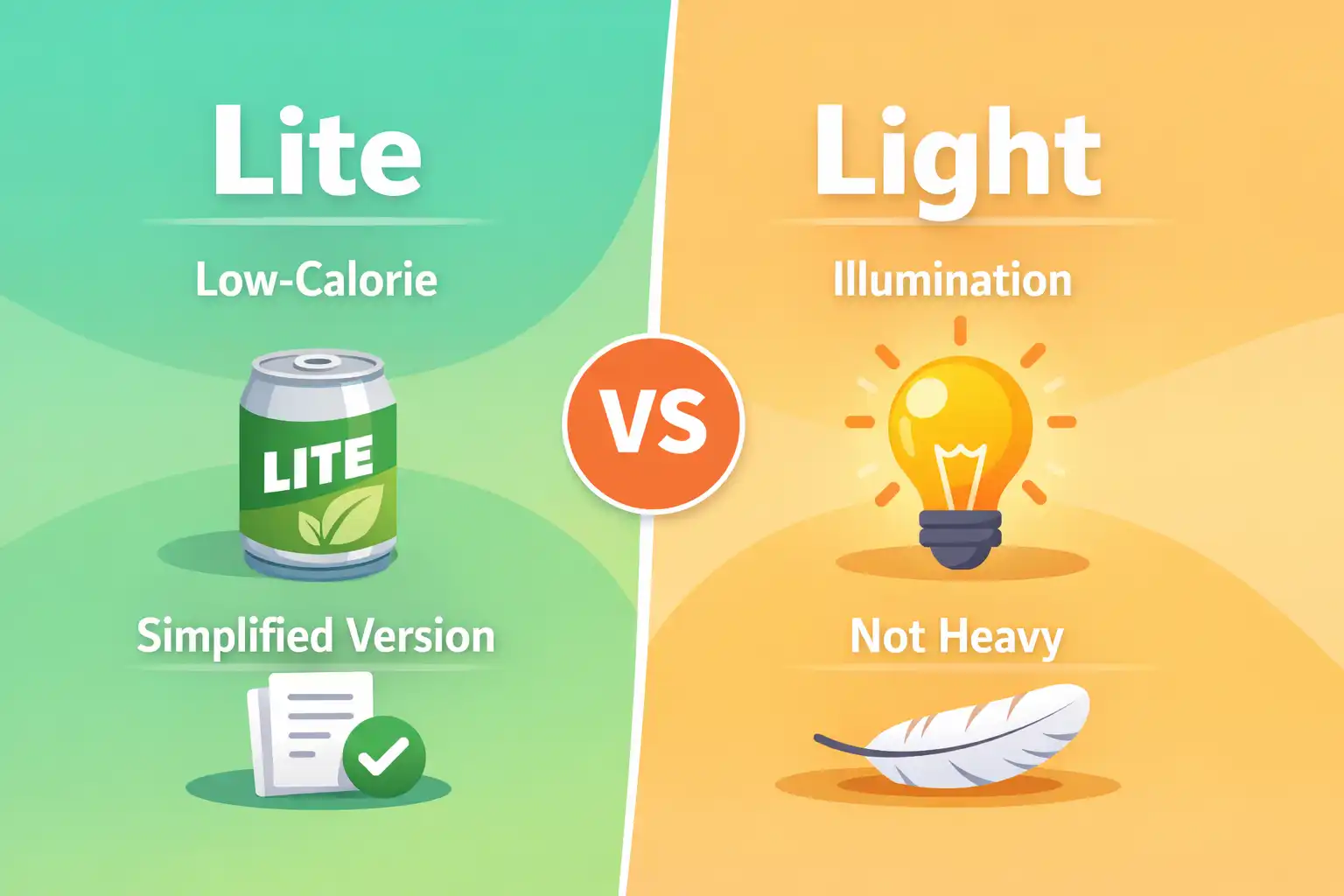
Many people see lite and light and think they mean the same thing. At first glance, they look almost identical. So, confusion is very common. You may see “lite version” in apps, or “light food” on packaging, and wonder if they follow the same rule.
This confusion matters because the wrong word can change your meaning. For example, in writing or professional work, using “lite” instead of “light” can look informal or even incorrect. On the other hand, using “light” in branding may miss the intended tone.
In this guide, you will learn the clear difference between lite vs light, when to use each word, and how to avoid common mistakes. The goal is simple: help you choose the right word fast and with confidence.
Lite vs Light – Quick Answer
Meaning of Lite
- A simplified or reduced version of something
- Often used in branding, apps, or marketing
- Suggests fewer features or lower intensity
Examples:
- This is the lite version of the app
- I use a lite plan to save data
Meaning of Light
- Refers to weight, brightness, or low amount
- Used in normal English writing and speech
- Works in both formal and informal contexts
Examples:
- This bag is light
- I prefer light food at night
Easy Rule:
Use light for real meaning and correct English. Use lite only for branding or informal tone.
The Origin of Lite vs Light
The word light comes from Old English. It has been used for hundreds of years. It describes things that are not heavy, not dark, or not intense. Over time, it became a common and correct English word in all types of writing.
However, lite is much newer. It appeared in the 20th century, mainly in advertising. Companies started using “lite” to make products sound modern and simple. For example, food brands used it to suggest fewer calories.
So, the key point is simple. Light is original and correct, while lite is a creative spelling made for marketing.
Because both words sound the same, confusion happens today. Many learners think they are interchangeable, but that is not true in most cases.
British vs American English Spelling
There is no major difference between British and American English for these words.
Both regions use:
- Light as the correct spelling
- Lite only in informal or branded use
Here is a simple comparison:
| Aspect | Light | Lite |
| Standard English | Yes | No |
| Used in UK | Yes | Rare |
| Used in US | Yes | Common in ads |
| Formal writing | Correct | Not correct |
However, in contrast, American brands use “lite” more often than British ones. Still, in formal writing, both prefer “light.”
How to Choose the Right Word Fast
Choosing between lite vs light is easy when you follow simple rules.
For US users:
- Use light in essays, emails, and reports
- Use lite only in product names or apps
For UK / Commonwealth users:
- Always prefer light
- Avoid lite unless it is a brand name
Global or professional writing:
- Always choose light
- It is safe, correct, and widely accepted
If there is no branding purpose, then “lite” is usually not needed.
Common Mistakes with Lite vs Light
Writers often confuse these words because they sound the same. But the usage is different.
❌ Incorrect → ✅ Correct
- ❌ This bag is very lite → ✅ This bag is very light
- ❌ I like lite meals → ✅ I like light meals
- ❌ Use the lite to see → ✅ Use the light to see
Explanation:
- “Lite” does not describe weight or brightness
- “Light” handles all real meanings
Another mistake is overusing “lite” to sound modern. However, editors usually see this as informal or incorrect.
Lite vs Light in Real Life Examples
Now let’s see how these words work in daily life.
Emails:
- Please send me the light version of the document
- We offer a lite plan for new users
News:
- The room had soft light
- The company launched a lite app
Social Media:
- I prefer light snacks
- Try our new lite version today
Professional Writing:
- Use clear and light language
- Avoid using “lite” unless it is a brand
So, context matters a lot. “Light” fits almost everywhere, while “lite” fits only specific cases.
Lite vs Light – Word Usage Patterns and Search Trends
In general, light is far more common. Students, writers, and professionals use it daily. It appears in books, articles, and formal writing.
On the other hand, lite is popular in:
- App names
- Software versions
- Food marketing
Many ESL learners search for “lite vs light” because they see both online. The confusion grows when apps and brands use “lite” frequently.
A real-world issue can happen in writing. For example, if a student writes “lite weight,” it looks incorrect. This can affect clarity and impression.
Comparison Table: Lite vs Light
| Feature | Lite | Light |
| Meaning | Simplified or reduced version | Not heavy, bright, or low amount |
| Part of Speech | Informal adjective | Standard adjective and noun |
| Context of Use | Branding, marketing | Everyday English |
| Formal vs Informal | Informal | Formal and informal |
| Common Mistake | Used in normal writing | Rarely misused |
| Correct Example | Lite version available | This bag is light |
This table helps remove confusion quickly.
FAQs About Lite vs Light
Is lite the same as light?
No. Lite is informal and used in branding. Light is the correct standard word.
Which one is correct in formal writing?
Light is correct. Avoid lite in formal writing.
Can they be used interchangeably?
No. Use light for real meaning. Use lite only for style or branding.
Why do people confuse them?
They sound the same, so many think they are equal.
Can grammar tools catch this mistake?
Yes, most tools suggest “light” in formal writing.
Is there a British vs American difference?
No major difference. Both prefer “light” in standard English.
Is lite wrong?
Not always. It is fine in branding but not in formal writing.
Conclusion
Overall, the difference between lite vs light is simple once you understand the context. “Light” is the correct and original word. It works in all situations, from daily speech to professional writing. In contrast, “lite” is a modern, informal spelling used mostly in branding or marketing.
The most common mistake is using “lite” in normal sentences. This can make your writing look less accurate. So, it is better to stick with “light” unless you clearly mean a branded or simplified version.
In short, remember this easy rule:
Use light for meaning, and use lite for style.
Once you follow this rule, you will never feel confused again.

Moses Jhon is a dedicated content writer known for producing high-quality, reader-focused, and SEO-optimized content. He has experience crafting blog posts, website content, articles, and marketing copy across different niches. His writing style combines creativity, clarity, and strategy to help businesses grow their online presence and engage their target audience effectively.