Many people mix up chief and chef because the words look almost the same. Only one letter changes, but the meanings are very different. This small spelling mistake can cause big confusion, especially in emails, school writing, job titles, and news stories. For example, writing “police chef” instead of “police chief” sounds funny, but it also looks unprofessional.
This confusion happens often because both words come from French roots, and both relate to positions or roles. However, one word belongs to leadership, and the other belongs to cooking. So the difference matters in real life communication.
In this article, you will learn the exact meanings, origins, and correct usage of chief vs chef. You will also see common mistakes, easy examples, and a simple rule to remember forever. By the end, you will feel confident choosing the right word every time.
Chief vs Chef – Quick Answer
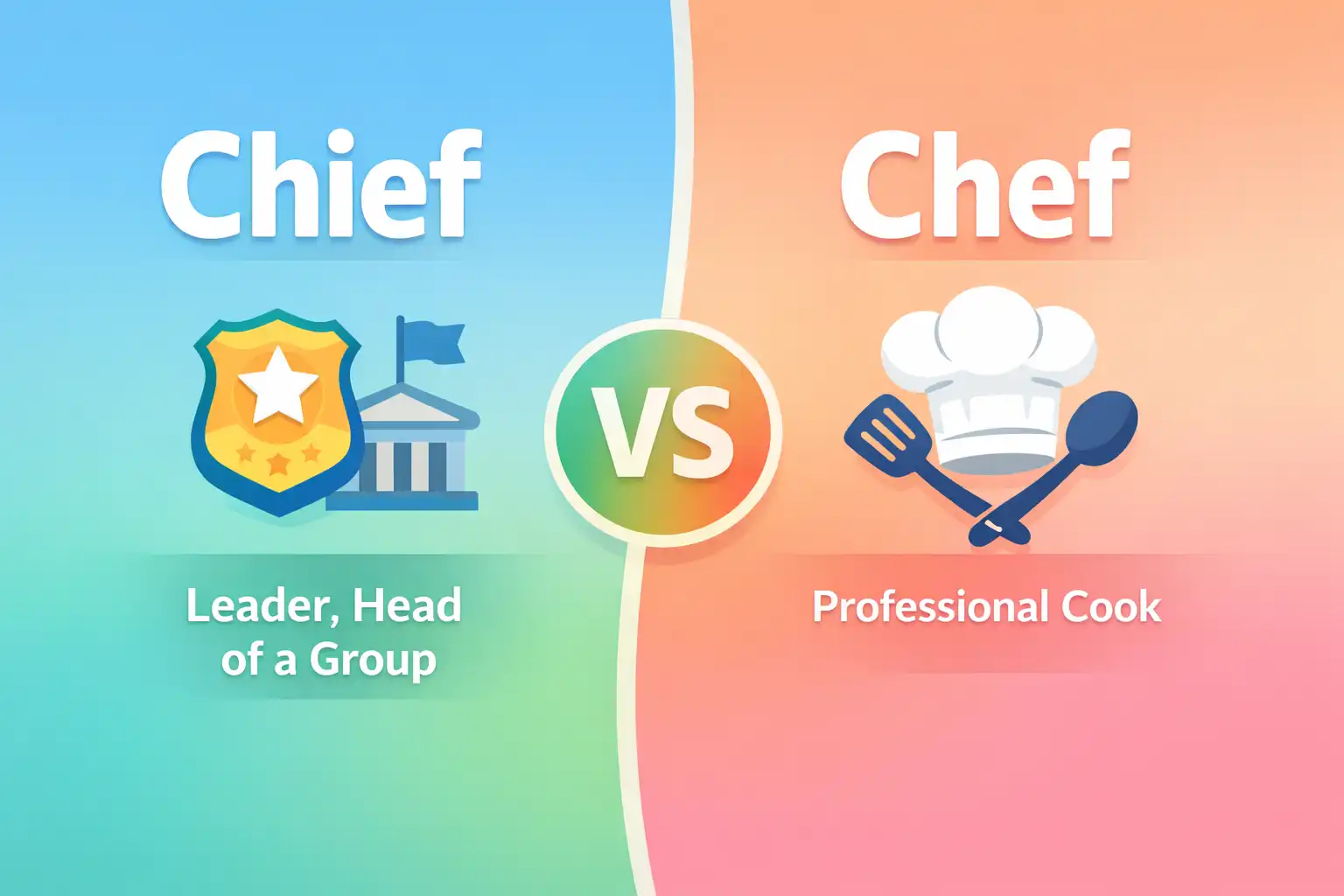
- Chief = a leader or person in charge.
- Chef = a professional cook.
Examples:
- The chief of police spoke to the media.
- The chef prepared dinner.
✅ Easy rule: If it relates to leadership, use chief. If it relates to food or cooking, use chef.
Origin of Chief and Chef (Shared French Root Explained)
Both words share the same French root word “chef,” which means “head” or “leader.” Over time, English changed the spelling of one version to chief, while chef stayed closer to the original French spelling.
Originally, a chef meant the “head person” in any area. Later, the meaning became more specific. In kitchens, the head cook was called chef de cuisine, and eventually English speakers shortened this to just chef.
Meanwhile, English developed chief as a general word for leaders. So today:
- Chief = leader, head, boss
- Chef = professional cook, kitchen expert
The confusion exists because both words started from the same idea of being “the head.”
British vs American English: Chief vs Chef Spelling (No Difference)
There is no spelling difference between British and American English for these words. Both regions use:
- Chief (leader)
- Chef (cook)
However, confusion still happens because pronunciation sounds similar, especially for learners.
Small comparison:
| Word | UK Spelling | US Spelling | Meaning |
| Chief | Chief | Chief | Leader |
| Chef | Chef | Chef | Cook |
So the issue is not regional spelling. It is about meaning and context.
How to Choose the Right Word Fast
Choosing the correct word becomes easy when you think about context.
US:
Professional titles like police chief, fire chief, or chief executive officer are very common. Food contexts always use chef.
UK / Commonwealth:
Usage is the same. Leadership roles use chief. Restaurant or cooking roles use chef.
Global or professional writing:
Business and government documents almost always use chief for leadership positions. Hospitality industries use chef for cooking professionals.
Simple check:
If you can replace the word with leader, choose chief.
If you can replace the word with cook, choose chef.
Common Mistakes with chief vs chef
Writers often confuse these words because they rely on sound instead of meaning.
Here are common errors:
❌ The police chef announced new rules.
✅ The police chief announced new rules.
❌ She works as a chief in a restaurant kitchen.
✅ She works as a chef in a restaurant kitchen.
❌ The company hired a new marketing chef.
✅ The company hired a new marketing chief.
❌ The hotel’s head chief created a new menu.
✅ The hotel’s head chef created a new menu.
The mistake usually happens when someone types quickly or depends on autocorrect.
Chief vs Chef in Everyday Examples
Seeing real-life sentences helps build confidence.
Emails:
- Please contact the department chief for approval.
- Our new chef will join the team next week.
News:
- The fire chief warned residents about the storm.
- A famous chef opened a restaurant downtown.
Social media:
- Our kitchen chef just won an award!
- The police chief shared safety tips today.
Formal or professional writing:
- The Chief Executive Officer announced company growth.
- The executive chef designed the new menu.
Context always shows the correct choice clearly.
Why People Confuse Chief vs Chef (Spoken Similarity + Writing Errors)
Search interest for chief vs chef is high among students, ESL learners, and early writers. Many people hear the words spoken but do not see them written often. So spelling confusion grows.
Editors usually notice this error in job titles and business communication. A wrong word can change meaning completely. Imagine writing “bank chef” instead of “bank chief.” That mistake can reduce credibility.
One real-world example happens in resumes. A candidate might write “team chef” instead of “team chief” or “team lead.” Employers may see this as a language mistake, which affects professional impression.
Because of this, learning the difference is important for both education and career writing.
Comparison Table: Chief vs Chef
| Feature | Chief | Chef |
| Meaning | Leader or person in charge | Professional cook |
| Part of Speech | Noun (sometimes adjective in titles) | Noun |
| Context of Use | Business, government, organizations, teams | Restaurants, hotels, kitchens |
| Formal vs Informal | Often formal or professional | Can be formal or casual |
| Common Mistakes | Used instead of chef in cooking context | Used instead of chief in leadership context |
| Correct Example | The police chief spoke today. | The chef prepared dinner. |
This table removes confusion quickly because it connects meaning with context.
Semantic FAQs (People Also Ask)
Is chief the same as chef?
No. Chief means leader. Chef means cook. They have different uses.
Which one is correct in formal writing?
Both are correct, but it depends on context. Leadership uses chief. Cooking uses chef.
Can they be used interchangeably?
No. Switching them changes the meaning completely.
Why do people confuse them?
They sound similar and share the same historical root.
Can grammar tools catch this mistake?
Sometimes yes, but not always. Tools may miss it if the sentence still looks correct.
Is there a British vs American difference?
No. Both countries use the same spelling and meanings.
Which word is more common?
Chief appears more in business and news. Chef appears more in food and hospitality contexts.
Conclusion
Conclusion
Understanding chief vs chef becomes simple once you focus on meaning instead of spelling similarity. Both words come from the same historical root, but modern English separated them into two clear roles. Chief belongs to leadership and authority, while chef belongs to cooking and food preparation. So context always decides the correct choice.
Many mistakes happen because people type quickly or rely on pronunciation. However, the solution is easy. If the situation involves a boss, leader, or head of a group, the correct word is chief. If the situation involves a kitchen or cooking, the correct word is chef. This small difference protects clarity and professionalism in writing.
Quick recap: Leader = Chief. Cook = Chef.
Finally, keep this rule in mind whenever you write, and you will avoid confusion every time. If you found this guide helpful, explore more word comparison articles to improve your English accuracy and confidence.

Moses Jhon is a dedicated content writer known for producing high-quality, reader-focused, and SEO-optimized content. He has experience crafting blog posts, website content, articles, and marketing copy across different niches. His writing style combines creativity, clarity, and strategy to help businesses grow their online presence and engage their target audience effectively.