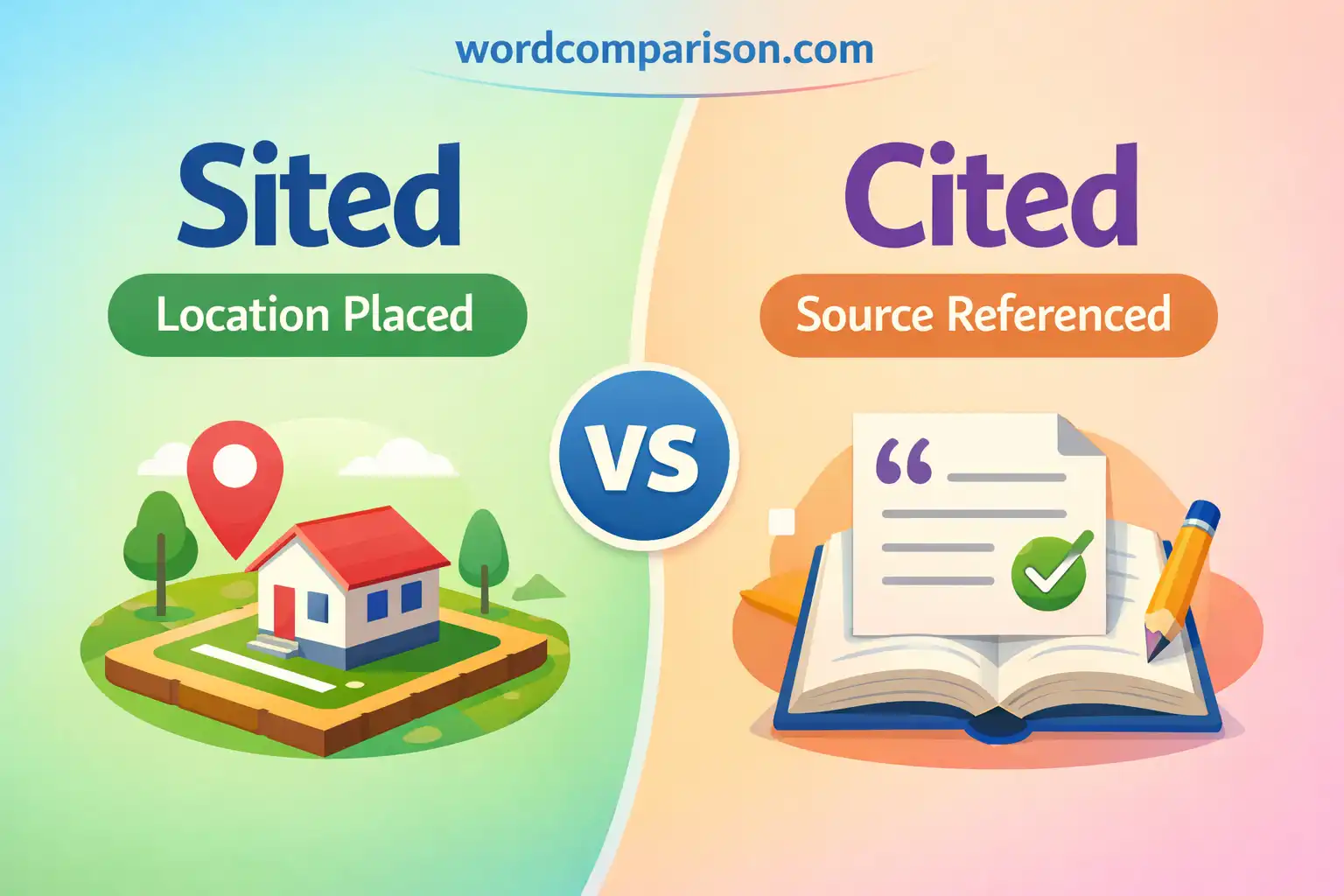
You read a sentence and pause. The word looks right, but something feels off. Was it sited or cited? Many writers stop at this exact point. Students, bloggers, and even professionals mix these two words every day. They sound the same, and spell-check does not always help. So the mistake slips through.
This confusion happens in essays, emails, reports, and even news posts. One word talks about a location. The other talks about a reference. Yet they share the same sound. That is why people search for sited vs cited so often.
In this guide, you will learn the real difference in very simple words. You will see where each word fits. You will also see common mistakes and easy examples from daily writing. By the end, you will never mix them again.
Sited vs Cited – Quick Answer
- Sited = placed in a location
- Cited = mentioned or quoted as a reference
Examples:
- The school is sited near the river.
- The report cited three research studies.
Easy rule:
If you talk about place, use sited.
If you talk about reference, use cited.
The Origin of Sited vs Cited
Both words come from old Latin roots, but they grew in different directions.
Sited comes from the word site, which means a place or position. Builders, planners, and architects often use this word. They talk about where something stands.
Cited comes from the word cite, which means to quote, mention, or refer to a source. Teachers, writers, and researchers use this word often.
However, both words sound exactly the same. They are homophones. Because of this, people often type the wrong one without noticing.
Writers often confuse them because the brain listens to sound, not spelling. Editors usually see this mistake in essays and academic writing.
British English vs American English Spelling
Good news: there is no spelling difference between British and American English here.
| Word | US Spelling | UK Spelling | Meaning |
| Sited | Sited | Sited | Placed in a location |
| Cited | Cited | Cited | Referred to as a source |
So, the confusion is not about region. It is only about meaning and usage.
Which Spelling Should You Use?
You do not choose based on country. You choose based on meaning.
- Use sited when you describe where something is placed.
- Use cited when you talk about mentioning a source or reference.
This rule works the same in the US, UK, Canada, Australia, and everywhere else.
In global or professional writing, this difference matters a lot. A small spelling mistake can change the whole meaning of a sentence.
Common Mistakes with Sited vs Cited
Here are mistakes editors often see:
❌ The article sited several journals.
✅ The article cited several journals.
❌ The hospital was cited near the highway.
✅ The hospital was sited near the highway.
These errors happen because the ear hears the same sound, but the meaning changes.
Sited vs Cited in Everyday Examples
Emails
- We cited your report in our proposal.
- The office is sited next to the parking lot.
News
- The factory is sited outside the city.
- The journalist cited two experts.
Social Media
- This park is perfectly sited for sunsets.
- She cited a famous quote in her post.
Professional Writing
- The bridge was carefully sited to avoid flooding.
- The paper cited ten academic sources.
Sited vs Cited – Usage Patterns & Search Interest
Many students search this term while writing essays. ESL learners also struggle because both words sound the same. Writers often notice the confusion only after someone points it out.
A common real-world problem happens in academic work. A student writes, “The author sited many sources.” The teacher marks it wrong. The student feels confused because the word sounded correct.
This mistake can reduce clarity and credibility in serious writing.
Comparison Table: Sited vs Cited
| Feature | Sited | Cited |
| Meaning | Placed in a location | Mentioned as a reference |
| Part of speech | Verb (past tense) | Verb (past tense) |
| Context of use | Buildings, places, planning | Writing, research, speech |
| Formal vs informal | Mostly formal/technical | Formal and academic |
| Common mistake | Used when talking about sources | Used when talking about place |
| Correct example | The school was sited near hills | The essay cited two books |
This table clears the confusion quickly.
FAQs: People Also Ask
Is sited the same as cited?
No. One talks about place. The other talks about reference.
Which one is correct in formal writing?
Both are correct, but only in the right context.
Can they be used interchangeably?
No. They have very different meanings.
Why do people confuse them?
They sound exactly the same when spoken.
Can grammar tools catch this mistake?
Sometimes, but not always. Context matters.
Is there a British vs American difference?
No. The spelling and meaning stay the same.
Do students often make this error?
Yes. It is very common in essays and reports.
Conclusion
The confusion between sited and cited happens because they sound alike. Yet their meanings are far apart. One belongs to the world of location. The other belongs to the world of reference.
When you write about where something stands, you use sited. When you write about mentioning a source, you use cited. This small difference can change the whole message of a sentence.
Overall, this mistake is easy to fix once you see the pattern. In short, always link the word to its meaning before you type it. Finally, remember this simple rule:
Place = sited. Reference = cited.

James Holloway writes detailed guides on confusing English words and grammar usage with clear side-by-side comparisons.