Many learners stop when they see lesser and lessor. The words look almost the same. The sound is close too. So people guess they mean the same thing. But they do not.
This small spelling change can cause a big mistake. One word talks about size or importance. The other word talks about property and rent. Writers, students, and even professionals mix them up in emails, contracts, and reports. Then the sentence loses its meaning.
So, this guide will make it very simple. You will learn what each word means, where to use it, and how to never confuse them again.
Lesser vs Lessor – Quick Answer
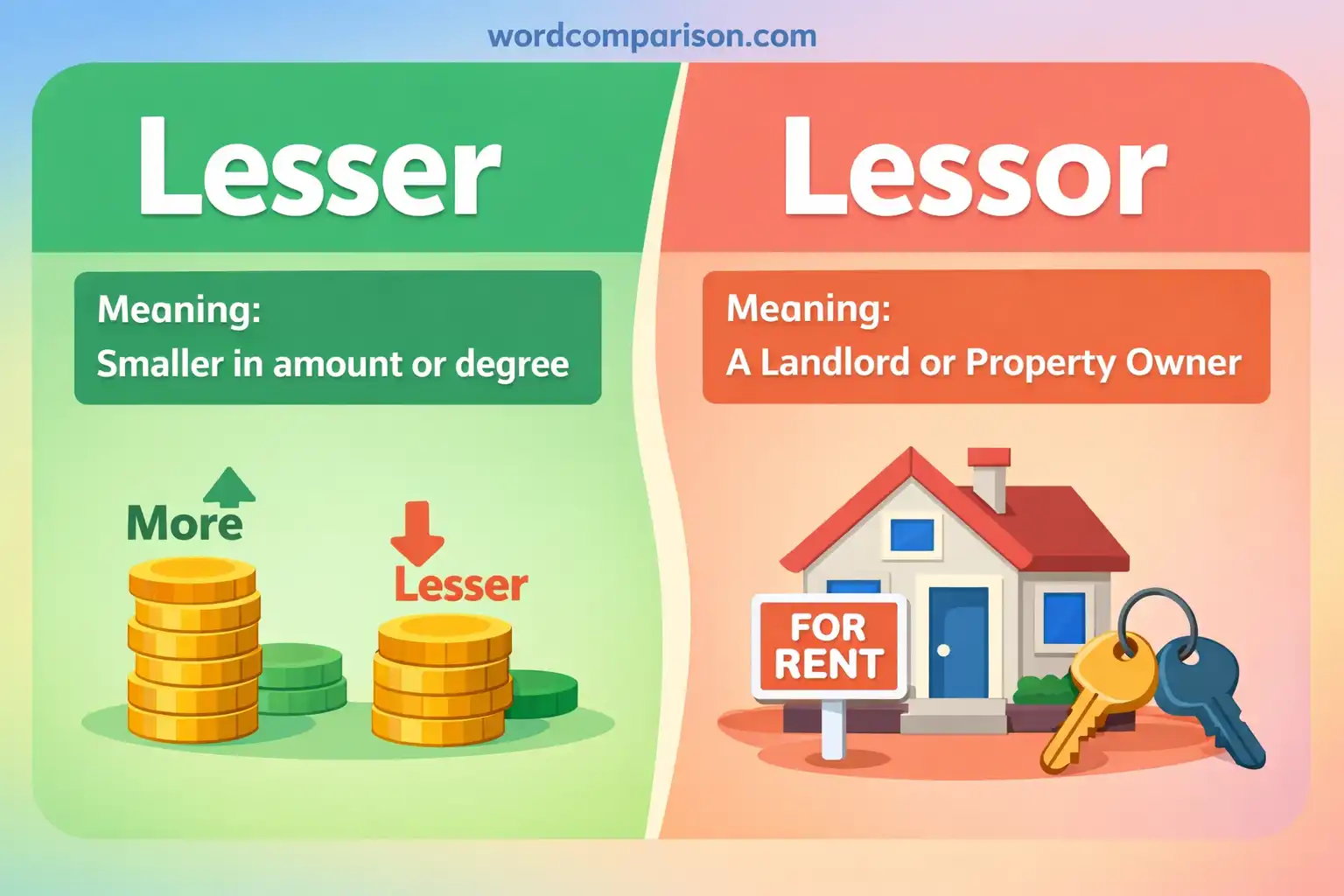
- Lesser means smaller or not as important
- Lessor means a person who rents out property
Examples:
- She chose the lesser option.
- The lessor signed the lease.
Easy rule:
If you talk about size or importance → use lesser
If you talk about rent or property → use lessor
The Origin of Lesser vs Lessor
The confusion starts because both words come from old English roots.
Lesser comes from the word less. It simply means smaller in amount, size, or value. People have used it for hundreds of years in daily speech and writing.
Lessor, however, comes from a legal background. It comes from the word lease. A lessor is the one who gives a lease. This word lives mostly in legal and property documents.
However, today both words look almost identical. So many people think they are spelling variations. They are not. They come from different ideas and different uses.
British English vs American English Spelling
There is no spelling difference between British and American English for these words.
Both countries use:
| Word | US Spelling | UK Spelling | Meaning |
| Lesser | Lesser | Lesser | Smaller / less important |
| Lessor | Lessor | Lessor | Property owner who rents out |
So the confusion is not about region. It is about usage.
Which Spelling Should You Use?
You do not choose based on country. You choose based on meaning.
- Use lesser in normal writing, emails, speech, and general content.
- Use lessor only in legal, rental, or property documents.
Students, bloggers, and social media writers almost always need lesser.
Lawyers, landlords, and property agents often need lessor.
Common Mistakes with Lesser vs Lessor
Writers often make these errors because they rely on sound, not meaning.
❌ The lessor problem was ignored.
✅ The lesser problem was ignored.
❌ The lesser signed the rental agreement.
✅ The lessor signed the rental agreement.
These mistakes change the whole meaning of the sentence.
Lesser vs Lessor in Everyday Examples
Here is how these words appear in real life.
Emails
- We will focus on the lesser issues first.
- The lessor will send the documents tomorrow.
News
- The court asked the lessor to repair the building.
- This is the lesser known side of the story.
Social Media
- Always pick the lesser risk.
- The lessor raised the rent this year.
Professional Writing
- The company accepted the lesser penalty.
- The lessor must maintain the property.
Lesser vs Lessor – Usage Patterns & Search Interest
Many students and ESL learners search for this pair because spellcheck does not catch it. Both words are correct English words. So grammar tools often miss the mistake.
Editors usually see this error in blogs, essays, and contracts. In legal writing, using lesser instead of lessor can cause real confusion about who owns the property.
One common case happens in rental agreements. If someone writes “the lesser agrees,” the sentence becomes unclear. It should say “the lessor agrees.”
So this confusion matters in real documents.
Quick Comparison Table
| Feature | Lesser | Lessor |
| Meaning | Smaller, less important | Person who rents property |
| Part of Speech | Adjective | Noun |
| Context | General writing | Legal / rental documents |
| Formal vs Informal | Used everywhere | Mostly formal/legal |
| Common Mistake | Used for landlord | Used for comparison |
| Correct Example | A lesser risk | The lessor signed the lease |
This table removes the confusion instantly.
FAQs About Lesser vs Lessor
Is lesser the same as lessor?
No. One describes size. The other describes a property owner.
Which one is correct in formal writing?
Both are correct, but for different meanings.
Can they be used interchangeably?
Never. The meanings are completely different.
Why do people confuse them?
They look and sound almost the same.
Can grammar tools catch this mistake?
Often no, because both words are valid.
Is there a British vs American difference?
No. The spelling and meaning stay the same.
Where is lessor mostly used?
In leases, contracts, and property documents.
Conclusion
These two words look like twins, but they live in different worlds.
Lesser talks about size, value, or importance. You will use it in daily writing, speech, emails, and articles.
Lessor lives in legal and rental language. It names the person who rents out property.
This confusion happens because the words look almost the same. But the meaning is far apart. So one small letter can change the whole sentence.
Overall, the mistake is easy to avoid once you know the rule.
Final rule to remember:
If the sentence talks about rent, think of lease → lessor.
If it talks about small or less important, use lesser.

James Holloway writes detailed guides on confusing English words and grammar usage with clear side-by-side comparisons.