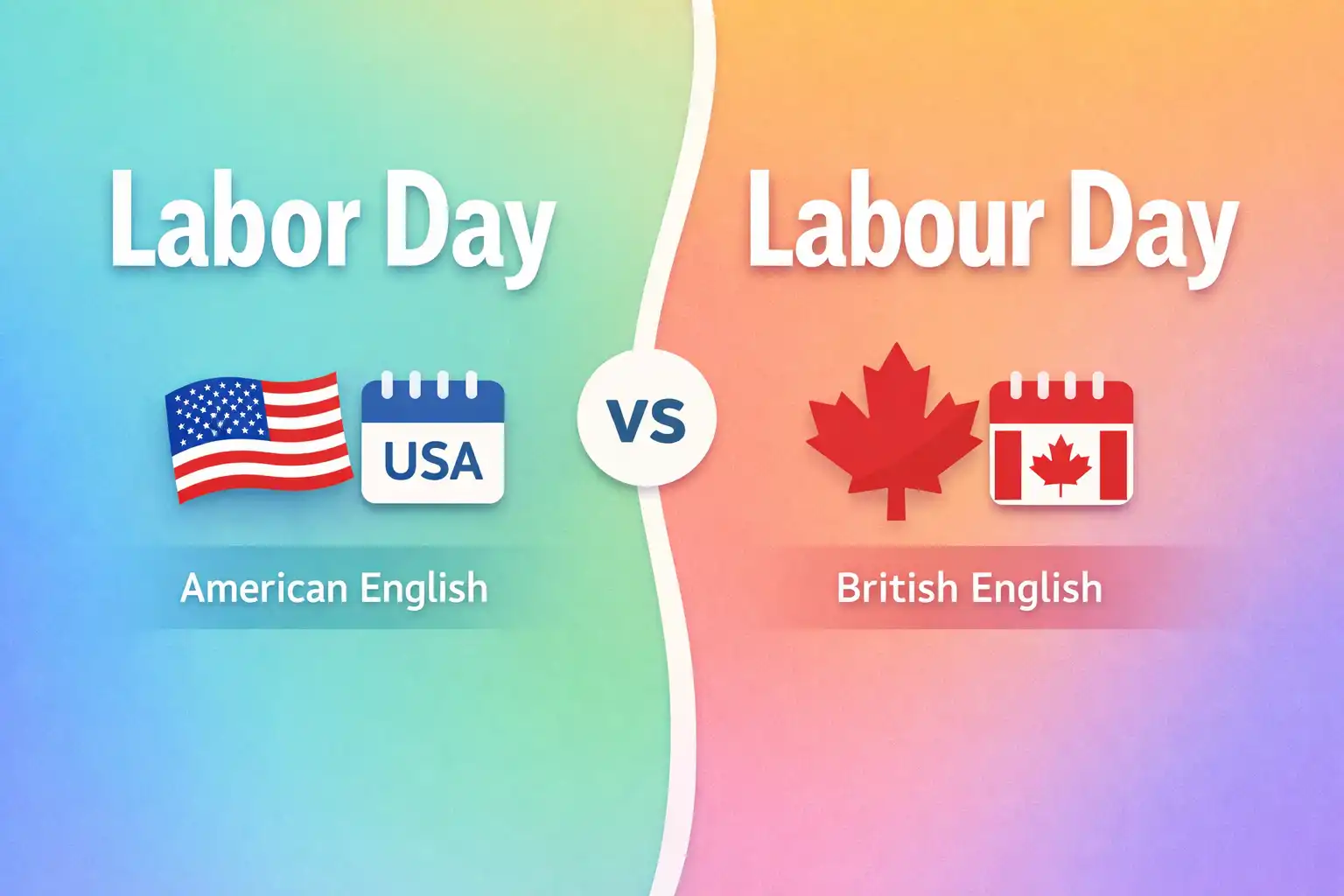
Many people feel confused when they see Labor Day and Labour Day. The words look almost the same, but the spelling changes. So, people wonder if the meaning also changes. Students, writers, and ESL learners often search this because they want to avoid mistakes in school work, emails, or articles.
The confusion happens because English has two main spelling systems: American and British. Both are correct, but they are used in different places.
This article will help you understand the difference clearly. You will learn when to use each spelling, why the confusion exists, and how to choose the right word fast.
Quick Answer: Labor Day vs Labour Day (US vs UK Spelling)
- Labor Day = American English spelling (used in the United States).
- Labour Day = British English spelling (used in the UK, Canada, Australia, and others).
- Both mean the same holiday that honors workers.
Easy rule:
If your audience is American, use Labor Day. Otherwise, use Labour Day.
Example:
- US news: Labor Day weekend travel
- UK article: Labour Day celebrations
The Origin of Labor Day vs Labour Day (simple history)
The holiday started in the late 1800s. Workers wanted fair pay and better working conditions. So, many countries created a special day to honor workers and labor movements.
The spelling difference came later. American English removed the letter “u” from many words. For example:
- colour → color
- honour → honor
- labour → labor
Noah Webster, an American dictionary writer, helped make these spelling changes popular in the United States. However, British English kept the original forms.
Today, the holiday meaning stays the same, but the spelling depends on location.
US vs UK Spelling Rules: Why Labor/Labour Changes
The main difference is spelling style, not meaning.
American English prefers shorter spellings. British English keeps older forms with extra letters like “u.”
Here is a simple comparison:
| American English | British English |
| Labor Day | Labour Day |
| Color | Colour |
| Honor | Honour |
| Favorite | Favourite |
However, the pronunciation usually sounds similar. So, spoken English does not cause confusion. The problem mainly appears in writing.
How to Choose the Right Word Fast
Choosing the correct spelling is easy when you think about your audience.
US
Use Labor Day. This is the official spelling in the United States. Schools, news, and businesses all follow this form.
UK / Commonwealth
Use Labour Day. Countries like the UK, Canada, Australia, India, and South Africa prefer British spelling.
Global or professional writing
If your audience is international, both can work. However, you should stay consistent. Do not mix spellings in the same document.
Consistency matters more than the choice itself.
Common Mistakes with Labor Day vs Labour Day
Writers often make small but noticeable errors.
❌ Labor Day celebrations in London
✅ Labour Day celebrations in London
❌ Mixing both spellings in one article
✅ Using one spelling consistently
Another mistake happens with dates. In the United States, Labor Day is in September. But many countries celebrate Labour Day on May 1. This creates extra confusion.
Labor Day vs Labour Day in Everyday Examples
Seeing real examples makes learning easier.
Emails
“Enjoy your Labor Day weekend!” (US company email)
“Happy Labour Day to our team!” (UK company email)
News
“Labor Day travel expected to rise this year.”
“Workers gather for Labour Day marches.”
Social Media
“Labor Day BBQ time!”
“Celebrating Labour Day with friends.”
Formal or professional writing
“The company will remain closed on Labor Day.”
“The office will close for Labour Day holiday.”
Both forms look natural when used in the right region.
Labor Day vs Labour Day – Usage Patterns & Search Interest
Search interest for labor day vs labour day often increases around holiday seasons. This usually happens when students, writers, and businesses prepare content and want the correct spelling. According to general patterns seen on tools like Google Trends, searches often spike near September in the United States and near May in many other countries.
ESL learners also look for this comparison because English spelling changes between regions. Both words are correct, but the context decides which one fits best. That creates uncertainty for people who write for global audiences.
A real-world confusion example can appear in marketing. For instance, a company might promote a “Labour Day Sale” in the United States. Customers may notice the spelling and feel unsure if the message is local or foreign. Small spelling details can influence trust and clarity.
Overall, the search pattern shows that people mainly want quick confirmation about spelling, not meaning.
Comparison Table: Labor Day vs Labour Day
| Feature | Labor Day | Labour Day |
| Meaning | Holiday honoring workers | Same meaning |
| Part of Speech | Proper noun | Proper noun |
| Context of Use | United States | UK and Commonwealth countries |
| Formal vs Informal | Used in all contexts | Used in all contexts |
| Common Mistakes | Using in British context | Using in US context |
| Correct Example | Labor Day parade in Chicago | Labour Day parade in London |
This table shows there is no meaning difference. Only spelling changes.
FAQs
Is Labor Day the same as Labour Day?
Yes. Both refer to the same idea: a holiday that honors workers. Only the spelling differs.
Which one is correct in formal writing?
Both are correct. Choose based on your audience location and stay consistent.
Can they be used interchangeably?
Not always. Use Labor Day for American audiences and Labour Day for British or international audiences.
Why do people confuse them?
The words look almost identical, and both are correct English. Also, the holiday dates vary by country.
Can grammar tools catch this mistake?
Sometimes no. Many tools accept both spellings, so context matters.
Is there a British vs American difference?
Yes. Labor = American spelling. Labour = British spelling.
Do they occur on the same date?
Not always. The US celebrates in September, while many countries celebrate on May 1.
Conclusion
Labor Day and Labour Day share the same meaning. Both celebrate workers and their contributions. The only difference is spelling, and that depends on region. American English drops the letter “u,” while British English keeps it. So, the choice becomes simple when you know your audience.
Many writers repeat one common mistake. They mix both spellings in the same document or campaign. This can look careless, especially in professional or marketing content. Also, some people forget that the holiday date changes by country. Paying attention to context solves most problems.
Overall, the safest approach is to match your spelling with your audience location and stay consistent from start to finish.
Easy rule to remember:
US audience → Labor Day
UK / international audience → Labour Day

Moses Jhon is a dedicated content writer known for producing high-quality, reader-focused, and SEO-optimized content. He has experience crafting blog posts, website content, articles, and marketing copy across different niches. His writing style combines creativity, clarity, and strategy to help businesses grow their online presence and engage their target audience effectively.