A friend posts a silly meme and writes, “I love this movie, unironic.” Another person says, “I said that ironically.” Now you pause. What do they mean? Are they joking or serious?
Many people mix up ironic and unironic. The words look close. They sound related. But they show opposite feelings. This small mistake can change the whole meaning of a sentence.
So, in this guide, you will learn the real difference. You will see when to use each word. You will also learn why writers, students, and social media users often confuse them. By the end, you will never guess again.
Ironic vs Unironic – Quick Answer
People search unironic meaning because the word is used a lot in internet culture. Unironic usually means sincere or not intended as irony. Queries like is unironic a word and difference between ironic and unironic are common for clarity.
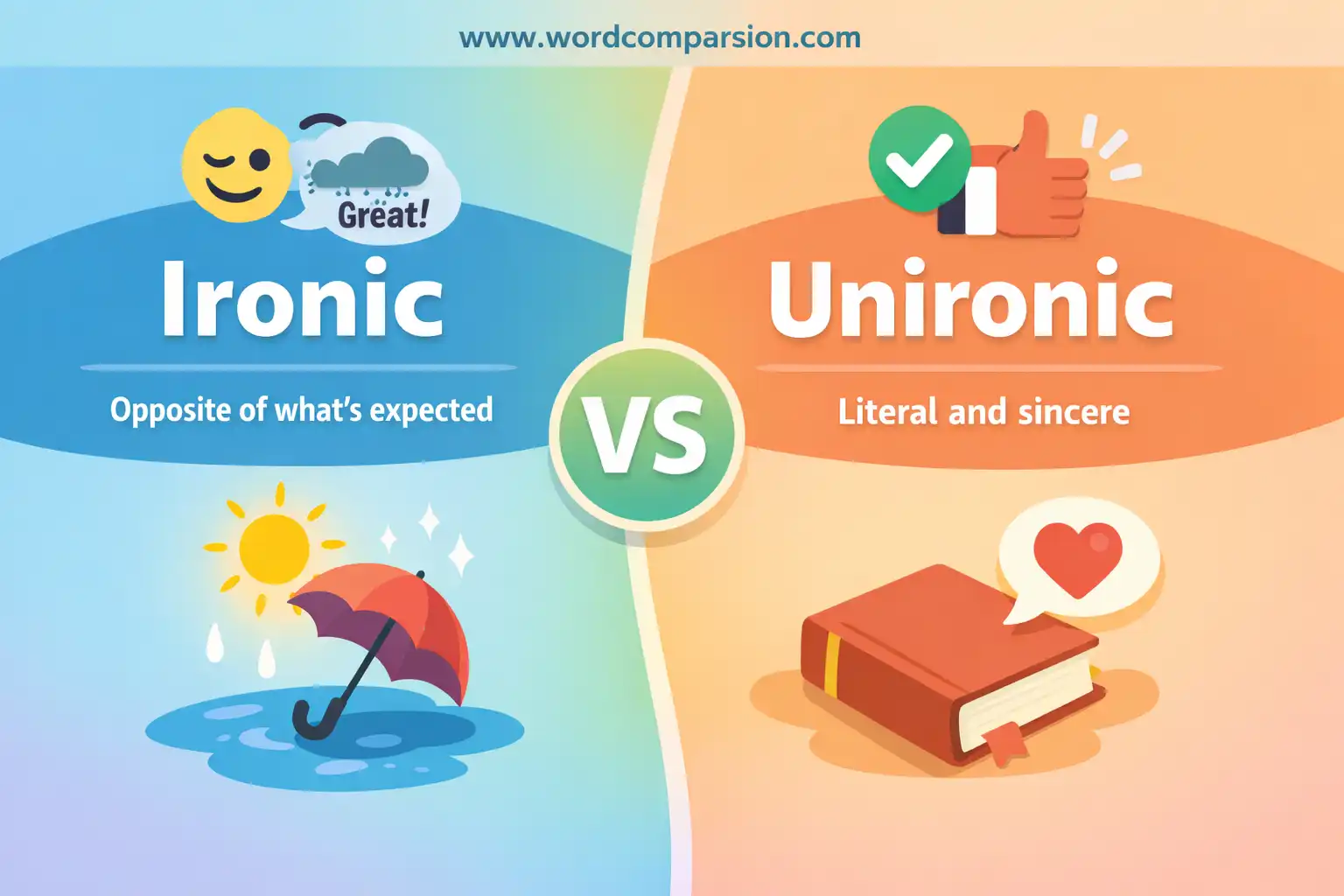
- Ironic = you say something but mean the opposite, often as a joke.
- Unironic = you mean exactly what you say, with no joke.
Examples:
- “Great weather!” (during a storm) → ironic
- “I love this song.” (truly love it) → unironic
Easy rule:
If there is hidden humor or opposite meaning → ironic.
If the meaning is direct and serious → unironic.
The Origin of Ironic vs Unironic
The word ironic comes from ancient Greek. It comes from a word that means “to pretend” or “to hide the real meaning.” Later, English speakers used it to describe speech that means the opposite of the words used.
Unironic is much newer. People built it by adding un- (not) to ironic. So, it simply means “not ironic.” The word became popular online, especially on social media, where people wanted to show they were serious and not joking.
Today, confusion happens because people use “ironic” very loosely. Some use it to mean “funny,” “strange,” or “coincidental.” But that is not correct. Real irony always has a hidden opposite meaning.
British English vs American English Spelling
There is no spelling difference between British and American English for these words.
| Word | US Spelling | UK Spelling |
| Ironic | Ironic | Ironic |
| Unironic | Unironic | Unironic |
Both forms are the same everywhere.
Which Spelling Should You Use?
Since the spelling does not change, you only need to think about tone and context.
- US writing: Both words are common, especially in casual speech and online.
- UK / Commonwealth: Same usage and meaning.
- Global or professional writing: Use ironic carefully. Use unironic only when clarity is needed, because it sounds modern and informal.
Common Mistakes with Ironic vs Unironic
Writers often confuse these words because they focus on the situation, not the meaning.
❌ Incorrect: “It’s ironic that I forgot my umbrella and it rained.”
✅ Correct: “It’s unfortunate that I forgot my umbrella and it rained.”
(That is bad luck, not irony.)
❌ Incorrect: “I love this old song ironically.”
✅ Correct: “I love this old song unironically.”
(You truly love it.)
❌ Incorrect: “He gave an unironic joke.”
✅ Correct: “He gave an ironic joke.”
(Jokes often use irony.)
Ironic vs Unironic in Everyday Examples
Emails
- “Nice job…” (after a mistake) → ironic
- “Nice job!” (real praise) → unironic
News
- “The safety expert forgot his helmet.” → ironic situation
Social Media
- “I watch this show unironic.” → truly enjoys it
- “I watch this show ironic.” → watching as a joke
Professional Writing
Use ironic carefully. Avoid unironic unless the tone is informal.
Ironic vs Unironic – Usage Patterns & Search Interest
Many students, ESL learners, and writers search this topic because irony is hard to spot. The speaker’s tone changes everything. Online culture also made unironic popular, so people now see both words often.
A common problem happens on social media. Someone says they like a “bad” movie. Others cannot tell if they are joking. So they add “unironic” to remove doubt.
This misuse can cause confusion in conversations, comments, and even articles.
Comparison Table
| Feature | Ironic | Unironic |
| Meaning | Opposite or hidden meaning | Direct, true meaning |
| Part of Speech | Adjective | Adjective |
| Context | Humor, sarcasm, contrast | Serious, honest tone |
| Formal vs Informal | Works in both | Mostly informal |
| Common Mistake | Used for bad luck | Rarely understood in formal writing |
| Correct Example | “Lovely day” in a storm | “I love this song” sincerely |
Semantic FAQs
Is ironic the same as sarcastic?
No. Sarcasm is sharp or mocking. Irony is softer and often playful.
Which one is correct in formal writing?
Use ironic. Avoid unironic unless needed.
Unironic meaning what does it mean
Unironic means genuine or sincere and not meant as irony.
Is unironic a word
Yes it is used widely in modern English especially online.
Ironic vs unironic what is the difference
Ironic involves irony while unironic is sincere and straightforward.
Unironic definition in simple words
It means not ironic and genuinely meant.
Difference between ironic and unironic
Ironic suggests a contrast or irony and unironic suggests sincerity.
Why do people confuse them?
Because irony depends on tone and hidden meaning.
Is there a British vs American difference?
No. Both use the same spelling and meaning.
Conclusion
Many people feel unsure when they see ironic and unironic. The words look related, but they show opposite ideas. One hides the real meaning. The other shows the real meaning clearly.
Overall, irony depends on contrast between words and intent. Unironic speech removes that contrast. So the listener knows you are serious.
Finally, remember this simple rule:
If the meaning is opposite or playful, use ironic. If the meaning is honest and direct, use unironic.
That one rule will keep your writing clear every time.

James Holloway writes detailed guides on confusing English words and grammar usage with clear side-by-side comparisons.