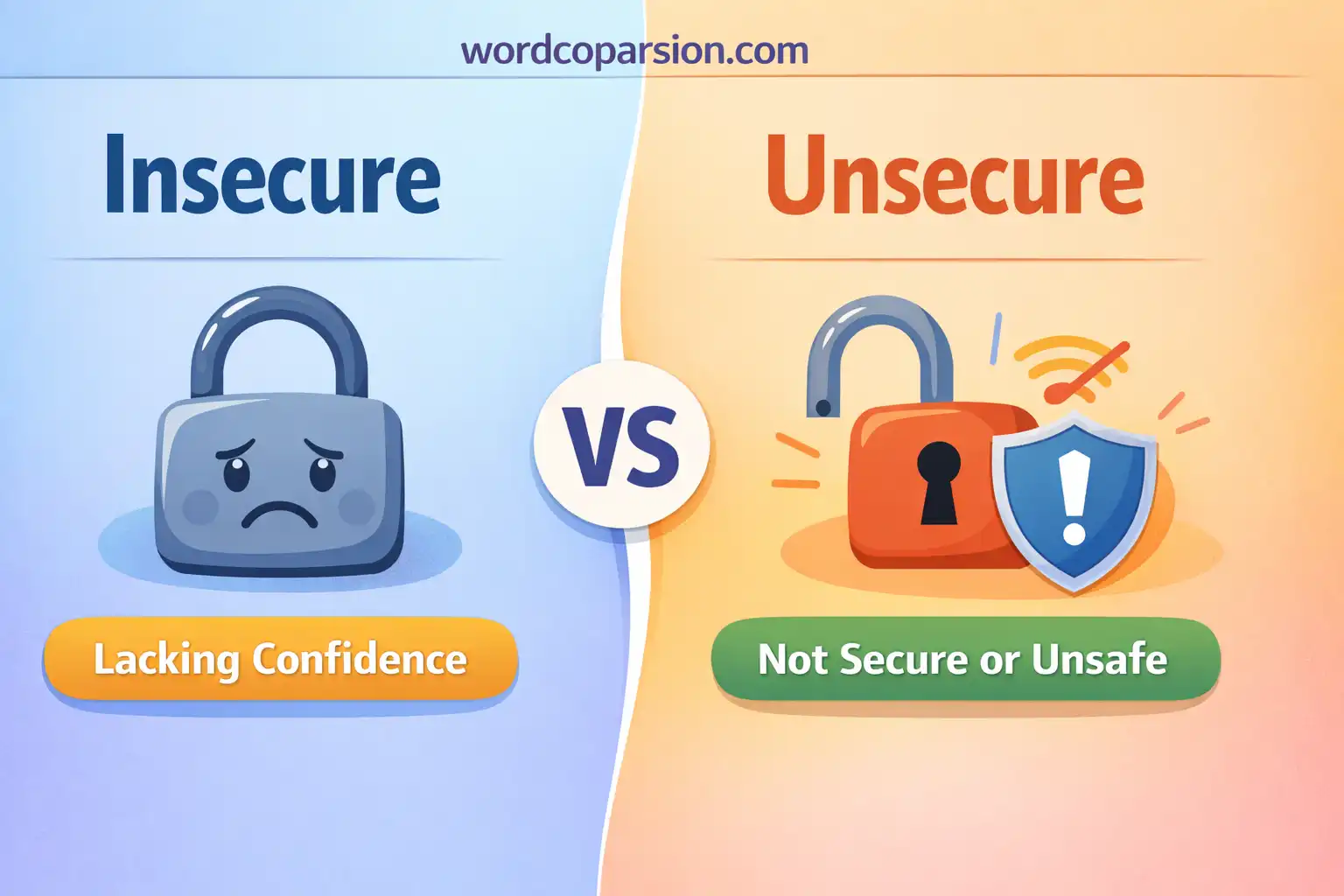
Many people type insecure vs unsecure into Google because both words look right. Both seem to mean “not safe.” So writers, students, and even professionals mix them without noticing. Then confusion appears in emails, articles, and reports. The sentence sounds odd, but the reason feels unclear.
This confusion matters because one word is standard English, and the other is rare and often wrong in modern writing. Editors often fix this mistake. Grammar tools also flag it. Yet the mistake keeps happening because the difference is small but important.
In this guide, you will learn the real meaning of each word, why people confuse them, and when to use the correct one with confidence.
Insecure vs Unsecure – Quick Answer
- Insecure is the correct and common word in modern English.
- Unsecure is rare and usually incorrect today.
- Use insecure for people, places, systems, and feelings.
Example:
- ✅ The network is insecure.
- ❌ The network is unsecure.
Easy rule: If you mean “not safe,” always choose insecure.
The Origin of Insecure vs Unsecure
The word insecure comes from Latin roots. It means “not safe” or “not firm.” Over time, English adopted it as the normal word for unsafe situations and uncertain feelings.
The word unsecure also appeared in old English texts many centuries ago. However, writers slowly stopped using it. Language changed. People preferred insecure because it sounded smoother and clearer.
However, old dictionaries still list unsecure. So learners think it must be correct. This creates confusion today.
Writers often assume both words work the same way. But modern English clearly favors one word.
British English vs American English Spelling
There is no spelling difference between British and American English for these words.
Both regions follow the same rule.
| Word | US English | UK English | Status |
| Insecure | Correct | Correct | Standard word |
| Unsecure | Rare | Rare | Outdated usage |
In contrast, many other word pairs change by region. This pair does not.
Which Spelling Should You Use?
- US audience → Use insecure
- UK / Commonwealth → Use insecure
- Global writing → Use insecure
The choice is simple because unsecure is not preferred anywhere in modern professional writing.
Common Mistakes with Insecure vs Unsecure
Writers often replace insecure with unsecure because both seem logical.
Here are frequent mistakes:
❌ He feels unsecure about his job.
✅ He feels insecure about his job.
❌ This door is unsecure at night.
✅ This door is insecure at night.
The mistake happens because people think “un + secure” should work. But English does not follow that logic here.
Insecure vs Unsecure in Everyday Examples
Emails
- The connection looks insecure. Please check the settings.
News
- Experts warned that the system was insecure.
Social Media
- I feel insecure before interviews.
Professional Writing
- The data transfer method is insecure and needs improvement.
In real life, you will almost never see unsecure in trusted publications.
Insecure vs Unsecure – Usage Patterns & Search Interest
Many students, ESL learners, and content writers search this term because:
- Spellcheck sometimes misses it
- Old books contain the word unsecure
- The prefix “un-” feels correct in logic
Meanwhile, editors and grammar tools strongly prefer insecure.
A common problem happens in tech writing. Someone writes “unsecure website,” and readers question the credibility of the content.
Comparison Table
| Feature | Insecure | Unsecure |
| Meaning | Not safe, not confident | Intended to mean not safe |
| Part of speech | Adjective | Adjective |
| Context of use | People, systems, places, feelings | Rare, outdated |
| Formal usage | Correct | Incorrect today |
| Common mistake | None | Used instead of insecure |
| Correct example | The server is insecure | (Avoid using) |
This table shows clearly why one word works and the other does not.
FAQs
Is insecure the same as unsecure?
No. Insecure is correct modern English. Unsecure is outdated.
Which one is correct in formal writing?
Always use insecure.
Can they be used interchangeably?
No. Only insecure sounds natural today.
Why do people confuse them?
Because “un + secure” looks logical in English structure.
Can grammar tools catch this mistake?
Yes. Most tools flag unsecure as an error.
Is there a British vs American difference?
No. Both use insecure.
Is unsecure ever acceptable?
Only in very old texts or rare historical context.
Conclusion
Many writers feel confused when they see insecure vs unsecure. Both words seem to say the same thing. However, modern English clearly accepts only one of them in daily use.
Insecure works for feelings, technology, buildings, and situations. It appears in books, news, and professional writing across the world. Unsecure, on the other hand, belongs to older English and rarely appears today.
This mistake often happens because people trust word logic instead of real usage. They assume “un + secure” should be correct. But English history chose a different path.
Overall, the safest choice is simple.
Final rule to remember:
If you mean “not safe” or “not confident,” always write insecure.

James Holloway writes detailed guides on confusing English words and grammar usage with clear side-by-side comparisons.