Genius vs prodigy is a common confusion, especially for students, writers, and ESL learners. Many people use both words for someone very smart. But they are not the same. The mistake often happens when we describe talent without thinking about age, timing, or development.
This confusion matters because using the wrong word can change meaning. For example, calling an adult a prodigy sounds odd. In the same way, calling a child a genius may miss an important detail. So, this article will make things clear in a simple way. You will learn the real difference, correct usage, and how to choose the right word fast.
Genius vs Prodigy – Quick Answer
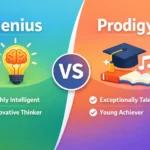
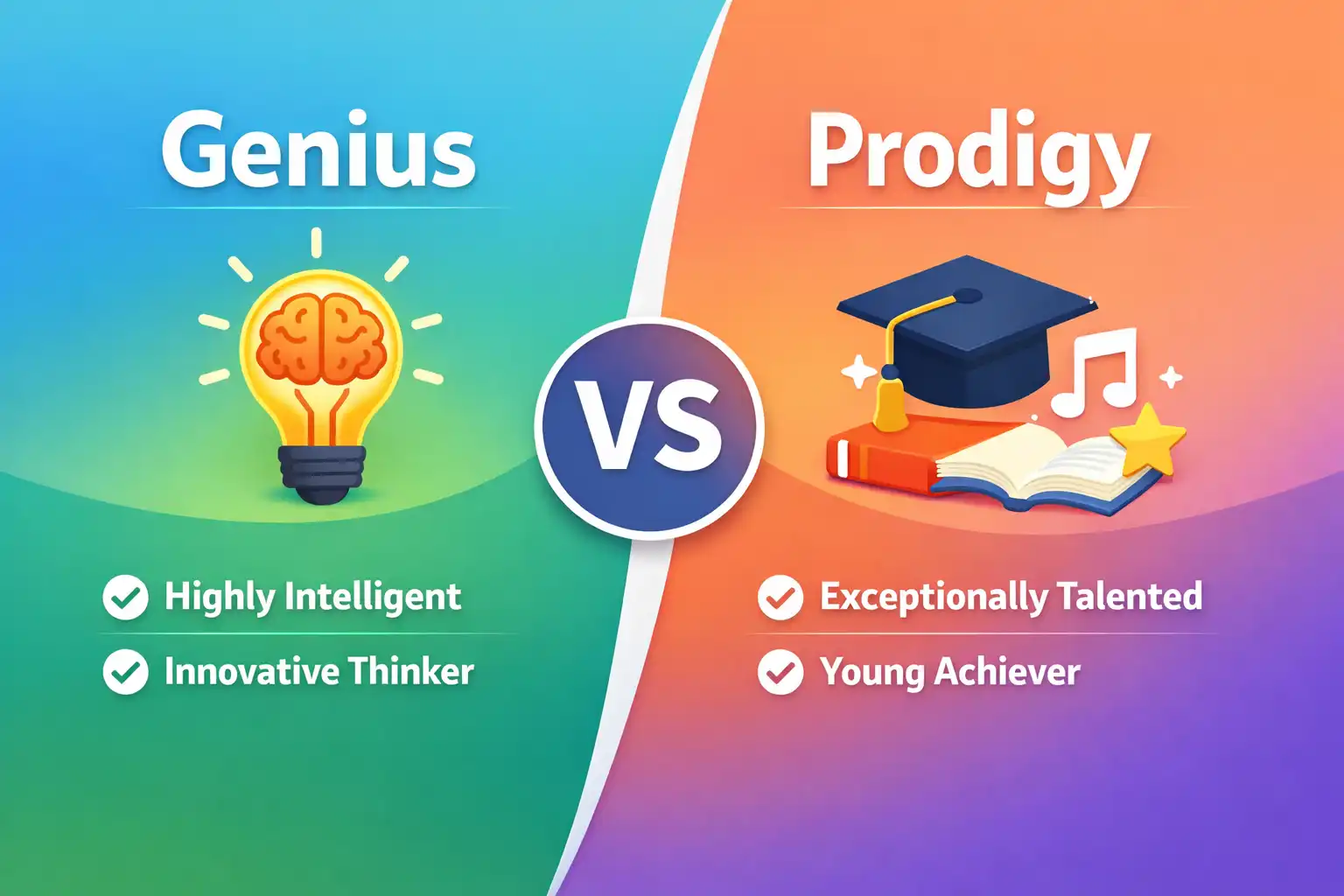
A genius is a person with exceptional intelligence or creative power at any age. A prodigy is a young person with advanced talent or skill at an early age.
Meaning of Genius
• Very high intelligence or creativity
• Can be any age
Examples
• Albert Einstein was a genius
• She has a genius for solving problems
Meaning of Prodigy
• A child with adult-level skill
• Focus on early age talent
Examples
• He was a piano prodigy at age 8
• The child is a math prodigy
Easy rule
Use prodigy for children. Use genius for anyone, especially adults.
The Origin of Genius vs Prodigy
The word genius comes from Latin “genius,” which means spirit or guiding power. In early use, it described a special ability or inner talent. Over time, it came to mean a person with very high intelligence or creativity.
The word prodigy comes from Latin “prodigium,” which means something extraordinary or surprising. It was first used for unusual events. Later, it described children with rare talent.
Now, the confusion happens because both words describe high ability. But the key difference is age and timing. Genius focuses on ability itself. Prodigy focuses on early development of that ability.
British vs American English Spelling
There is no spelling difference between British and American English for genius and prodigy. Both forms are the same in all regions.
Examples
• UK: He is a genius
• US: She is a prodigy
So, spelling is not the issue here. The difference is only in meaning and usage.
How to Choose the Right Word Fast
Choosing between genius and prodigy is simple if you follow context.
For US audience
Use genius for general intelligence. Use prodigy for young talent.
For UK or Commonwealth
The rule is the same. There is no regional change.
For global or professional writing
Use genius when age does not matter. Use prodigy when age is important.
Quick guide
• Talking about a child with rare skill → prodigy
• Talking about intelligence or creativity → genius
• Talking about adults → genius
Common Mistakes with Genius vs Prodigy
Writers often mix these words because both sound similar in meaning.
❌ He is a prodigy scientist at age 40
✅ He is a genius scientist at age 40
Explanation: Prodigy is only for young people
❌ She is a genius child who plays piano at age 5
✅ She is a piano prodigy at age 5
Explanation: Prodigy fits early talent better
❌ That genius kid solved complex math at age 6
✅ That prodigy kid solved complex math at age 6
Explanation: Age matters here
❌ The prodigy invented a new system in his 30s
✅ The genius invented a new system in his 30s
Explanation: Prodigy does not apply to adults
Genius vs Prodigy in Real Life Examples
In emails
• He is a genius when it comes to strategy
• The child is a coding prodigy
In news
• The genius behind the new AI model
• A chess prodigy wins global title at 10
On social media
• This guy is a genius at editing videos
• That kid is a music prodigy
In formal writing
• The author is seen as a literary genius
• The young artist is a prodigy in modern art
Genius vs Prodigy – Word Usage Patterns and Search Trends
Both words are popular, but they are used in different contexts.
Genius is more common in general use. People use it for intelligence, creativity, or problem-solving. It appears in education, science, and business content.
Prodigy is less common but very specific. It is used in stories about young talent, sports, music, or academics.
Students and ESL learners often search this comparison because they want clarity. Writers also check this to avoid misuse.
A real issue happens in headlines. If a news article calls an adult a prodigy, it feels incorrect. This can reduce clarity and trust.
Genius vs Prodigy Comparison Table
Aspect
Genius
Prodigy
Meaning
Very high intelligence or creativity
Young person with advanced skill
Part of speech
Noun
Noun
Context of use
All ages
Only children or very young people
Formal vs informal
Used in both
Used in both but more specific
Common mistake
Used for children instead of prodigy
Used for adults incorrectly
Correct example
She is a genius writer
He is a chess prodigy
Semantic FAQs
Is genius the same as prodigy
No. Genius refers to high ability at any age. Prodigy refers to early talent in young people.
Which one is correct in formal writing
Both are correct. But use prodigy only for young individuals.
Can they be used interchangeably
No. They have different meanings. Age is the key factor.
Why do people confuse them
Both describe high ability, so people think they are the same.
Can grammar tools catch this mistake
Most tools do not catch it. You need to understand context.
Is there a British vs American difference
No. Both words are spelled and used the same way.
Can a prodigy become a genius
Yes. A prodigy may grow into a genius, but not all do.
Conclusion
Genius vs prodigy is not a hard topic once you understand the core idea. A genius is someone with great intelligence or creativity. This can be at any age. A prodigy is a young person with advanced skill very early in life.
The most common mistake is using prodigy for adults. This should always be avoided. In the same way, using genius for a child may miss the special meaning of early talent.
Overall, the difference is simple. Genius describes level of ability. Prodigy describes early timing of that ability. So, when age matters, choose prodigy. When it does not, choose genius.
In short, remember this rule. If the person is a child with rare skill, use prodigy. For everyone else, use genius.
Meta description
Genius vs prodigy explained simply. Learn the difference, correct usage, and avoid common mistakes in everyday writing easily today.