Many people search expense vs expenditure because both words appear in money-related topics. You see them in business reports, school books, budgets, and accounting discussions. Because both words relate to spending, writers often think they mean the same thing.
However, they do not always work the same way. The difference is small, but it matters in real writing. For example, students may use expense in essays when a teacher expects expenditure. Business writers sometimes mix them in reports. Even editors notice that learners confuse these two terms when describing costs.
The confusion usually happens because both words describe money leaving a person or organization. Yet the tone and context change their meaning. Expense often appears in everyday situations. Expenditure usually sounds more formal and appears in professional or financial contexts.
This article solves that confusion clearly. You will learn the meaning of each word, where people use them, and how to choose the correct one quickly. By the end, you will understand the difference and avoid common mistakes in writing.
Expense vs Expenditure – Quick Answer
Expense and expenditure both refer to money spent, but they differ in tone and usage.
Meaning of Expense
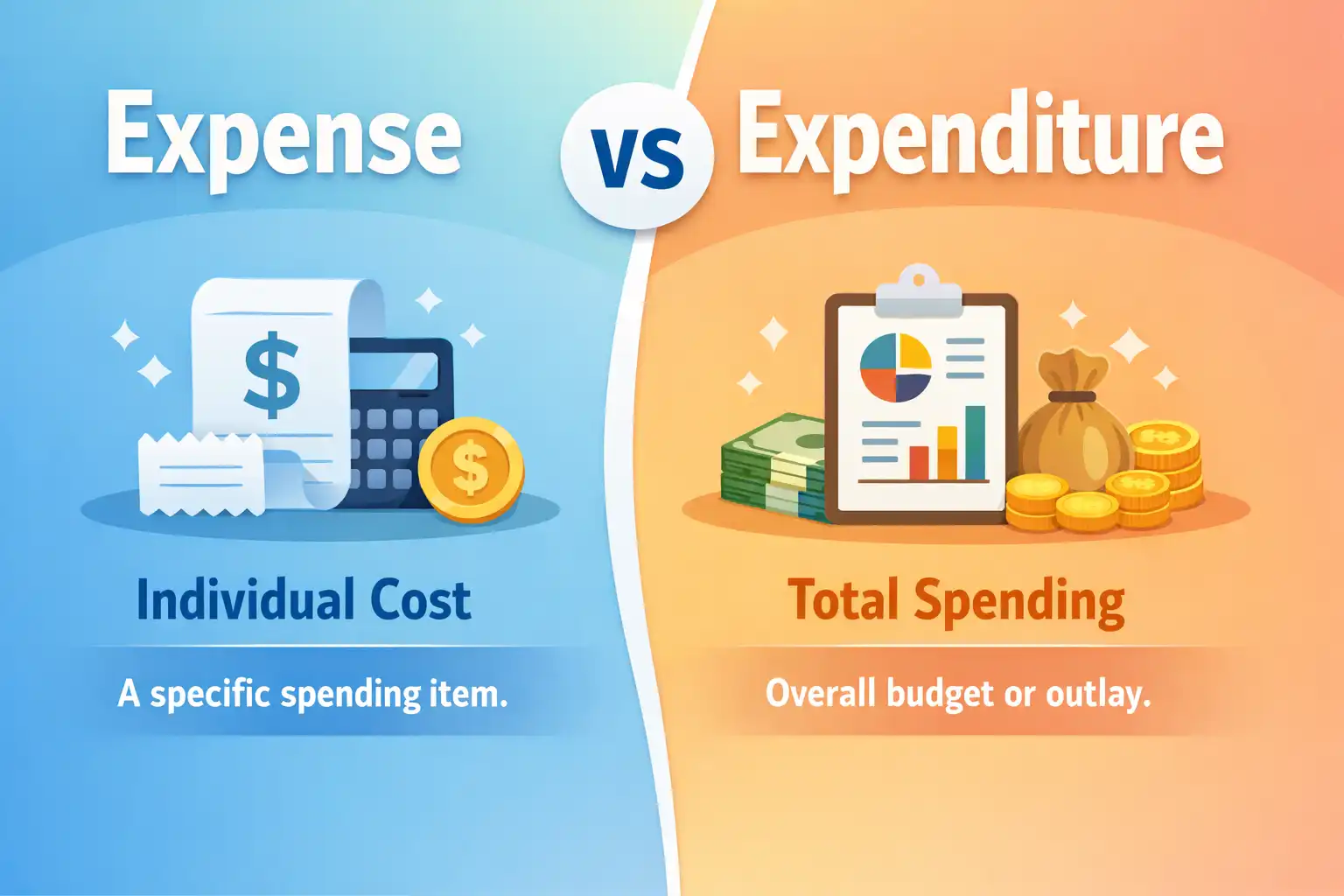
Expense means a cost or payment for goods or services.
Examples:
- Travel expense for a business trip
- Monthly food expenses
- Office repair expense
Meaning of Expenditure
Expenditure means the total amount of money spent, often in formal or financial reports.
Examples:
- Government expenditure on health
- Annual company expenditure
- Public infrastructure expenditure
Simple rule:
Use expense for everyday spending.
Use expenditure for formal, financial, or official contexts.
The Origin of Expense vs Expenditure
Both words come from Latin roots related to spending money.
The word expense comes from the Latin word expensa, which means money paid out. It entered English through French during the Middle Ages. People used it to describe personal or household costs.
The word expenditure also comes from Latin. It comes from expendere, which means “to weigh out or pay out money.” Over time, English speakers used this word in financial writing and government reports.
Because both words share the same root idea of spending money, confusion naturally developed. Writers often assume they are interchangeable.
However, usage changed over time. Everyday speech favored expense because it is shorter and easier. Formal writing kept expenditure because it sounds more precise in financial contexts.
Editors often notice this difference today. Students tend to use expense everywhere, while financial writing prefers expenditure when discussing total spending or official budgets.
British vs American English Spelling
There is no spelling difference between British and American English for these words. Both regions use the same spelling for expense and expenditure.
However, usage patterns can vary slightly depending on context.
Expense usually appears in casual or business communication. Expenditure often appears in academic writing, economics, and government reports.
Example sentences:
US English:
- The company reduced travel expenses this year.
UK English:
- Government expenditure increased after the new policy.
Comparison overview:
| Feature | Expense | Expenditure |
| Spelling | Same in US and UK | Same in US and UK |
| Tone | Everyday language | Formal or technical |
| Common users | Individuals, businesses | Governments, economists |
Therefore, the difference is not about spelling. It is about tone and context.
How to Choose the Right Word Fast
Choosing the correct word becomes easier once you understand the audience and context.
For US readers
Business writing often uses expense when discussing company costs.
Example:
- Marketing expenses increased this quarter.
However, financial reports may still use expenditure when discussing broader spending.
For UK and Commonwealth audiences
Both words appear frequently. Yet official documents, government reports, and policy discussions often prefer expenditure.
Example:
- Public health expenditure continues to grow.
For global or professional writing
Use expense when talking about specific costs.
Use expenditure when describing total or large-scale spending.
In simple terms, choose the word based on tone:
- Casual or everyday → expense
- Formal or financial reporting → expenditure
Common Mistakes with Expense vs Expenditure
Writers often make predictable mistakes when using these two words.
❌ Incorrect: The government reduced its travel expenses for infrastructure.
✅ Correct: The government reduced its infrastructure expenditure.
Explanation: Government spending usually uses expenditure in formal reports.
❌ Incorrect: My monthly expenditure for coffee is five dollars.
✅ Correct: My monthly coffee expense is five dollars.
Explanation: Everyday personal spending fits better with expense.
❌ Incorrect: The report listed many office expenditures for lunch.
✅ Correct: The report listed many office expenses for lunch.
Explanation: Small or routine costs are typically called expenses.
Editors often see these mistakes in student essays and business writing. The issue happens because writers focus on meaning but ignore tone.
Understanding context fixes most errors.
Expense vs Expenditure in Real Life Examples
Real examples help show how these words work in everyday writing.
Email communication:
- Please submit your travel expenses by Friday.
- The company will reimburse hotel expenses.
News writing:
- Government expenditure on education increased this year.
- Defense expenditure rose after the policy change.
Social media:
- Rising food expenses make budgeting harder.
- City expenditure on new roads sparked debate.
Professional reports:
- Total operating expenses declined in the second quarter.
- Public healthcare expenditure reached a new record.
Notice the pattern. Small or personal costs use expense. Large or official spending uses expenditure.
Expense vs Expenditure – Word Usage Patterns and Search Trends
Search trends show that people often look for expense vs expenditure when studying accounting, writing reports, or learning English vocabulary.
Students frequently search this term while writing essays in economics or business classes. ESL learners also look it up because both words translate to the same concept in many languages.
Professional writers sometimes check the difference when preparing reports or financial documents.
In everyday language, expense appears much more often. It sounds natural in conversation and casual writing.
However, expenditure appears more often in academic research, government budgets, and policy analysis.
Misuse can cause confusion. For example, a business report that repeatedly says expenses instead of expenditure when discussing national budgets may sound informal or inaccurate.
Understanding the difference helps writers match the tone of their audience.
Expense vs Expenditure Comparison Table
| Feature | Expense | Expenditure |
| Meaning | A cost or payment for something | Total money spent, often formally |
| Part of speech | Noun | Noun |
| Context | Everyday spending | Official or financial spending |
| Tone | Informal to neutral | Formal |
| Common mistake | Using it in government budgets | Using it for small personal costs |
| Example | Travel expenses increased | Government expenditure increased |
This simple comparison removes most confusion between the two words.
FAQs About Expense vs Expenditure
Is expense the same as expenditure?
Not exactly. Both refer to money spent. However, expense usually describes everyday costs, while expenditure often describes total or official spending.
Which word is better in formal writing?
Formal financial writing usually prefers expenditure, especially in government reports, economics, and academic studies.
Can expense and expenditure be used interchangeably?
Sometimes they can. However, the tone may change. Expense sounds more casual, while expenditure sounds more formal.
Why do people confuse these words?
Both words share the same root meaning and relate to spending money. Because of that similarity, many writers assume they mean exactly the same thing.
Can grammar tools detect this mistake?
Most grammar tools do not flag this difference. They check spelling and grammar, but context-based word choice often requires human judgment.
Is there a British vs American difference?
No major difference exists. Both regions use expense and expenditure with the same spelling and general meaning.
Which word is more common in daily conversation?
People usually say expense in daily conversation because it is shorter and more natural.
Conclusion
Understanding expense vs expenditure becomes easy once you focus on context and tone. Both words describe money spent, but they serve different purposes in writing.
Expense works best for everyday situations. People use it when talking about personal spending, business costs, or small payments. For example, travel expenses, food expenses, or office expenses fit naturally in conversation and casual writing.
Expenditure, however, appears more often in formal discussions. Governments, economists, and financial analysts often use this word when describing large-scale or official spending. It sounds more technical and precise in reports or academic texts.
Writers often confuse these words because they share the same basic meaning. Yet the tone changes the correct choice.
Overall, the easiest rule to remember is simple. Use expense for regular costs and daily situations. Use expenditure for formal, financial, or official spending. Keeping this rule in mind helps you write clearly and avoid common mistakes.

James Holloway writes detailed guides on confusing English words and grammar usage with clear side-by-side comparisons.