Many English learners search for buy or bye because these words sound the same. However, they mean very different things. Because of this, mistakes happen often. For example, people write “bye a product” or “buy for now.” These errors look small. Still, they can confuse readers and reduce trust.
Therefore, this article solves that problem clearly. It explains what each word means. Moreover, it shows where people get confused. Additionally, it gives real examples you can copy. As a result, you will know exactly when to use buy and when to use bye.
This guide uses very simple English. It works well for students, ESL learners, writers, and professionals. Furthermore, it focuses on real-life use, not hard grammar rules. By the end, you will feel confident. Finally, you will avoid this mistake forever. For more quick side-by-side checks, browse the “word comparison hub“.
Buy or Bye – Quick Answer
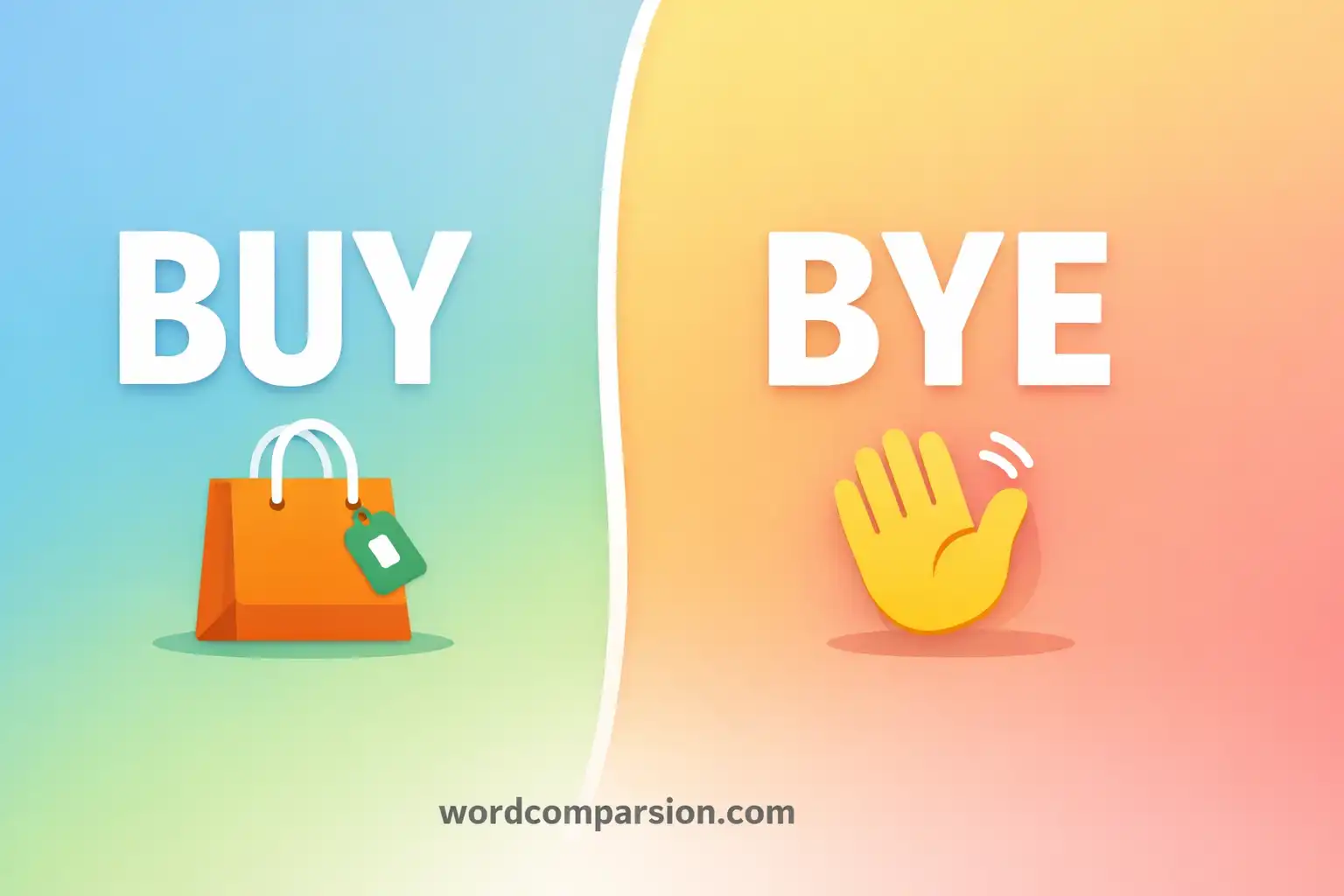
Buy means to get something with money.
Bye means goodbye or leaving.
- ✅ I want to buy a new phone.
- ✅ I said bye and left the room.
Therefore, remember this rule: money = buy, leaving = bye.
The Origin of Buy or Bye
The word buy comes from Old English bycgan. It always meant to purchase something. People used it in trade and markets. Over time, the meaning stayed the same.
In contrast, bye comes from goodbye. It developed as a short, friendly way to say farewell. Meanwhile, pronunciation stayed similar to buy. As a result, confusion started.
However, history shows one clear fact. These words never shared meaning. They only share sound. Therefore, understanding origin helps reduce mistakes.
British English vs American English Spelling
Both American and British English use buy and bye the same way. However, confusion still appears in both regions.
| Aspect | Buy | Bye |
| Meaning | Purchase | Farewell |
| Part of Speech | Verb | Interjection |
| UK vs US | Same | Same |
In contrast to some spelling pairs, no regional difference exists here. Therefore, rules stay simple everywhere.
Which Spelling Should You Use?
The correct spelling depends on meaning, not location.
For US users, buy always connects to shopping. Meanwhile, bye always connects to leaving.
For UK and Commonwealth users, rules remain identical. However, informal texts cause more errors.
For global or professional writing, clarity matters most. Therefore, choose carefully. Moreover, proofread before publishing.
For similar mix-ups, visit the “commonly confused words” pillar page.
Common Mistakes with Buy or Bye
People confuse these words because they sound the same. However, context fixes the problem fast.
- ❌ I will bye this book tomorrow.
✅ I will buy this book tomorrow. - ❌ She said buy and closed the call.
✅ She said bye and closed the call.
As a result, check meaning first. Then, choose spelling.
Buy or Bye in Everyday Examples
In emails, clarity matters.
- Please buy the tickets today.
- I must go now. Bye.
On social media, mistakes spread fast.
- Time to buy new shoes!
- Late night post. Bye everyone.
In news writing, editors watch closely.
- Consumers buy less during inflation.
In professional writing, errors reduce trust. Therefore, correct use matters more.
Buy or Bye – Google Trends & Usage Data
Search data shows strong interest in buy or bye. Students search it most. ESL learners follow closely. Meanwhile, content writers also struggle.
Countries with high search volume include India, Pakistan, the UK, and the US. As a result, this confusion appears global.
Correct usage appears more in formal content. However, mistakes rise in comments and messages. Therefore, learning this difference helps online writing greatly. If you’re comparing similar terms, our “how to use waving or waiving” article can help.
Comparison Table: Buy vs Bye
| Feature | Buy | Bye |
| Meaning | To purchase | To say goodbye |
| Part of Speech | Verb | Interjection |
| Context of Use | Shopping, money | Leaving, ending |
| Formal or Informal | Both | Mostly informal |
| Common Mistake | Used instead of bye | Used instead of buy |
| Correct Example | I will buy food. | I said bye. |
This table removes confusion instantly.
Semantic FAQs (People Also Ask)
Is buy the same as bye?
No. They sound alike. However, meanings differ.
Which one is correct in formal writing?
Both work, but context decides.
Can they be used interchangeably?
Never. Meaning changes completely.
Why do people confuse them?
Pronunciation sounds the same.
Can grammar tools catch this mistake?
Sometimes. However, context errors still pass.
Is there a British vs American difference?
No difference exists.
Conclusion
Overall, buy or bye looks confusing at first. However, meaning makes it simple. Buy always connects to money and shopping. In contrast, bye always connects to leaving or ending. Because pronunciation matches, mistakes happen often. Still, awareness fixes the issue.
Therefore, focus on context every time. Ask one question. Is money involved? If yes, use buy. Is someone leaving? If yes, use bye.
In short, never rely on sound alone. Instead, rely on meaning. Finally, follow this easy rule: money buys, people say bye. You will never get it wrong again.
Related reading: see “nevertheless or nonetheless” for another commonly mixed-up pair.

James Holloway writes detailed guides on confusing English words and grammar usage with clear side-by-side comparisons.