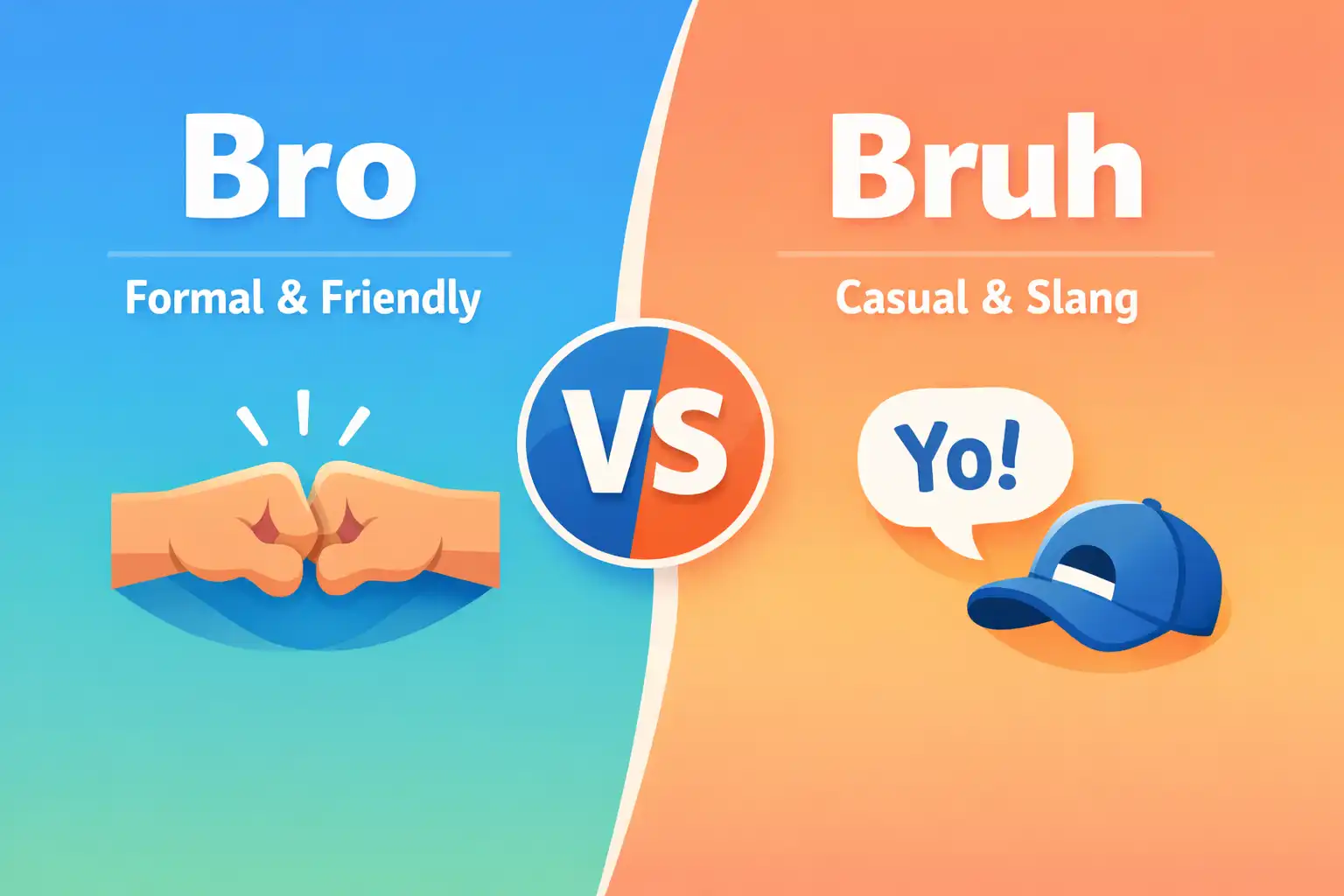
“Bro” and “bruh” look almost the same, but they do not feel the same. Many learners, writers, and even native speakers mix them up. This happens a lot on social media, in chats, and even in casual emails. One small change in spelling can change tone, mood, and meaning. So, the confusion matters more than people think.
Now, why do people search “bro vs bruh”? Because both words sound alike, and both are informal. But they serve different emotional purposes. If you use the wrong one, your message may sound rude, sarcastic, or too casual. That can create confusion or even awkward moments.
In this guide, you will learn the exact meaning, tone, and usage of both words. You will also see real examples, common mistakes, and a simple rule to choose the right word every time.
Bro vs Bruh – Quick Answer
“Bro” means friend, brother, or a close person. It shows connection and respect. “Bruh” shows emotion, usually surprise, disbelief, or disappointment. Use “bro” to address someone. Use “bruh” as a reaction. They are not interchangeable in most cases.
Meaning of Bro
- “Bro” comes from “brother”
- It refers to a male friend or close person
- It can be friendly and respectful
Examples:
- “Hey bro, how are you?”
- “That was great, bro!”
Meaning of Bruh
- “Bruh” is a slang expression
- It shows reaction, not a person
- It often expresses disbelief or frustration
Examples:
- “Bruh, did that just happen?”
- “Bruh, you forgot again?”
Easy rule:
Use “bro” for people. Use “bruh” for reactions.
The Origin of Bro vs Bruh
“Bro” comes from the word “brother.” It started in African American communities and then spread widely. Over time, it became common in everyday speech, movies, and online chats. Now, people use it globally to show friendship or casual bonding.
“Bruh” is a newer slang form. It comes from a relaxed way of saying “brother,” but its meaning changed. People started using it to express feelings instead of addressing someone. Social media platforms like TikTok and Twitter helped it grow fast.
However, the confusion happens because both words sound similar. Many people assume they mean the same thing. But in real use, they play different roles.
British vs American English Spelling
There is no spelling difference between British and American English for “bro” and “bruh.” Both forms stay the same in all regions.
However, usage may vary slightly.
| Region | Common Usage |
| US | Uses both “bro” and “bruh” often |
| UK | Uses “bro” more than “bruh” |
| Global | “Bro” is more widely accepted |
In contrast, “bruh” feels more internet-based and informal. So, it may not appear in professional or formal settings anywhere.
How to Choose the Right Word Fast
Choosing between “bro” and “bruh” is simple if you focus on purpose.
For US audience
Use “bro” in friendly talk. Use “bruh” in casual reactions or memes.
For UK or Commonwealth
Use “bro” more often. “Bruh” may sound too informal or internet-based.
For global or professional writing
Avoid “bruh.” Use “bro” only in informal tone. In formal writing, avoid both.
So, always check your audience and tone before using these words.
Common Mistakes with Bro vs Bruh
Writers often confuse these words because they sound alike. But their usage is different.
❌ Incorrect: “Bruh, can you help me?”
✅ Correct: “Bro, can you help me?”
Explanation: “Bruh” is not used to address someone directly.
❌ Incorrect: “Bro, I can’t believe this happened.”
✅ Correct: “Bruh, I can’t believe this happened.”
Explanation: “Bruh” fits better for emotional reaction.
❌ Incorrect: “My best bruh helped me.”
✅ Correct: “My best bro helped me.”
Explanation: “Bruh” does not describe a person.
So, the key mistake is mixing role and emotion.
Bro vs Bruh in Real Life Examples
Now let’s see how these words appear in real contexts.
Emails
- “Hey bro, let’s catch up soon.”
- “Bruh” is not used in emails.
News
- These words rarely appear in news writing
- “Bro” may appear in quotes
Social Media
- “Bro, that was amazing!”
- “Bruh, what was that move?”
Professional Writing
- Avoid both words
- Use formal alternatives like “friend” or names
So, context matters a lot when choosing these words.
Bro vs Bruh – Word Usage Patterns and Search Trends
“Bro” is more common overall. People use it in daily speech, chats, and even light professional settings. It feels safe and friendly.
“Bruh” is popular among younger users. It appears more in memes, reactions, and casual posts. It is strongly linked to internet culture.
Students and ESL learners often search this keyword because both words look similar. Writers also search it to avoid tone mistakes.
One real issue happens in workplace chats. If someone writes “bruh” instead of “bro,” it may sound sarcastic or rude. That can confuse the reader.
Comparison Table: Bro vs Bruh
| Feature | Bro | Bruh |
| Meaning | Friend or brother | Emotional reaction |
| Part of Speech | Noun (address) | Interjection |
| Context of Use | Friendly conversation | Reaction to events |
| Formal vs Informal | Informal but acceptable | Very informal |
| Common Mistake | Used as reaction | Used for addressing people |
| Correct Example | “Thanks, bro!” | “Bruh, seriously?” |
This table shows the core difference clearly.
FAQs
Is bro the same as bruh?
No. “Bro” refers to a person. “Bruh” shows a reaction.
Which one is correct in formal writing?
Neither is suitable. Use formal words instead.
Can they be used interchangeably?
No. Their meanings and roles are different.
Why do people confuse them?
They sound similar and both are informal slang.
Can grammar tools catch this mistake?
Most tools do not catch it. It depends on context.
Is there a British vs American difference?
No spelling difference exists. Only usage varies slightly.
Is “bruh” rude?
It can sound rude or sarcastic depending on tone.
Conclusion
“Bro” and “bruh” may look similar, but they serve different purposes. “Bro” builds connection. It shows friendship and respect. On the other hand, “bruh” expresses emotion. It often shows surprise, disbelief, or frustration.
Many people confuse these words because of their sound. However, using the wrong one can change your tone. That can lead to confusion, especially in messages or chats.
Overall, remember this simple rule. Use “bro” when you talk to someone. Use “bruh” when you react to something. This one rule solves most mistakes.
In short, focus on purpose and tone. That will help you choose the right word every time.